New Delhi There should be “zero tolerance” for any abuse of authority or transgressions by the police forces against common citizens, the Supreme Court has asserted, emphasising that maintaining public confidence in law enforcement is paramount.
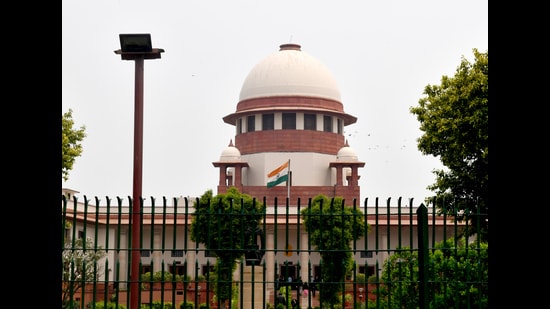
“The police are a very vital part of the State apparatus and have a direct bearing on the safety and security of the society at large and individuals in particular. The need, therefore, for maintaining the confidence of individuals and society-at-large in the police is paramount,” underlined a bench comprising justices Ahsanuddin Amanullah and Prashant Kumar Mishra.
The court pointed out that the criminal jurisprudence of this country works on the cardinal principle of “innocent until proven guilty”, in addition to the Constitution envisaging a set of other rights for all individuals.
“Even if a person may be a ‘criminal’, the law requires that he be treated in accordance therewith. Even a ‘criminal’, under the law of our land, enjoys certain safeguards in order to ensure protection of his person and dignity,” it maintained.
The bench made these remarks while hearing a petition concerning alleged police high-handedness by the Haryana police. The petitioner had accused the police of violating the guidelines established in Arnesh Kumar Vs State of Bihar (2014) regarding arrest procedures and claimed to have suffered physical abuse both at the scene of the arrest and later at the police station in April 2022.
{{/usCountry}}The bench made these remarks while hearing a petition concerning alleged police high-handedness by the Haryana police. The petitioner had accused the police of violating the guidelines established in Arnesh Kumar Vs State of Bihar (2014) regarding arrest procedures and claimed to have suffered physical abuse both at the scene of the arrest and later at the police station in April 2022.
{{/usCountry}}The petitioner’s counsel argued that after the arrest, the petitioner’s brother had immediately sent an email to the superintendent of police, which allegedly enraged the police officers, prompting them to physically assault the petitioner. Furthermore, it was contended that the FIR against the petitioner was filed only two hours after his arrest, suggesting a retaliatory action by the police.
The Punjab & Haryana high court had dismissed a contempt petition in January 2023, which led to the present appeal before the Supreme Court.
Expressing strong disapproval of the conduct of the police, the apex court observed: “We find that there appears to be evident high-handedness on the part of the police in this case. Even if a person may be a ‘criminal’, the law requires that he be treated in accordance therewith.”
In its March 26 order, the court noted that the petitioner, when taken into custody, was merely an accused and had not yet been proven guilty. It further stated: “It is possible to state that a common man can be expected to exceed his limits (whereafter appropriate action in law shall ensue), but not the police.”
In an earlier hearing, the bench had summoned the director general of police (DGP), Haryana, and after examining the compliance affidavit submitted by the state, directed that such transgressions should not recur.
The court categorically warned: “The concerned police officers are cautioned and warned to be careful in the future. The DGP is also directed to ensure that such types of occurrences do not recur and that there should be zero-tolerance on behalf of the senior officers with regard to any alleged transgression of authority by any subordinate officers.”
The Supreme Court further expressed dissatisfaction with the procedural formalities followed by the police, particularly regarding the checklist under Section 41(1)(b)(ii) of the Code of Criminal Procedure that incorporates guidelines to be followed before making arrests, stating: “Perusal of the same prima facie does not inspire confidence. Rather, it appears that only as a formality, the same has been submitted.”
The bench also reminded judicial magistrates that they are obligated to carefully scrutinise such checklists before accepting them while approving a person’s arrest and should not do so as a matter of routine.
Reaffirming its stance against police brutality, the Supreme Court cited its previous ruling in Somnath Vs. State of Maharashtra (2023), reiterating that all law enforcement agencies must adhere strictly to constitutional and statutory safeguards while handling arrests and custodial procedures.
Before concluding the proceedings, the Supreme Court directed its registry to circulate copies of its order and the Somnath judgment to the DGPs across all States and Union territories, including the commissioner of police for Delhi, as a reminder to strictly adhere to procedural safeguards for individuals in custody.