
 E-Paper



SC condemns unlawful demolitions, issues guidelines for road widening projects
On demolitions of private properties for road widening projects, the top court made it mandatory for authorities to issue prior notices and grant an opportunity of hearing.

 Prefer HTon Google


The Supreme Court on Wednesday took a strong stance against hasty and unlawful demolitions, stressing that any action against private property must strictly adhere to proper procedures and be founded on valid legal grounds.
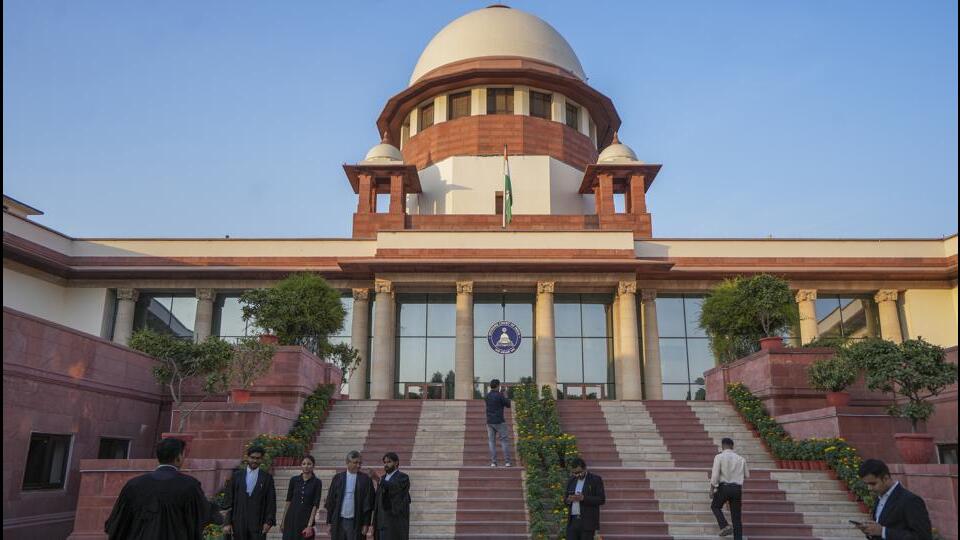
Expressing concern over the indiscriminate demolition actions, the top court also laid down clear directives for all states and Union Territories (UTs) to follow in road widening projects that involve potential demolition of private property, making it mandatory for authorities to issue prior notices and grant an opportunity of hearing.
“You can’t come with bulldozers and demolish houses overnight...there has to be due process followed,” stated a bench, led by Chief Justice of India Dhananjaya Y Chandrachud, as it condemned actions by the Uttar Pradesh government for bulldozing a private residence in July 2019 without proper legal notice or process.
“This is completely high-handed. Where is the due process followed? We have an affidavit that says no notice was issued. You only went to the site and informed the people through the beat of a drum... You cannot come with bulldozers and demolish the houses,” the bench, also comprising justices JB Pardiwala and Manoj Misra, told the counsel for the state.
While the state’s counsel sought to justify the demolition saying more than 100 properties were brought down for the road widening project, the court retorted, “You say that he was an encroacher of 3.7 square metre... We take it that there was an encroachment and we are not giving him a certificate for it. But how can you start demolishing people’s houses like that? This is complete lawlessness...walking into somebody’s house and demolishing it.”
Ruling that the demolition was illegal, the top court ordered the Uttar Pradesh government to pay ₹25 lakh in punitive damages while also directing the chief secretary of the state to initiate criminal action against responsible officials.
This ruling follows a broader judicial trend addressing the controversial practice of demolishing properties, often without notice, using bulldozers. Critics argue that these actions are used punitively, without regard for due process, effectively sidestepping legal protections. The apex court’s decision signals a significant stance on the matter, underscoring that property rights must not be undermined by state power, even in cases of alleged encroachment.
By an order in September, another bench of the Supreme Court had imposed a nationwide restraint on demolition activities, ruling that no demolition, including of those accused or convicted of crime, should occur without the court’s explicit permission. Even as the court order included a caveat that the restraining order will not apply to encroachments on public roads, footpaths, railway lines or water bodies, the SC was emphatic that “heavens will not fall” if the authorities across the nation stayed their hands against hasty demolitions for the time being as it highlighting the need for judicial oversight.
A different bench, in another order in the same month, said that the growing trend of demolishing properties of individuals accused of crimes, often targeting their families too and executed via bulldozers, is “inconceivable in a nation where law is supreme, adding that if not checked, this pernicious practice “may be seen as running a bulldozer over the laws of the land.”
The petitioner in the present case alleged that his home was demolished without prior notice or explanation, following his public comments on irregularities in a road construction project. The demolition, he claimed, was an act of retaliation by state officials.
The court, accepting the petitioner’s claim, found that there was no evidence showing the original width of the highway, nor was there any documentation that proved any legal acquisition of land in the area prior to the demolition.
In response to this case, the apex court laid down directives for all states and UTs to follow in road widening projects, and specified that authorities must ascertain the current width of the road in question; issue a formal notice to any residents if encroachments are identified, allowing them the opportunity to respond; if objections are raised, deliver a reasoned decision with adequate time for occupants to vacate, in compliance with principles of natural justice. The bench stressed that any decision against an objection must come in the form of a reasoned order, granting sufficient time for compliance.
To ensure the guidelines are uniformly applied, the bench directed its registrar to circulate copies of the order to all states and UTs. This nationwide directive aims to standardise due process in cases where demolition may be necessary for infrastructure projects, such as road widening, while protecting the rights of affected residents.
To be sure, a bench led by justice Bhushan R Gavai, on September 2, initiated steps towards issuing pan-Indian guidelines on demolitions, noting that demolishing homes of accused persons without following legal procedures violates fundamental rights and due process. Underlining that even in cases of illegal constructions, demolitions must adhere to proper legal protocols, this bench had sought suggestions from various stakeholders on formulating comprehensive regulations, while reiterating that no individual’s property should be destroyed solely due to their or a family member’s alleged involvement in criminal activities. Following a detailed hearing, the court has said, it would formulate a uniform legal framework to prevent such arbitrary actions.



