The Supreme Court on Wednesday refrained from issuing a blanket direction to curb the practice of pronouncing talaq through WhatsApp, email or other electronic modes, observing that it would first hear all parties, examine the legal and constitutional issues involved, and weigh competing concerns before taking a call.
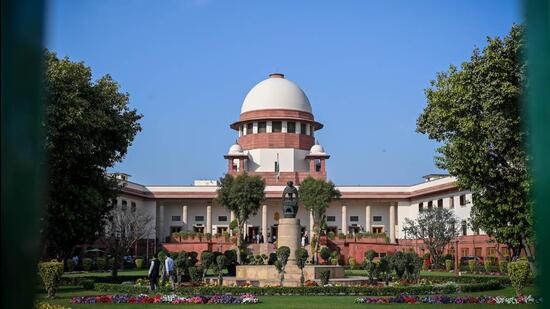
A bench of Chief Justice of India Surya Kant and Justice Joymalya Bagchi observed that while the court would not hesitate to intervene if any practice is against the constitutional ethos and fundamental rights of individuals, such directions could not be issued without a comprehensive hearing since courts should be slow in interfering with matters of faith and religious practices.
“If we bar virtual talaqs, people will pre-judge us. We will not shy away from issuing directions, but that we will do only after hearing both sides. These are sensitive issues,” remarked the bench.
The court was hearing a spate of petitions that have questioned the validity of the practice of Talaq-e-Hasan, under which a Muslim man can divorce his wife by pronouncing “talaq” once a month over three months. The pleas have also sought guidelines for a gender- and religion-neutral framework governing divorce.
One of the petitions was filed by a woman who received her third and final notice of Talaq-e-Hasan in June 2022. Her husband, she said, went ahead with the divorce through his lawyer after her family refused to pay additional dowry. The woman argued that the practice is discriminatory, arbitrary, violative of her dignity and incompatible with constitutional values.
{{/usCountry}}One of the petitions was filed by a woman who received her third and final notice of Talaq-e-Hasan in June 2022. Her husband, she said, went ahead with the divorce through his lawyer after her family refused to pay additional dowry. The woman argued that the practice is discriminatory, arbitrary, violative of her dignity and incompatible with constitutional values.
{{/usCountry}}During the Wednesday hearing, her counsel, Syed Rizwan Ahmed, contended that her estranged husband had attempted to effect divorce by sending talaq notices by post to incorrect addresses while he had earlier communicated talaq through legal notice. It was argued that such attempts were defective and that practices such as “WhatsApp talaq” were being resorted to casually. Ahmed pressed the bench to issue a judicial mandate that all such talaqs through WhatsApp messages, emails or other electronic modes are null and void.
Senior counsel MR Shamshad, appearing for the husband in the matter, opposed the plea, arguing that the issuance of such an interim order would mean invalidating a practice otherwise valid under the Shariat law, without examining the core issues sought to be raised.
Responding to Ahmed’s plea, the bench replied that it was not inclined to pass sweeping interim directions at this stage. “We respect all religions. While respecting all religions, the court should ensure the least interference in religious affairs unless we find that protection of internal values is directly hitting human rights. Then human rights will have an overriding effect,” it observed. The court added that the broader constitutional questions surrounding talaq-e-hasan and related practices would be considered after a full hearing.
At the same time, the bench pointed out that if there were allegations that a spouse was deliberately evading service of talaq, appropriate legal remedies, including deemed service through court orders or public notice, were available.
In the present case, after Ahmed said that her client wanted a mediation, the bench referred the matrimonial dispute to mediation and requested former Supreme Court judge Justice Kurian Joseph to act as sole mediator. The mediation exercise has been asked to be completed within four weeks.
The bench is examining the constitutional validity of Talaq-e-Hasan, distinct from the instant triple talaq (Talaq-e-Biddat), which it struck down in 2017 as “manifestly arbitrary.” In August 2025, the top court had sought opinions from the National Human Rights Commission (NHRC), the National Commission for Women (NCW) and the National Commission for Protection of Child Rights (NCPCR).