NEW DELHI: The Supreme Court on Friday stayed a verdict of the Allahabad high court ordering a probe by the Central Bureau of Investigation (CBI) into the staff recruitment process at the Uttar Pradesh legislative council over alleged nepotism and favouritism in the selection process.
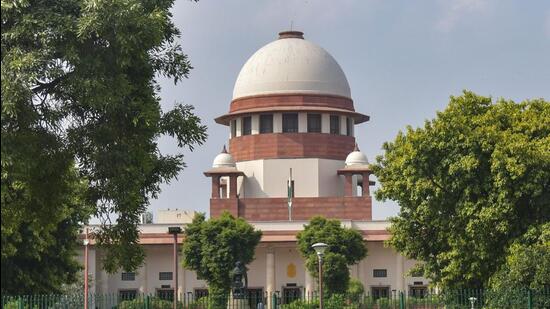
A bench of justices Hrishikesh Roy and Sanjay Karol stayed the high court’s September 18 order on an appeal filed by the UP legislative council which said the high court converted an appeal filed by a group of unsuccessful candidates into a suo moto petition and passed orders without hearing the council.
“The impugned order (of the high court) is stayed,” the bench said in its order as it sought response from the unsuccessful candidates, who were petitioners in the high court, within four weeks on the appeal filed by the legislative council.
Senior advocate Mukul Rohatgi appearing for the UP legislative council told the top court that the high court failed to realise that the petition at the behest of unsuccessful candidates was not maintainable.
Rohatgi said a 2019 amendment to the UP Legislative Council Secretariat Service Rules, 1976 gave powers to the council’s chairperson to authorise any external agency to conduct an examination and hold recruitment for the Grade 3 vacancies in the council secretariat. Prior to this amendment, the state made recruitment through the UP public service commission.
{{/usCountry}}Rohatgi said a 2019 amendment to the UP Legislative Council Secretariat Service Rules, 1976 gave powers to the council’s chairperson to authorise any external agency to conduct an examination and hold recruitment for the Grade 3 vacancies in the council secretariat. Prior to this amendment, the state made recruitment through the UP public service commission.
{{/usCountry}}He further stated that these candidates took the examination, participated in the process and then turned around to challenge the recruitment after they failed to clear the test. Rohatgi said a single bench of the high court refused to entertain their petition and later they appealed before a two-judge bench of the high court which converted it into a suo moto petition.
The top court asked the state, “How was the agency (which conducted the examination) selected?” Rohatgi told the court that this question was not open to be raised by the candidates who participated in the exam and challenged it after being unsuccessful.
The petitioners before the high court were also represented in court by their lawyers who requested for a report to be called from the CBI to ascertain the progress of investigation.
The appeal, filed by the legislative council through advocate Ruchira Goel, cited the Supreme Court decisions that the CBI probe must only be ordered in exceptional circumstances and questioned the high court’s findings of nepotism, favouritism, fraud in the selection process and the manner by which the external agency was selected.
The UP legislative council also reasoned that the issues on which the matter was referred to CBI were never raised in the petition or the appeal filed by the unsuccessful candidates. Even the 2019 amendment to the recruitment rules were not under challenge before the high court, the appeal said.
One of the grounds for the high court to order CBI probe was the exclusion of UP subordinate selection board (UPSSB) and the UP public services commission (UPPSC) from the recruitment process. The council told the top court that the UPSSB was not empowered to conduct selection to the secretariat of the legislative council and assembly. The council also added that the UP’s public service recruitment body had given its no objection certificate before the 2019 amendment was notified.