
 E-Paper



SC suggests syllabi changes to raise dowry awareness
The top court further asked high courts to collect data on the pending cases under offences related to dowry to ensure their speedy disposal


Eliminating dowry is a constitutional imperative to ensure every woman entering a marriage is an equal citizen, the Supreme Court observed on Monday, and asked the Centre and states to consider reinforcing this fact by making amends to the education curriculum to generate awareness about this “evil practice”.
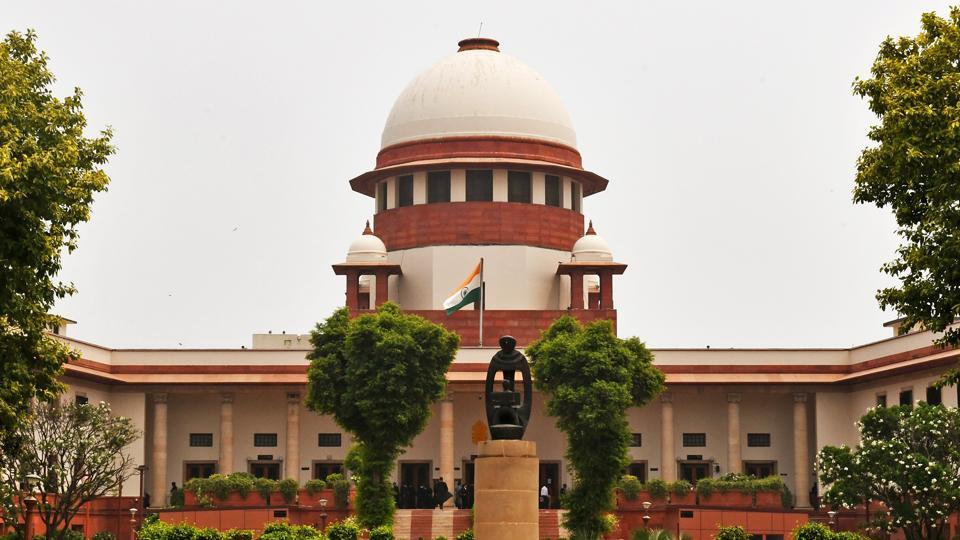
The top court further asked high courts to collect data on the pending cases under offences related to dowry to ensure their speedy disposal.
The directions came as the court restored conviction on a man Aslam Beg in a 24-year-old case for setting his wife, barely 20 years old at the time, on fire. Setting aside an Allahabad high court order of 2017 that acquitted Beg and his 94-year old mother Jamila in the 2001 case, the top court ordered him to surrender in four weeks while spared the mother considering her advanced age. Earlier, a trial court in Bijnore had convicted and sentenced them to life imprisonment in October 2003.
A bench of justices Sanjay Karol and N Kotiswar Singh said, “Eliminating dowry is not only a matter of enforcing the Dowry Prohibition Act (DPA), 1961 (DPA) but a constitutional imperative. It fulfils the Republic’s promise that every woman should enter marriage as an equal citizen and not as the bearer of an unjust financial burden.”
The court posted the matter after four weeks for passing further orders.
Tracing the history of how the system of dowry in the country had descended from its original intent of ensuring well-being of women to an institutionalised “groom price theory”, the court held that such a system undervalues women across all religions.
Directing the Centre and states to consider bringing necessary changes in the education curriculum, the court said, “To ensure that the change brought in is able to make an impact on the efforts to eradicate this evil, it is to be ensured that the future generation, youngsters of today, are informed and made aware about this evil practice and the necessity to eschew it.”
The bench felt such a step would help “reinforcing the constitutional position that parties to a marriage are equal to one another and one is not subservient to the other as is sought to be established by giving and taking of money and or articles at the time of marriage.”
The judgment churned out data from the last five years which it said revealed that the number of dowry death cases under Section 304B of the Indian Penal Code have come down from 7,141 in 2019 to 6,156 in 2023 while the cases under cruelty by husband under Section 498A increased during the corresponding period from 124,934 to 133,676.
“Today, even though outlawed, it continues, having divorced itself entirely from the well-being of the female (its original intent) to what is now being referred to as the ‘groom price theory’- i.e., the amount of dowry being determined by the particulars of the groom, such as social and educational background, earning capacity etc. What all of this translates to, is a systemic bias against women - pervasive across all sections of society - undervaluing them grossly,” said justice Karol, writing the judgment for the bench.
The DPA defines dowry as “any property or valuable security given or agreed to be given directly or indirectly” by one party to a marriage to the other, or by the parents of either party, in connection with the marriage.
“Many, who openly seek and give dowry, go scot-free…While on the one hand, the law suffers from ineffectiveness and so, the malpractice of dowry remains rampant, on the other hand, the provisions of this Act have also been used to ventilate ulterior motives along with Section 498-A, IPC. This oscillation between ineffectiveness and misuse creates a judicial tension which needs urgent resolution,” the judgment said.
To bring about a change, the court opined since this practice has “deep roots in society”, it needs concentrated effort on part of the legislature, law enforcement, judiciary, and civil society organizations.
The judgment further directed the dowry prohibition officers in states appointed under DPA to be duly appointed and made aware of their responsibilities in aiding victims. At the same time, court directed periodic training for police officials and judicial officers dealing with such cases in order to appreciate the “social and psychological implications” involved in such cases.
Going by the present case which occurred in 2001 but concluded after 24 years, the court felt the need to address the long pendency of such cases and requested high courts to ascertain the number of cases pending under sections 304-B, 498-A from the earliest to the latest for expeditious disposal.
The court directed a copy of the judgment to be circulated to all high courts and chief secretaries and sought affidavits from high courts and states on the compliance of its directions.


