
 E-Paper



SC urged to hear review of same-sex marriage verdict in open court
A bench, led by CJI Chandrachud, and comprising justices Sanjiv Khanna, Hima Kohli, BV Nagarathna, and PS Narasimha, will consider the bunch of review petitions on July 10

 Prefer HTon Google


A request was made before the Supreme Court on Tuesday to allow an open court hearing of bundle of petitions seeking a review of its October 17 judgment that refused to grant legal recognition to same-sex couples and said only Parliament and state legislatures can validate their marital unions.
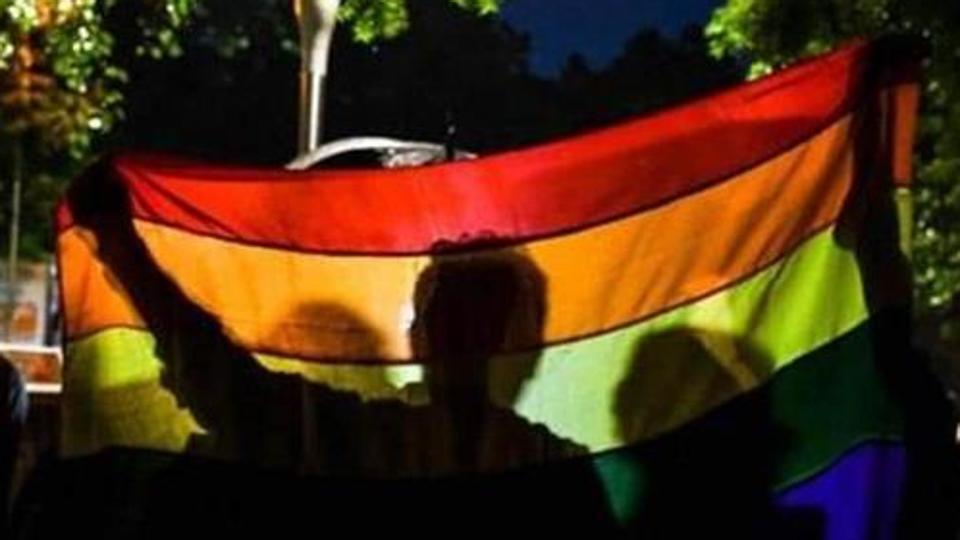
Senior advocates Neeraj Kishan Kaul and Abhishek Manu Singhvi made a mention before Chief Justice of India (CJI) Dhananjaya Y Chandrachud, urging the Court to hear the review petitions against the same-sex marriage verdict in open court on July 10, rather than in chambers as is customary.
Kaul and Singhvi emphasised the importance of an open court hearing for the review petitions, arguing that the matter’s significance for the nation and society warranted a departure from the usual practice of considering review petitions in chambers. They contended that an open court hearing would allow for a more transparent and thorough examination of the issues at stake.
The CJI acknowledged the request and stated that he would consider it, while also pointing out that this is a review petition before a constitution bench and that he cannot unilaterally decide to list the matter for an open court hearing.
“This is a review petition before a constitution bench... are you arguing the matter before us now?” Justice Chandrachud asked the lawyers, adding no arguments could be made before him to list the matter in the open court.
The CJI’s response highlighted the procedural aspects of review petitions before a constitution bench, pointing out that any decision to list the matter for an open court hearing would require careful consideration by all the members of the five-judge bench.
A bench, led by CJI Chandrachud, and comprising justices Sanjiv Khanna, Hima Kohli, BV Nagarathna, and PS Narasimha, will consider the bunch of review petitions against the same-sex marriage verdict on July 10.
Justices Khanna and Nagarathna have replaced the retired members of the previous bench – justices Sanjay Kishan Kaul and Ravindra Bhat.
Typically, a review petition is considered by the judges in their chambers and decided without an open court hearing. However, if the judges find merit in the review plea, they can allow an open court hearing and oral arguments. In this case, the petitioners have demanded an open court hearing.
The October 17 judgment, decided by a 3-2 majority, refused to accord legal sanction to same-sex marriage and declined to grant constitutional protection to civil unions and adoption rights for queer couples.
The judgment noted that mandating the State to grant recognition or legal status to some unions would violate the doctrine of separation of powers and could lead to unforeseeable consequences.
Also Read: Thailand becomes first country in Southeast Asia to recognise same-sex marriage
While CJI Chandrachud and justice Kaul ruled in favor of recognising civil unions and adoption rights, justices Bhat, Kohli, and Narasimha held that the right to a civil union could not be assigned the status of a constitutionally protected right when the right to marry had not been given the same status.
Udit Sood, a US-based lawyer among the 52 petitioners seeking marriage equality in India, filed the first review petition on November 1.
He complained that the majority judgment was “manifestly unjust” and “self-contradictory” in not protecting the rights of the LGBTQIA+ community despite acknowledging its travails.
Sood argued that the majority ruling found that queer Indians endure severe discrimination at the hands of the State, declared that discrimination must be prohibited, and then did not take the logical next step of enjoining the discrimination.
Sood termed this contradiction an error apparent on the face of the record, stating that it was nothing short of an “abdication of the duty” by the Supreme Court to not correct a wrong after acknowledging it.
Supriya Chakravarty and Abhay Dang also moved the top court seeking a review of the October 17 judgment. They argued that constitutional courts are empowered to review statutory law to ensure its conformity with constitutional values and do not need to wait for the legislature to enact or amend laws to recognize same-sex marriage. They pointed out that the bench unanimously found that the exclusion of queer couples from the existing statutory regime is discriminatory, yet the majority decision granted no relief.
The top court’s October 17 ruling unanimously held that the right to marry was not a fundamental right, and that it was beyond the remit of courts to issue a positive direction to the legislature to characterize same-sex marriages and queer relationships through a new instrument of law.
The judgments, authored separately by the CJI, and justices Kaul, Bhat, and Narasimha, also refused to annul or read down the provisions of the Special Marriage Act (SMA) to include non-heterosexual couples within its fold.
The judges, however, were divided on how far a court can go despite acknowledging that queerness is not an “urban, elitist concept” and required the State to ascertain protection for such couples.
While the CJI and justice Kaul maintained that the right to enter into a union by queer couples is a constitutionally protected right and that the State has an obligation to recognise such civil unions and grant them benefits under law, including adoption rights, the other three judges overruled this view.
The outcome of the July 10 review will be closely watched as it could have significant implications for the LGBTQIA+ community and their fight for equal rights in India.



