E-Paper



School used as morgue for Odisha train tragedy victims razed
The school which had a strength of 567 students had two classrooms filled with bodies after the June 2 train collision

 Prefer HTon Google


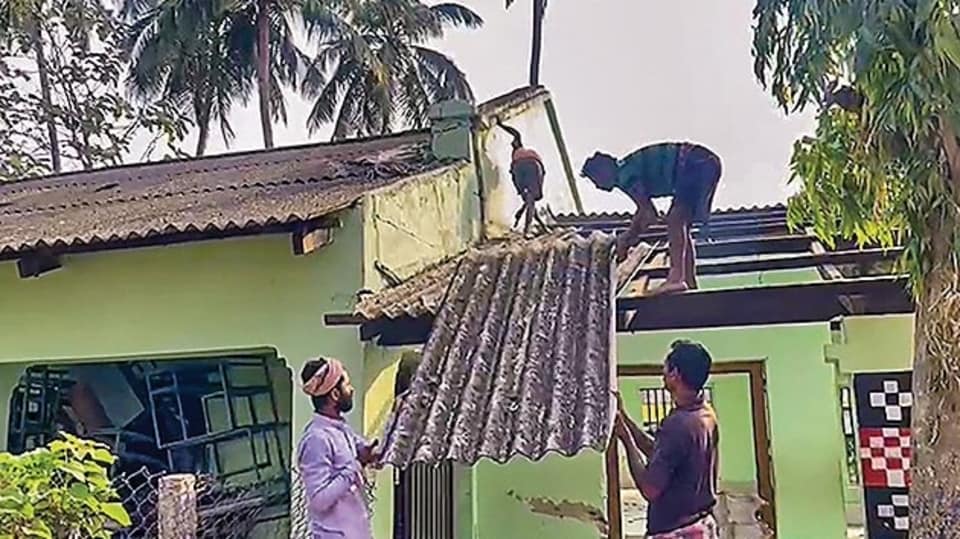
The Public Works Department of Odisha on Friday began the demolition of the 65-year-old Bahanaga High School building which was used as a makeshift morgue in the aftermath of the three-train crash in Odisha’s Balasore, after students expressed reluctance to return to the premises.
Read here: Foul smell at Odisha train crash site not from decaying corpses but…
The school which had a strength of 567 students had two classrooms filled with bodies after the June 2 incident involving three trains — the Chennai-bound Coromandel Express, the Howrah-bound Shalimar Express and a goods train, which left 288 people dead.
The demolition began at around 6 am on Friday morning, with workers taking out the asbestos roofs of two classrooms where 211 bodies were kept for over 24 hours, member of the school managing committee Rajaram Mohapatra said.
“Many students and their guardians were stressed over the school being turned into a morgue. Though the rooms where the bodies were kept have been sanitised, the students were still not convinced,” Mohapatra said.
The rooms which would be demolished housed primary and elementary classes.
Dipanjali Sahoo, a parent and a member of the school management committee, said the students, particularly those in primary classes were scared after the bodies were kept in their classroom last week. “They are disturbed and would have found difficult to mind their studies in the current circumstances. So we requested the collector to reconstruct the rooms,” said Sahoo.
On Thursday, Balasore district collector Dattatraya Bhausaheb Shinde had visited the school and said it would be demolished if the school managing committee submits a resolution.
During his visit, students told Shinde that they were scared of returning to the school.
“Parts of the rooms and the benches used by students were still bloodstained. The students are apprehensive of returning to the building. So, the government decided to raze five to six classrooms,” he said.
On the morning of June 3, the dismembered bodies were brought in to the school — the accident took place about 100 metres from the school — so the families of the victims could identify them.
“Once the new buildings are ready, a priest would sanctify the place so that the children do not get scared after the opening of the school,” said Mohapatra.
Once the school reopens on June 19, the school management plans to hold the primary classes in other rooms of the school building. The school principal said the demolitions would happen gradually.
The chief minister’s office later announced that the school would be developed into a model school under the 5T initiative.
Read here: Odisha school where train crash bodies were kept razed over 'superstition' | VIDEO
“The CM has now decided that the entire school would be made a model school under CM’s 5T programme,” said VK Pandian, secretary to CM(5T).
Meanwhile, the state government has decided to hold counselling sessions for the students and school staff.
“Many of the teachers took part is shifting of the bodies. So they would also need to be counselled,” secretary of the school and mass education department, Aswathy S, said.