E-Paper



'Self-perceived' sexual identities not part of new transgender definition bill
The definition “shall not include, nor shall ever have been so included, persons with different sexual orientations and self-perceived sexual identities.”

 Prefer HTon Google


New Delhi: The Union government on Friday introduced a bill in the Lok Sabha that significantly narrows the definition of transgender persons, removes the right to self-identification, introduces medical boards for certification, and prescribes punishments up to life imprisonment for offences such as kidnapping and forced mutilation of children.
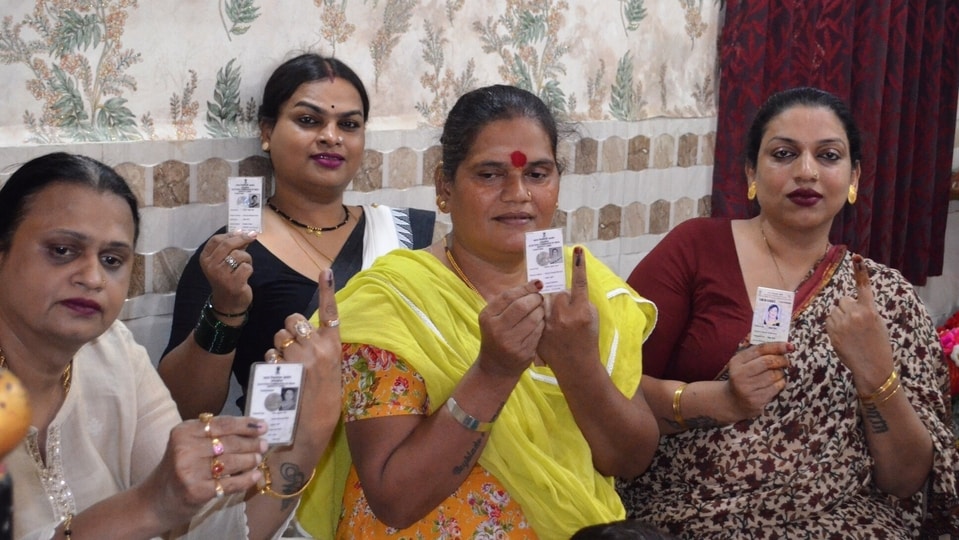

The Transgender Persons (Protection of Rights) Amendment Bill, 2026, introduced by social justice minister Virendra Kumar, replaces the broad, inclusive definition in the 2019 act — which covered anyone whose gender identity did not match the gender assigned at birth, including trans-men, trans-women, genderqueer persons and those with intersex variations — with one rooted primarily in biological or congenital conditions and traditional socio-cultural identities.
Under the new definition, a transgender person means a person with socio-cultural identities such as kinner, hijra, aravani, jogta, or eunuch; a person with specified intersex variations; or a person who at birth has a congenital variation in sex characteristics, including primary sexual characteristics, external genitalia, chromosomal patterns, gonadal development, and endogenous hormone production or response.
The definition also covers any person or child who has been “by force, allurement, inducement, deceit or undue influence, either with or without consent, compelled to assume, adopt, or outwardly present a transgender identity, by mutilation, emasculation, castration, amputation, or any surgical, chemical, or hormonal procedure or otherwise.”
A provision explicitly states that the definition “shall not include, nor shall ever have been so included, persons with different sexual orientations and self-perceived sexual identities.”
Rights advocates and transgender community members have criticised the bill, calling it a shift from a rights-based to a medicalised approach that excludes a large number of transgender persons who do not fall within biological or traditional community categories.
The amendment omits Section 4(2) of the 2019 act, which stated that a person recognised as transgender shall have the right to self-perceived gender identity — a principle rooted in the Supreme Court’s 2014 NALSA judgment, according to experts.
In place of the earlier system in which a district magistrate directly issued identity certificates, the bill introduces a medical board, headed by a chief medical officer or a deputy chief medical officer, as a new certifying authority. The DM may now issue a certificate only after examining the recommendation of this authority and, if considered necessary, consulting other medical experts.
The bill also changes Section 7 of the 2019 act, replacing “may” with “shall” to make it mandatory for a transgender person who has undergone gender-affirming surgery to apply for a revised certificate. Medical institutions that perform such surgeries will be required to report details to the DM and the new medical authority.
The bill also proposes to expand penal provisions. The 2019 act prescribed a uniform punishment of six months to two years’ imprisonment for offences including forced labour, denial of public access, forced eviction, and abuse. The amendment replaces Section 18 entirely with a graded system.
Under the new provisions, kidnapping and causing grievous hurt to a child — whether through mutilation, emasculation, castration, amputation, or any surgical, chemical, or hormonal procedure — with the intent of compelling the child to assume a transgender identity is punishable with rigorous imprisonment for life and a minimum fine of ₹5 lakh. For similar offences against an adult, the punishment is rigorous imprisonment of not less than 10 years, which may extend to life, with a minimum fine of ₹2 lakh.
Forcing a child to dress or present as transgender for the purpose of begging, solicitation, or bonded labour is punishable with 10 to 14 years’ rigorous imprisonment and a minimum fine of ₹3 lakh. The corresponding offence against an adult carries a sentence of five to 10 years and a minimum fine of ₹1 lakh.
The existing offences — forced labour, denial of public access, forced eviction, and physical, sexual, verbal, emotional or economic abuse — continue to carry a punishment of six months to two years.
The bill also changes the composition of the National Council for Transgender Persons, requiring that state government and Union territory representatives be not below the rank of director in the concerned ministry or department, and that they be nominated by rotation from the North, South, East, West, and North-East regions.
The government, in the statement of objects and reasons, said doubts and difficulties had arisen “with regard to the expanse of the definition of transgender persons and how the identification of such persons is to be done under the existing definition,” adding that it was “of prime importance that the enactment is utilised and works towards only those who are in actual need of such protection.”
The bill’s stated aim is to “protect only those who face severe social exclusion due to biological reasons for no fault of their own and no choice of their own.”
Avinaba Dutta, a public policy researcher, said: “The 2026 amendment narrows the definition of transgender persons, removes the right to self-identified gender, introduces medical boards for certification, strengthens government oversight, and significantly increases criminal penalties for forced mutilation or exploitation linked to transgender identity.”
Rituparna Neog, an Assam-based member of the National Council for Transgender Persons, said: “This amendment ignores the diverse identities and gender expressions we hold. It cannot ignore the fact that, due to social discrimination and fear, many transgender individuals do not come out with their true identity. We must remember our identity is diverse and we are not homogeneous. By highlighting socio-cultural identities alone, the bill excludes a huge number of our people who are part of the transgender umbrella.”
Senior advocate Jayna Kothari, who runs Bengaluru-based Centre for Policy and Research, said: “The Transgender Persons (Protection of Rights) Amendment bill 2026 turns back the clock by offering a medicalised approach, instead of a rights-based one, and thus completely alters the definition of transgender persons.”
“The bill is extremely harmful. No one from the community even asked for this,” Kothari said.
“The bill removes a person’s right to self-identify as male, female or transgender, which was upheld by the Supreme Court of India in 2014 through the NALSA and Others v Union of India judgement. It further mimics the language of the colonial era Telangana Eunuchs Act that criminalised transgender persons, who were suspected of ‘kidnapping children’ to emasculate them. We successfully challenged this state act in 2023 to bring it in line with the fundamental rights of transpersons guaranteed by the Indian Constitution,” she said.