
 E-Paper



Serene world of Carnatic music roiled by award controversy
But in the spate of 24-hours, the issue boiled over, with at least six top musicians and performers pulling out, and one even returning his own Sangita Kalanidhi award, and the Academy, founded in 1928 — it instituted the award, of which usually only one is given every year, in 1942 — standing its ground.

 Prefer HTon Google


The world of Carnatic music — usually tranquil, at least on the surface — was roiled by a controversy that has been brewing since March 18, when the Music Academy decided that this year’s top honour, the title of Sangita Kalanidhi, would go to singer T M Krishna, a man, who ironically, has not performed at the Academy’s venue since 2015 in his effort to democratise Carnatic music, and who has openly and repeatedly challenged what he believes is a caste privilege entrenched within classical music and also opposed the worldview of the Bharatiya Janata Party (BJP) and its ideological parent the Rashtriya Swayamsewak Sangh (RSS).
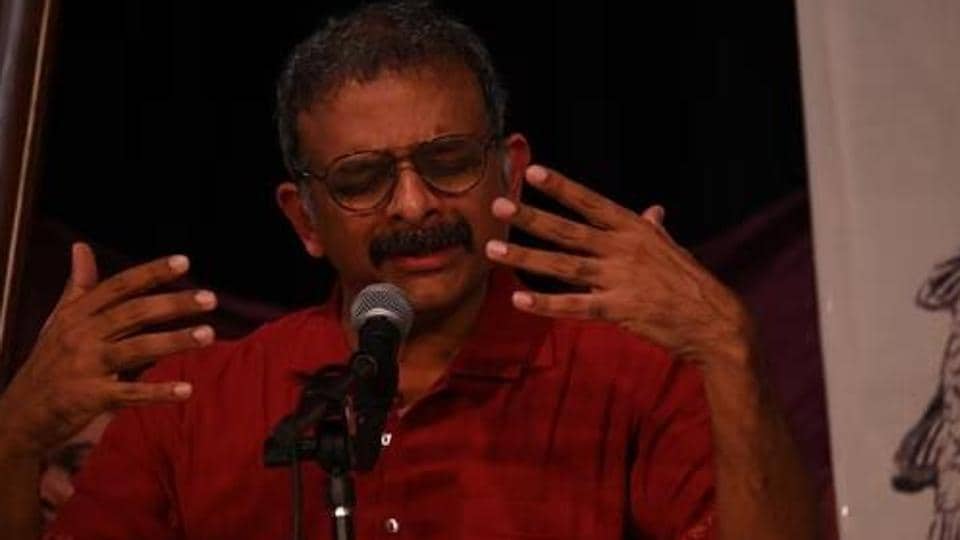
But in the spate of 24-hours, the issue boiled over, with at least six top musicians and performers pulling out, and one even returning his own Sangita Kalanidhi award, and the Academy, founded in 1928 — it instituted the award, of which usually only one is given every year, in 1942 — standing its ground.
Krishna declined comment on the controversy, but the incident, which comes against the backdrop of the summer’s Lok Sabha elections, where the BJP, which is going it alone in Tamil Nadu, hopes to stamp its presence in the state with a decent showing, in terms of votes, if not seats, has rapidly acquired political colour.
On Monday, when the Academy, which, in some ways, stands for everything Krishna has spoken against, named him as the recipient of its top award, it generated the expected murmurs. But things really heated up on Wednesday, when sisters Ranjani and Gayatri, both popular singers, shot off a letter to the Academy and posted a series of posts on X in which they said that they will not perform during the music festival hosted by the Academy this year.
They added that it was “dangerous” to overlook Krishna’s eulogising of Dravidian movement founder E V Ramasamy, revered as ‘Periyar’. “His actions have tried to spread a sense of shame in being a carnatic musician and has been exhibited through his consistent denigration of spirituality in music,” the sisters said. “We believe in a value system that respects art and artists, vaggeyakaras(lyricist/Composers), rasikas (fans), institutions, our roots and culture. We will be in moral violation if we were to bury these values and join this year’s conference.”
The sisters weren’t immediately available to talk to HT.
Krishna, a Ramon Magsasay awardee (for his social activism in music) continues to perform in smaller venues (called sabhas). He also performs in a festival at a fishing neighbourhood in Chennai’s Besant Nagar beach —the Uroor-Olcott Kupppam festival —that is organised by the city’s environmentalists.
Naturalist Yuvan Aves who has worked with Krishna on several campaigns, including for Chennai’s Ennore-Pulicat wetlands, said the move to honour Krishna has exposed the casteist underbelly of the music community.
“In such a huge music community, he has been the only person who brought Carnatic music form to honour the marginalised communities and marginalised landscapes,” Aves said.
Krishna, he said, also collaborated with Tamil writer Perumal Murugan, singing on a range of topics from birds to manual scavenging. “He is saving an art form from its obsolete fixity and giving it a future in this evolving world through what he is doing. As public we only see the performances and we can now see the sub-surface realities of this space.”
Krishna also writes, and in a sea of Carnatic musicians supporting the BJP and Prime Minister Narendra Modi, he has stood out as a staunch critic.
But it wasn’t so much his political leanings as his disdain for fellow musicians, past and present — in 2017, he said singer M S Subbulakshmi, a Bharat Ratna awardee “brahminised” herself to gain acceptance — that seems to have angered his fellow musicians.
Instrumentalist Chitravina Ravikiran, now 57, but identified as a child prodigy at the age of two by a group of musical maestros who interviewed him, said he would return the Sangita Kalanidi award that he received in 2017 because he could not understand why the Academy would want to reward someone who has polarised classical music through caste and communal lines. “Your institution’s decision is entirely discordant with the essential dictum that noble art is about uniting diverse peoples and cultures through positivity, not dividing them through negativity,” Ravikiran said in his letter to the Academy.
A Harikatha exponent, Dushyanth Sridhar said he was withdrawing from the event noting that he has had a “sea of ideological” differences with Krishna. “I am pained by many of his public statements on dharma, Ayodhya and Sri Rama,” Sridhar said. The Trichur Brothers too said that they were boycotting the music conference presided over by Krishnan because they didn’t want to be hypocrites.
But the Dravid Munnetra Kazhagam’s K Kanimozhi , running for a second term from Thoothukudi Lok Sabha constituency said that the hate Krishna was receiving for his engagement with Periyar is uncalled for. “A basic reading of Periyar’s ideas shows us that he is one of the greatest feminists the world has seen. He never called for a genocide,” Kanimozhi said in response to Gayathri-Ranjani’s statement that Periyar was against Brahmins and women. Kanimozhi likened their letter to the hate speech of Union minister and BJP leader Shoba Karandlaje’s remarks linking Tamilians to the Rameshwaram cafe blast in Bengaluru.
Music Academy said it was honouring Krishna for “his powerful voice” and “adherence to tradition when it comes to the art”. Responding to the honor, Krishna said through his journey, his friends have kept him grounded and challenged his ideas so he can think and act with greater care. On Wednesday, it expressed shock at Ranjani and Gayatri’s letter.
N Murali, President, Music Academy, said the letter is “replete with unwarranted and slanderous assertions and insinuations verging on defamation, and its vicious tone against a respected senior fellow-musician.” The executive committee of the Academy chose Krishna based on his excellence in music over a long career with no extraneous factors influencing their choice, he added. “We regard your decision to withdraw from the upcoming annual conference because the Academy has chosen for the award a musician you dislike and malign as unbecoming of artistes and in poor taste.”


