
 E-Paper



Six important milestones in the BRICS journey
A look at significant events in the decade-old history of the BRICS summit.

 Prefer HTon Google


From its birth in 2006, to its 8th annual summit in 2016, BRICS has come a long way. An organisation which brought together emerging world economies Brazil, Russia, India, China and South Africa, is now trying hard to stay relevant.
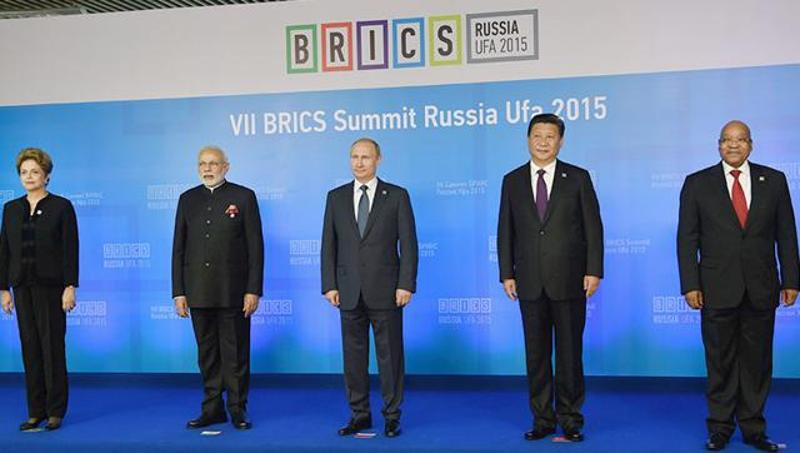
A look at some milestones in the BRICS journey over the last decade:
2001: The acronym BRIC was first used by Goldman Sachs, the multinational investment firm, in their Global Economics Paper, “The World Needs Better Economic BRICs” projecting that the economies of Brazil, Russia, India and China would be among the world’s largest in the next 50 years.
2006: As a formal grouping, BRIC started after the meeting of the leaders of Russia, India and China in St Petersburg on the margins of G8 Outreach Summit in 2006. The grouping was formalised after their foreign ministers met on the margins of a United Nations general assembly meeting in New York.
2009: The first BRIC Summit was held in Yekaterinburg, Russia, on June 16, 2009. The leaders discussed the current global financial crisis, global development, and further strengthening of the BRIC group.
2010: It was agreed to expand BRIC into BRICS with the inclusion of South Africa at the grouping’s foreign ministers meeting in New York in September 2010. Apparently two African countries were being considered as candidates, Nigeria and South Africa; including South Africa kept the acronym intact.
2011: South Africa attended the 3rd BRICS Summit in Sanya, China, for the first time. Brazil and India pressed China to buy such goods as Brazilian aircraft and Indian pharmaceuticals; the two countries also complained about the artificially undervalued yuan they claimed was undermining their exports.
2014: The grouping launches a multilateral New Development Bank (NDB) for infrastructure needs and the Currency Reserve Arrangement (CRA). The latter is a commitment by the five countries to set up a $100-bn pool of currency reserves to help forestall short-term liquidity reserves. China, with $41bn, contributes the most. India contributes $18 bn.


