E-Paper



Watch: ISRO’s new SSLV-D2 rocket successfully lifts off from Sriharikota
Meant to provide low-cost access to space, SSLV offers advantages like low turn- around time and is equipped to accommodate multiple satellites, and demands minimal launch infrastructure.

 Prefer HTon Google


The Indian Space Research Organisation (ISRO) successfully launched the second edition of the Small Satellite Launch Vehicle (SSLV-D2) on Friday morning, a video of which surfaced online capturing moments of the historic feat. The vehicle launched from Andhra Pradesh’s Sriharikota has been developed to capture the emerging small and micro-satellite commercial market.
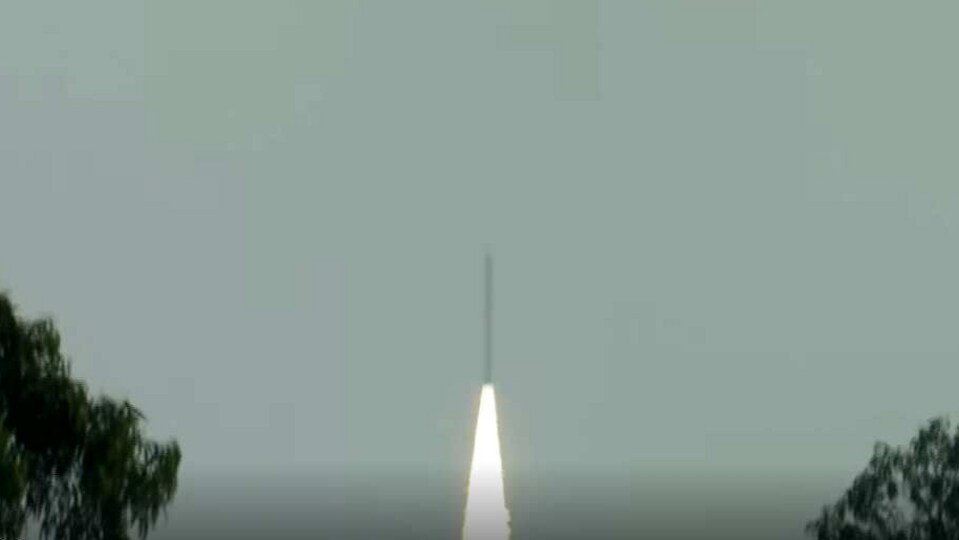
The launch will put earth observation satellite EOS-07 and two co-passenger satellites Janus-1 and AzaadiSAT-2 into space. “SSLV-D2 is intended to inject EOS-07, Janus-1 and AzaadiSAT-2 satellites into a 450 km circular orbit, in its 15 minutes flight,” ISRO said Wednesday.
Soon after the launch, Mission Director, ISRO Vinoth told news agency ANI "Janus 1 satellite separated. SSLV D2 mission accomplished”.
Also Read| Big plans for 2023 after a mixed 2022: Isro chief
The ‘launch-on-demand’ basis SSLV caters to the launch of up to 500 kg satellites to low earth orbits. Meant to provide low-cost access to space, it offers advantages like low turn- around time and is equipped to accommodate multiple satellites, and demands minimal launch infrastructure.
E0S-7 is designed and developed by ISRO while Janus-1 belongs to ANTARIS, USA. The AzaadiSAT-2 satellite is a combined effort of about 750 girl students across India guided by Space Kidz India, Chennai.
SSLV’s first flight test ended in partial failure in August after the upper stage of the launch vehicle injected the satellite into a highly elliptical unstable orbit due to a shortfall in velocity. On investigation, it was also revealed that there was a vibration disturbance for a short duration on the Equipment Bay (EB) deck during the second stage separation, ISRO had said.