Parts of India are facing a severe impact of the climate crisis with reduced rainfall and increase in dry, or no rain, and heavy rain days during the monsoon season, an India Meteorological Department (IMD) study on changes in monsoon patterns over 30 years has found.
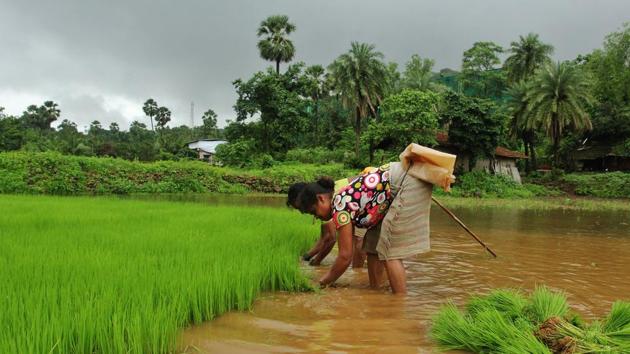
The monsoon, which generally begins in June and retreats by September, delivers around 70% of India’s annual rainfall. It is crucial for the cultivation of rice, wheat, sugarcane and oilseeds in the country where farming employs over half of its people. The monsoon is key to replenishing reservoirs, groundwater and addressing water shortages.
The study found “significant decreasing trends” in the south-west monsoon from 1989 to 2018 in the Ganga basin states like Uttar Pradesh, Bihar and West Bengal, which are known to have among the most fertile lands in the country. Meghalaya, where Cherrapunji is known as one of the places with the highest precipitation globally, Nagaland and Arunachal Pradesh recorded a decreasing trend along with Himachal Pradesh.
The study found a significant increase in heavy rainfall (6.5 cm or more) days in Gujarat’s Saurashtra and arid regions of Kutch and south-eastern Rajasthan, as well as northern Tamil Nadu, northern Andhra Pradesh, south-west Odisha, parts of Chhattisgarh, south-west Madhya Pradesh, parts of West Bengal, Manipur and Mizoram, Konkan, Goa and Uttarakhand.
Goa has recorded the maximum monsoon rainfall over the past 30 years (2878.0 mm) followed by Meghalaya (2702.4 mm). Tamil Nadu reported the lowest (311.7 mm) followed by Rajasthan (414.2 mm). Pulak Guhathakurta, who heads the IMD’s hydrometeorology wing in Pune, said a Parliamentary standing committee had asked for a report on the impact of the climate crisis on monsoon in the recent decades. “The ministry of earth sciences presented this analysis to the Committee in February but it is being made public today [??],” said Guhathakurta, who has also conducted long-term studies on monsoon patterns with 100-year data.
{{/usCountry}}Goa has recorded the maximum monsoon rainfall over the past 30 years (2878.0 mm) followed by Meghalaya (2702.4 mm). Tamil Nadu reported the lowest (311.7 mm) followed by Rajasthan (414.2 mm). Pulak Guhathakurta, who heads the IMD’s hydrometeorology wing in Pune, said a Parliamentary standing committee had asked for a report on the impact of the climate crisis on monsoon in the recent decades. “The ministry of earth sciences presented this analysis to the Committee in February but it is being made public today [??],” said Guhathakurta, who has also conducted long-term studies on monsoon patterns with 100-year data.
{{/usCountry}}He said there is multi-decadal variability. “For example, 1940 to 1970 was a wet period for us and now we are in a dry period. But there is a clear imprint of climate change on monsoon which is something that farmers have been trying to deal with. The Ganga basin is recording a significant increase in dry days.”
The IMD has put out individual detailed reports for states on variability in monsoon.
In a press statement on Monday, IMD (Pune) said the monsoon rainfall shows high temporal and spatial variability. “Further, in view of ongoing climate changes, there have been significant changes in the mean rainfall pattern and their variability exclusively in terms of the intensity and frequencies of heavy rainfall events.”
The IMD in January highlighted how monsoon onset dates had also changed in several parts of the country. “The onset and withdrawal dates for south-west monsoon recognised by the IMD were based on monsoon pattern between 1901 and 1940. But monsoon patterns including onset and withdrawal across the country have recorded significant changes in the recent decades and hence will be changed,’’ Union earth sciences ministry secretary M Rajeevan said in January.
He said they will announce the new dates for monsoon onset to states sometime in April. All meteorological forecast and data are being shared with farmers.
There was a bad start to the monsoon season last year with June being the driest in five years. “This monsoon will be bad. One challenge is when do farmers sow etc because of the unpredictable monsoon pattern but also because livestock is a major source of income for small and marginal farmers. Both fodder and water for livestock will be impacted if drought conditions extend. I fear there will be a deep crisis situation particularly for crops other than wheat and paddy for which there is no procurement policy. Markets are mostly closed owing to lockdown and outbreak. If you look at the past 10 years data, money earned by migrated labour comes into the village and used for agriculture. Now all those labourers have migrated back so there will be major stress on earning from the little agricultural plots in most parts of the country,” said GV Ramanjaneyulu, chief executive officer of Centre for Sustainable Agriculture.