Styrene gas which leaked from the LG Polymers unit at R R Venkatapuram on the outskirts of Visakhapatnam, is a lethal chemical that can have a carcinogenic (cancer causing) effect on human beings, if inhaled in high quantities, experts said.
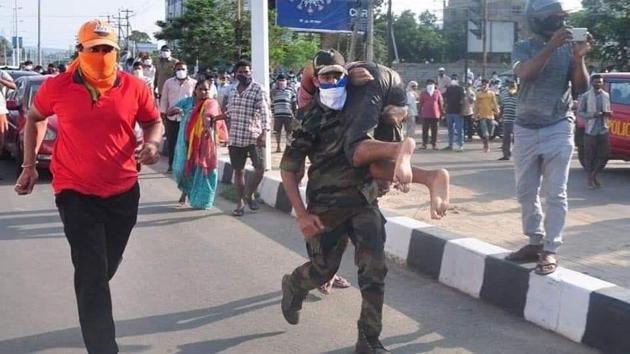
According to P Prasada Rao, an environmental engineer with the Andhra Pradesh Pollution Control Board in the regional office at Visakhapatnam, Styrene could cause skin-related problems like rashes and burning of eyes if inhaled in lesser quantities.
But if it would affect the brain if inhaled in high quantities and people fall into an unconscious state. It has a carcinogenic effect on such people in the long run. “We are right now assessing as to what extent this chemical has entered the air and its impact on the people,” Rao said.
Styrene is a common chemical used in the plastic industry. “If the quantity of consumption is very high and the proximity is intense, then it can be lethal,” S N Pradhan, Director General of the National Disaster Response Force said.
State industries minister P Gautam Reddy also admitted that Styrene has carcinogenic property. “I was told it is in a liquid form stored in the storage tank of the plant for the last 45 days and at 20 degrees Celsius and above, it would convert into gaseous form. Apparently, the gas leaked out of the tank due to opening of the lid. The technicians of the plant closed the lid within a short time but the damage was already done,” he said.
{{/usCountry}}State industries minister P Gautam Reddy also admitted that Styrene has carcinogenic property. “I was told it is in a liquid form stored in the storage tank of the plant for the last 45 days and at 20 degrees Celsius and above, it would convert into gaseous form. Apparently, the gas leaked out of the tank due to opening of the lid. The technicians of the plant closed the lid within a short time but the damage was already done,” he said.
{{/usCountry}}An official in the industries department who preferred anonymity said preliminary studies revealed that the company authorities had apparently not maintained the stipulated temperature during the lockdown period and subsequently while taking up the maintenance work before reopening.
It is learnt as many as 25 workers were involved in the maintenance work at the chemical tanks. On the night shift, they also kept the mandatory antidote in the form of water spray ready. Forensic experts are assessing if the workers did not use the antidote or if it did not work.
There was 2,000 metric tons of the gas (liquid) in the tank that created the problem. Another tank has 3,000 metric tons of the gas stored.
Noted environmentalist and former Union energy secretary E A S Sarma wondered how the state pollution control board had granted permission for expansion of the plant in 2019 without obtaining approvals from the Centre.
He also questioned how the state government had granted a No Objection Certificate to resume the plant operations though it was not an “essential” industry. By no stretch of imagination, a plastic manufacturing unit like this can be called essential, he pointed out.
LG Polymers, a group of company of South Korea-based LG Chem, originally began as Hindustan Polymers in 1961 at Visakhapatnam. Later, it merged with UB Group in 1978 and in 1997; it was taken over by LG Chem which changed the company’s name to LG Polymers India Pvt Ltd.