The Supreme Court on Thursday ruled by a majority that sub-classification within the scheduled castes (SC) and scheduled tribes (ST) is permissible. It declared that SCs cannot be considered homogenous classes and that it would be permissible for the Centre and states to earmark most backward classes within the reserved category of SC/STs to enable them frame appropriate policies on sub-classification and rationalisation of reserved seats.
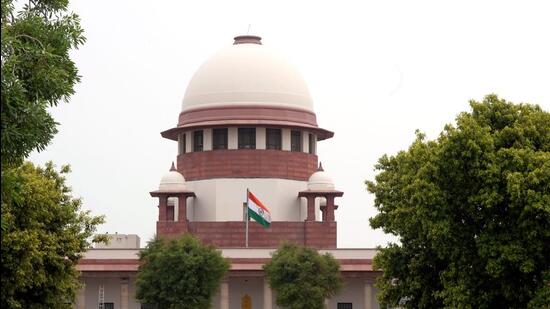
The majority judgment was delivered by Chief Justice of India Dhananjaya Y Chandrachud, and justices BR Gavai, Vikram Nath, Pankaj Mithal, Manoj Misra, and Satish Chandra Sharma. Justice Bela M Trivedi dissented.
The majority ruling overruled the 2004 judgment by a five-judge bench in EV Chinnaiah Vs State of Andhra Pradesh, which had held that sub-classification was not permissible because SC/STs form homogenous classes. It held that the principles of social equality would entitle the state to provide preferential treatment to the most backward classes among the SCs.
According to the majority, decisions on sub-classification would be subject to judicial review, and the states will have to justify their decision based on empirical evidence regarding the extent of backwardness. The matter was referred to the larger bench by a five-judge bench in 2020, observing that the 2004 judgment in the Chinnaiah case may require reconsideration.
The 2004 judgment by the apex court became the basis for the Punjab & Haryana high court to quash a 1975 notification of the Punjab government, dividing its existing 25% reservation for SCs into two categories. Half of these seats were to be offered to Balmikis and Mazhabi Sikhs while the rest for the remaining groups within the SC category. This notification was nixed by the high court in 2006.
{{/usCountry}}The 2004 judgment by the apex court became the basis for the Punjab & Haryana high court to quash a 1975 notification of the Punjab government, dividing its existing 25% reservation for SCs into two categories. Half of these seats were to be offered to Balmikis and Mazhabi Sikhs while the rest for the remaining groups within the SC category. This notification was nixed by the high court in 2006.
{{/usCountry}}Later, the Punjab government passed the Punjab Scheduled Caste and Backward Classes (Reservation in Services) Act, 2006. It introduced “first preference” reservation for the Balmikis and Mazhabi Sikhs, laying down that 50% of reserved seats would be offered first to these two communities before all other SC groups. But in 2010, the high court struck down this provision of the act based on the decision in the Chinnaiah case, leading to an appeal by the state government in the top court.
Finally, in 2020, a five-judge bench referred the matter to a larger bench, noting that the 2004 judgment by the coordinate bench requires to be revisited. While doing so, this bench said: “Reservation was not contemplated for all the time by the framers of the Constitution. On the one hand, there is no exclusion of those who have come up, on the other hand, if subclassification is denied, it would defeat the right to equality by treating unequal as equal.”