The Sudarshan Chakra mentioned by the Prime Minister in his Independence Day speech is a complex combination of long-range radars, surveillance inputs from satellites, aircraft and UAVs, and long-range interceptor missiles that can neutralise any aerial threat coming towards India from its adversaries, according to people familiar with the matter. Simply, it is a multi-layered air defence network that not only protects Indian skies from enemy missiles, drones and rockets but also simultaneously retaliates to the attack and takes the war to the adversary.
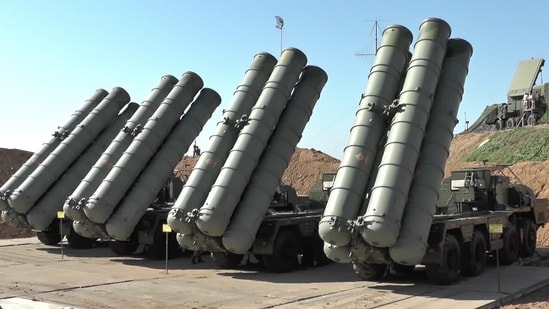
Conceptualised by top national security planners and missile scientists, Sudarshan Chakra is an overarching security architecture that has come into fruition after Pakistan launched nearly 1000 projectiles, including ballistic missiles and armed drones, at India during Operation Sindoor . While some Pakistani missiles and drones were intercepted by anti-aircraft batteries and surface-to-air missiles, others were deflected from the main target by jamming the enemy's command and control network. The need for the Sudarshan Chakra comes at a time when Israel was able to neutralise 498 out of 500 ballistic missiles fired by Iran this year using the Iron Dome system.
Given that Pakistan has developed a 2200 km range Ababeel surface-to-surface medium-range ballistic missile with MIRV (multiple independently targetable reentry vehicles) warheads, India needs an overarching system that neutralises all aerial threats—from Kamikaze drones to ballistic missiles—in order to protect its large landmass and civilian population.
PM Modi in his Independence Day speech today said: “India is launching Mission Sudarshan Chakra to create a powerful weapon system to thwart and attempt by enemies to attack us…..all public places will be covered by an expanded nationwide security shield by 2035.”
{{/usCountry}}PM Modi in his Independence Day speech today said: “India is launching Mission Sudarshan Chakra to create a powerful weapon system to thwart and attempt by enemies to attack us…..all public places will be covered by an expanded nationwide security shield by 2035.”
{{/usCountry}}While the Cabinet Committee on Security has already cleared DRDO’s Project Kusha which is aimed at extended range interceptors for Indian Air Force and Navy by 2030, Mission Sudarshan Chakra is an all encompassing security structure where control centres will receive inputs from multiple sources including satellites and airborne early warning systems and long range radars to identify incoming threats and then take a decision to either deflecting the incoming missile outside population centers or use precise interceptors to neutralize them before MIRV warheads are launched or before re-entry of the missile into atmosphere, the people cited above added.
While India has built significant advanced radar capability, it needs to develop multiple range interceptors of different range and warhead weight to tackle missiles coming at different ranges and different heights. In this context, it is important for national security planners to study the Chinese missile systems as the majority of Pakistani missile arsenal is either from China or from Turkey, the people pointed out. During Operation Sindoor, Pakistan fired Fatah I and II missiles at India but these were intercepted or deflected; it also fired Chinese CM 400 AKG missiles from JF-17 fighters at military targets but these were neutralized. This apart, Pakistan used Turkish Yiha drones with multiple payloads but all were neutralized by Indian air defence systems.
According to top national security planners, Mission Sudarshan Chakra is not limited to defence but also has an offensive posture. India is developing short, medium and long range ballistic and cruise missiles such as Pralay and Nirbhay to target the enemy with precision. In this context, the Indian Navy will need long range missiles to target enemy ships from sea as well as land. Mission Sudarshan will be India’s answer to all aerial threats with massive retaliation capability which bypass enemy defences and radars.