
 E-Paper



Supreme Court affirms right of transgender persons in heterosexual relationships to marry
All five judges in the Constitution bench agreed on Tuesday that transgender people in heterosexual relationships enjoyed the right to marry under existing laws governing marital unions, including personal laws.

 Prefer HTon Google


All five judges in the Constitution bench agreed on Tuesday that transgender people in heterosexual relationships enjoyed the right to marry under existing laws governing marital unions, including personal laws.
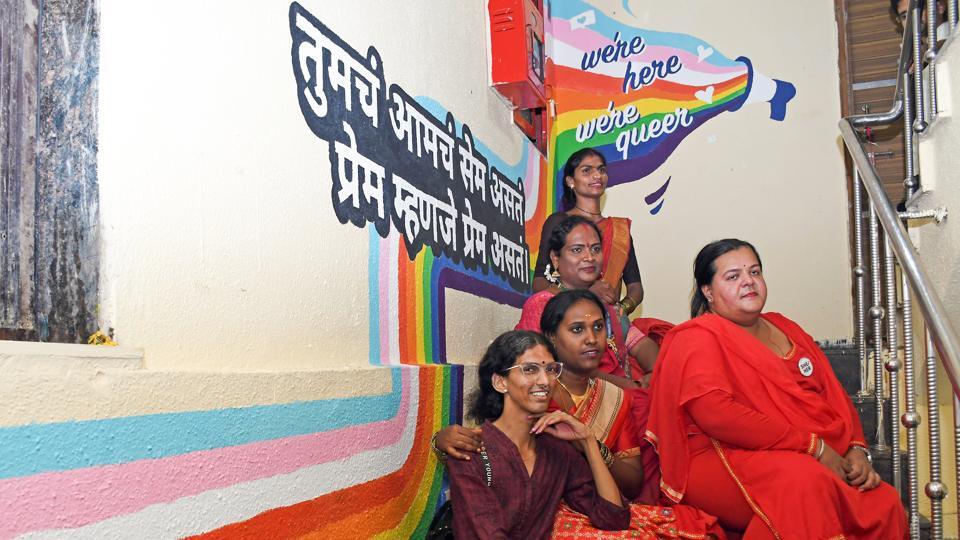
“Transgender persons in heterosexual relationships have the right to marry under existing law including personal laws which regulate marriage. Intersex persons who identify as either male or female have the right to marry under existing law including personal laws which regulate marriage,” said Chief Justice of India (CJI) Dhananjaya Y Chandrachud.
If a transgender person is in a heterosexual relationship and wishes to marry their partner within the conspectus of the existing legal regime, justice Chandrachud said, such a marriage would be recognised by the laws governing marriage.
“The terms “bride” and “bridegroom,” “wife” and “husband,” “male” and “female,” and “man” and “woman” in the statutes which regulate marriage cannot be read as governing marriages between cisgender men and cisgender women alone. Nothing in these statutes indicates that their intended application is solely to cisgender men and cisgender women. The plain meaning of the gendered terms used in these statutes indicates transgender persons in heterosexual relationships fall within their fold,” he added.
Justice Bhat concurred with the CJI. “We agree with the conclusion that transgender persons in heterosexual relations have the right to marry under existing laws, including in personal laws regulating marriage. Transgender persons in heterosexual relationships have the freedom and entitlement to marry under the existing statutory provisions,” his judgment added.
Both judges referred to the 2019 verdict in Arun Kumar v. Inspector General of Registration, where the Madras high court recognised a trans woman as a “bride” within the meaning of the Hindu Marriage Act 1955 and prohibited forced surgery for intersex infants and children.
Transgender rights in India flow mainly from the Supreme Court’s 2014 landmark judgement in Nalsa vs Union of India that affirmed the rights of transpersons, and the 2019 transgender persons (protection of rights) act. These verdicts have enabled many transgender people to come to the judiciary to file cases against alleged discrimination in employment and education.
The court’s decision on the right of transgender people to marry sparked mixed responses.
“Today’s judgement is an abdication by the Supreme Court of India of the LBGTQ+ people of India and their right to marry. While we saw some positive gains in terms of recognition of trans persons in heterosexual unions to get married under the Special Marriage Act or existing personal laws, it will be a huge challenge to see that implemented on the ground,” said Zainab Patel, a trans rights activist and petitioner in the case.
Other activists pointed to practical difficulties that transgender people face while engaging with authorities for even day-to-day tasks. “We face huge trouble with documentation, with names, and with officials who often demand medical certificates from doctors. Plus, there is always the threat of violence from families and the police. These problems remain unaddressed,” said Shaman Gupta, the founder of Delhi-based organisation Tweet Foundation.
Gupta said that the community was disappointed that the court had taken a binarised view of transgender rights, and that most of the details entailed in the judgment were already available with the Nalsa verdict and the 2019 act.



