The Supreme Court collegium on Tuesday recommended Andhra Pradesh high court chief justice Prashant Kumar Mishra and senior advocate KV Viswanathan for appointment as judges in the top court.
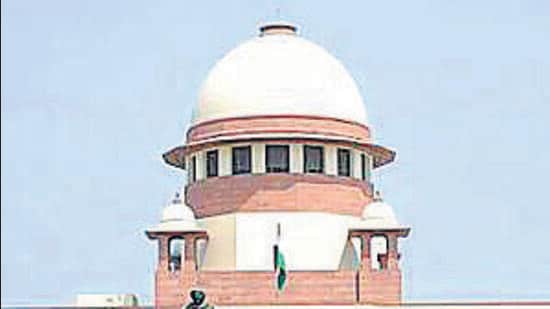
If the Union government clears the recommendations, Viswanathan will be in line to take over as the Chief Justice of India (CJI) in August 2030 and will have a tenure till May 25, 2031. Viswanathan will succeed justice JB Pardiwala to take the helm and will be only the fourth lawyer to head the judiciary.
The Supreme Court, which has a sanctioned strength of 34 judges, is short of two. Both these judges - Dinesh Maheshwari and MR Shah - retired in the past one week. By the second week of July, four more vacancies will arise in the top court.
The collegium is headed by CJI Dhananjaya Y Chandrachud and comprises justices Sanjay Kishan Kaul, KM Joseph, Ajay Rastogi and Sanjiv Khanna. In a resolution published on Tuesday, the collegium picked Viswanathan, noting that at present, there is only one member from the bar directly appointed to the Supreme Court Bench - justice PS Narasimha.
“The appointment of Shri KV Viswanathan will enhance the representation to the Bar in the composition of the Supreme Court. Shri Viswanathan is a distinguished member of the Bar of the Supreme Court. His wide experience and profound knowledge will provide a significant value addition to the Supreme Court,” said the resolution.
Viswanathan has a sound understanding of law and is known in the legal fraternity for his integrity and as an upright senior member of the bar, the collegium added.
{{/usCountry}}Viswanathan has a sound understanding of law and is known in the legal fraternity for his integrity and as an upright senior member of the bar, the collegium added.
{{/usCountry}}“Shri Viswanathan has appeared in a wide range of cases on diverse subjects including Constitutional law, criminal law, commercial law, the law of Insolvency, and Arbitration. His stature as an eminent member of the Bar has been recognised by the Supreme Court in numerous cases where he was appointed to assist the Court as amicus curiae,” it said.
Viswanathan is eminently suitable for being appointed as a judge of the Supreme Court and his inclusion will enhance the representation to the bar in the composition of the Supreme Court, according to the resolution.
“Viswanathan was recently appointed as an amicus curiae to assist the apex court in a batch of petitions challenging the extension given to Sanjay Kumar Mishra as the director of the Enforcement Directorate. The senior counsel had opposed Mishra’s extension, arguing piecemeal extensions will damage the independence and integrity of ED.’
About justice Mishra, the collegium said he was found to be “more deserving and suitable in all respects for being appointed as a judge of the Supreme Court of India” following a careful evaluation of the merit, integrity and competence of eligible chief justices and senior judges of high courts.
Justice Mishra has served as a high court judge for over 13 years, read the resolution, adding there is no representation of the Chhattisgarh high court in the present composition of the Supreme Court.
“Besides according representation to the State of Chhattisgarh, the appointment of justice Prashant Kumar Mishra will provide a value addition in terms of his acquired knowledge and experience. Justice Mishra is a judge with integrity,” it further said.
The collegium also addressed the point that the present chief justice of the Allahabad high court, Pritinker Diwaker, is also from Chhattisgarh and ranked senior to justice Mishra. “However, having considered all relevant factors, the Collegium is of the view that justice Prashant Kumar Mishra is worthy of appointment as a judge of the Supreme Court,” underlined the resolution.
While the appointment of two Supreme Court judges in February had taken the top court to its full working strength of 34 judges for the first time since May 2022, a bundle of recommendations and reiterations for the appointment and transfer of high court judges have remained pending with the Centre for several months. For instance, the transfer of the acting chief justice of the Madras high court, T Raja, is still to be notified. The collegium first proposed his transfer on November 16, 2022, and also reiterated it later.
Appointments of advocates Saurabh Kirpal, R John Sathyan and Somasekhar Sundaresan as judges in the high courts of Delhi, Madras and Bombay, respectively, have also been in limbo for more than six months each despite reiterations by the collegium.
The government, on its part, wrote to the CJI on January 6, underlining that the government is an “important stakeholder in the process of appointment of judges in the Supreme Court and high courts” and therefore, its views should also find a place in preparation for the panel of names who are eligible for being appointed as judges of the constitutional courts. The CJI is yet to respond to this, according to people aware of the matter who declined to be named.