The Supreme Court on Thursday expedited the disposal of criminal cases against the members of legislative assemblies and Parliament, directing high courts across the country to register cases on their own motion to monitor such trials and priorities those cases which entail death sentence or life imprisonment as maximum punishment. A guilty verdict in murder cases leads to either death penalty or life term for the convicts.
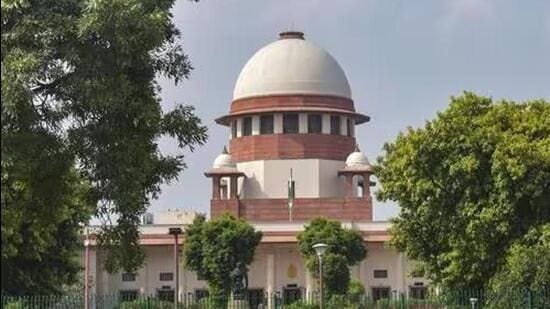
Even as the bench, headed by Chief Justice of India Dhananjaya Y Chandrachud, noted that no uniform directives can be issued setting down a specific timeline for disposal of criminal trials against MPs and MLAs, it said that chief justices of all high courts shall register suo motu proceedings for effective monitoring and disposal of trials pending within their jurisdiction.
Also Read: Supreme Court calls for norms on seizure of devices by probe agencies
“The special Bench may list the matter at regular intervals as felt necessary. The high court chief justices may issue such orders and directions as necessary for expeditious and effective disposal of the cases,” said the bench, also comprising justices PS Narasimha and Manoj Misra, adding the special bench can either be led by HC chief justices of judges nominated by them.
It further said that after the cases that fetch a death penalty or life term, those entailing a jail term of more than five years should be prioritised.
{{/usCountry}}It further said that after the cases that fetch a death penalty or life term, those entailing a jail term of more than five years should be prioritised.
{{/usCountry}}The court added that high courts will also list those cases where trials have been stayed and all attempts will be made to expedite such trials.
Apart from ensuring sufficient infrastructural facilities for trial courts to take up such cases, the bench directed, the high court websites will create an independent tab to make public the year of filing of such cases, their status and other relevant details.
The court was hearing a petition filed by advocate Ashwini Upadhyay in 2016, seeking suitable directives for fast-tracking criminal trials against sitting and former Members of Parliament and Assemblies.
Senior counsel Vijay Hansaria, assisting the court as amicus curiae in Upadhyay’s plea, had in his report in September underlined the need for expeditious disposal of trials pending against MLAs/MPs as there are 5,175 cases pending across various trial courts in the country. Of these, 2116 cases, translating to around 40% of such cases, were stated to be pending for more than five years, with the largest cases being reported from Uttar Pradesh (1,377), followed by Bihar (546) and Maharashtra (482).
A report by an amicus is submitted to the court as his or her recommendation, based on which a court may ask for a response from the government on one or more concerns highlighted in it. The court exercises its discretion regarding accepting the report in full or partly, or seeking changes in the proposed suggestions.
By a judgment in a separate case in 2014, the top court had ordered that trials against elected lawmakers be completed within a year of charges being framed. A court frames charges once the charge sheet is submitted. After hearing the prosecution and the accused, it decides on the counts on which the accused is to be tried.
In its 2014 judgment, the apex court directed that trial courts would have to explain to the chief justices of their high courts if proceedings are not completed within a year of framing charges, ordering day-to-day hearings in such cases. The chief justice can extend the period of trial if satisfied with the reason given by the trial judge.