It is an act of “intellectual dishonesty” not to grant bail in suitable cases, the Supreme Court observed on Monday as it declined to grant urgent hearing to a judicial officer from Uttar Pradesh who was sent for training at the state judicial academy for denying bail, an apparent breach of the top court’s guidelines.
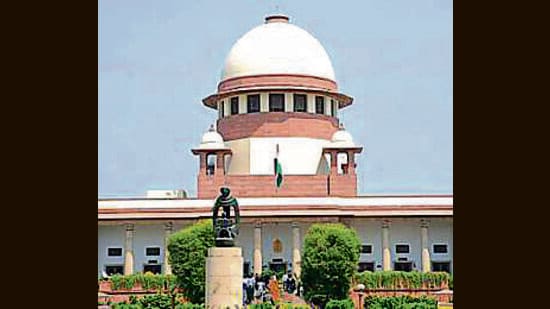
“If dishonesty in granting bail is a problem, it is also a form of dishonesty not to grant bail in cases where they are due...it is intellectual dishonesty,” said a bench led by justice Sanjay Kishan Kaul after the judicial officer from Lucknow requested for the court’s indulgence.
Also read: Did not probe Adani since ’16, Sebi tells SC; row erupts
On May 2, the bench, which also comprised justice Ahsanuddin Amanullah, had asked the Allahabad high court to send the Lucknow judge “for upgradation of his skills in a judicial academy” as it monitored a series of past orders aimed at curbing the tendency of trial courts to routinely order arrests of accused and lessening the burden of litigation in courts that follows as a result of their arrest. Most of these orders were passed on a batch of cases titled Satender Kumar Antil.
On Monday, senior advocate PS Patwalia, appearing for the judicial officer, presented before the bench the biggest predicament of the Lucknow judge.
{{/usCountry}}On Monday, senior advocate PS Patwalia, appearing for the judicial officer, presented before the bench the biggest predicament of the Lucknow judge.
{{/usCountry}}“The judicial officer is set to retire on June 30, and he is in the zone of consideration for being appointed as a judge in the Allahabad high court,” Patwalia told the bench. The senior counsel added that the judicial officer has more than three decades of service behind him. “He was appointed in 1990,” emphasised Patwalia.
The bench was quick to retort: “If he has been a judicial officer for 30 years, all the more reason why he should have been careful and understood the orders of this court...It will be useful for him if he goes to the academy for a few days.”
Patwalia tried to persuade the bench that the judicial officer did rely on the Supreme Court’s string of directives for the trial courts to grant bail to the accused, who cooperated during investigation and were not arrested once during the probe, when they are summoned at the time of filing of charge sheets. In a series of orders passed since last year, the apex court also held that even regular bail should be granted to accused who fulfil the twin criteria listed above and seek regular bail on being summoned.
Even as Patwalia read out the order passed by the Lucknow judge and repeatedly pressed that he could be considered for elevation to the high court, the bench was not moved. “The approach must change. If they come to the high court, they will do the same thing. We passed several orders that the accused should not be arrested if they were not arrested during the investigation. They should be summoned at the time of consideration of the charge sheet and be granted bail. If they do not appear despite summons, bailable warrant should be issued initially and then a non-bailable warrant can be issued,” it said.
The court added that the seniority of the judicial officer in question is an additional reason why it was not inclined to take a lenient view. “We cannot give him a benefit of doubt. We cannot give him such a long rope...Also, we have not said in our order that he should not be considered for the high court,” the bench further observed.
It told Patwalia that the judicial officer’s application will come up in due course on August 8 when the main matter is listed and that the court cannot grant him an urgent hearing.
The May 2 order of the bench came after it was shown an order of the Lucknow sessions judge, passed on April 26, in which he rejected the anticipatory bail pleas of several accused in a matrimonial dispute despite being informed about the top court’s judgment. The accused parents in the case were not arrested throughout the investigation. The Lucknow judge cited a specious ground saying “ample safeguards are available to applicants” while denying them anticipatory bail.
Also read: ‘Can be contempt’: AAP govt to SC on attempt to block secy transfer after ruling
On that day, senior advocate Sidharth Luthra, assisting the court as amicus curiae, showed a similar instance of non-compliance by a Ghaziabad sessions judge in an anti-corruption case. The accused was a cancer patient who was denied anticipatory bail. The bench asked the Allahabad high court to “look into” the order passed by this judicial officer too.
“The judgment of this court, including the one in Satender Kumar Antil’s case, is the law of the land. There is no question of anyone violating the principles laid down. Suffice for us to say that wherever this judgment is applicable, its principles must be followed,” the court had directed on May 2.
As Luthra pointed out that scores of violations were being reported from courts in Uttar Pradesh, the bench on that day directed that its order should be placed before the chief justice of the Allahabad high court “to ensure there is sufficient dissemination of information about this judgment”.
The top court also asked the Allahabad high court to inform it whether the high court has identified if some judicial officers were still frequently passing orders not in conformity with the Antil judgment and whether any of such officers have been sent to judicial academies for further upgradation of their skills.