The Supreme Court on Tuesday rejected the request by traders’ associations to extend the period of loan moratorium and allow sector-specific reliefs. The top court also dismissed petitions seeking a complete waiver of interest during the moratorium period of March 2020, when a lockdown was imposed in view of the coronavirus pandemic, till August that year.
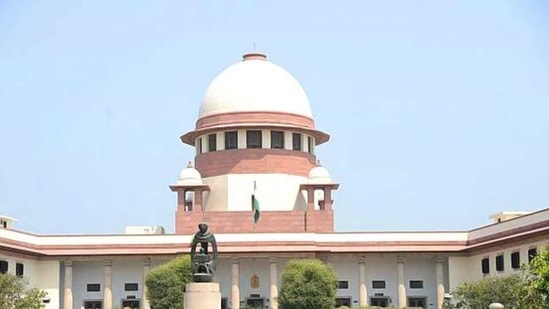
A bench of justice Ashok Bhushan, justice RS Reddy and justice MR Shah held that courts are not experts and such decisions lie in the realm of economic policy, in which interference by courts should be rarely made.
The top court’s ruling came on a batch of pleas filed by corporate bodies, business associations, and individuals demanding an extension of the moratorium beyond August 2020. The Centre, on the court’s insistence, had earlier agreed to waive compound interest on loans for six categories of borrowers who took loans of up to ₹2 crore. The business associations had demanded an extension of this benefit to borrowers who secured loans beyond ₹2 crore.
The requests were opposed by the Centre and the Reserve Bank of India (RBI). Solicitor General Tushar Mehta, appearing for the Centre, and senior advocate V Giri representing RBI, had argued that compound interest on loans of up to ₹2 crore was waived keeping in mind fiscal constraints and viability of banks.
On waiver of compound interest, the Supreme Court, however, on Tuesday said that it found no rationale behind the government’s decision to waive interest for the six categories. The bench clarified that any penal interest charged by banks for non-payment of loan during moratorium shall be refundable.
{{/usCountry}}On waiver of compound interest, the Supreme Court, however, on Tuesday said that it found no rationale behind the government’s decision to waive interest for the six categories. The bench clarified that any penal interest charged by banks for non-payment of loan during moratorium shall be refundable.
{{/usCountry}}The top court stated that the coronavirus pandemic affected the government as well and yet the Centre and Reserve Bank of India (RBI) came out with schemes and packages to reduce stress on businesses, adding that grant of any further relief would have far-reaching consequences on the economy.
The three-judge bench was of the firm view that decisions on economic policy matters should be left to the government and that courts should not interfere even if a second view is possible.
The petitioners included big borrowers like power producers, real estate developers, textile mill owners, knitwear association, jewellery manufacturing association, contract carriage operators, hotel and restaurant associations of states, financial technical institutions, and shopping centre associations who had obtained loans up to or above ₹1,500 crore.