
 E-Paper



Supreme Court moves 27 Manipur cases to Assam courts
The court said that the production, remand, and custody of accused will be allowed online due to distance and security reasons.

 Prefer HTon Google


The Supreme Court on Friday shifted 27 cases being investigated by the Central Bureau of Investigation (CBI) in connection with the ethnic strife in Manipur to a set of designated judges in Assam to ensure protection of victims and witnesses, besides facilitating fair and quick trials.
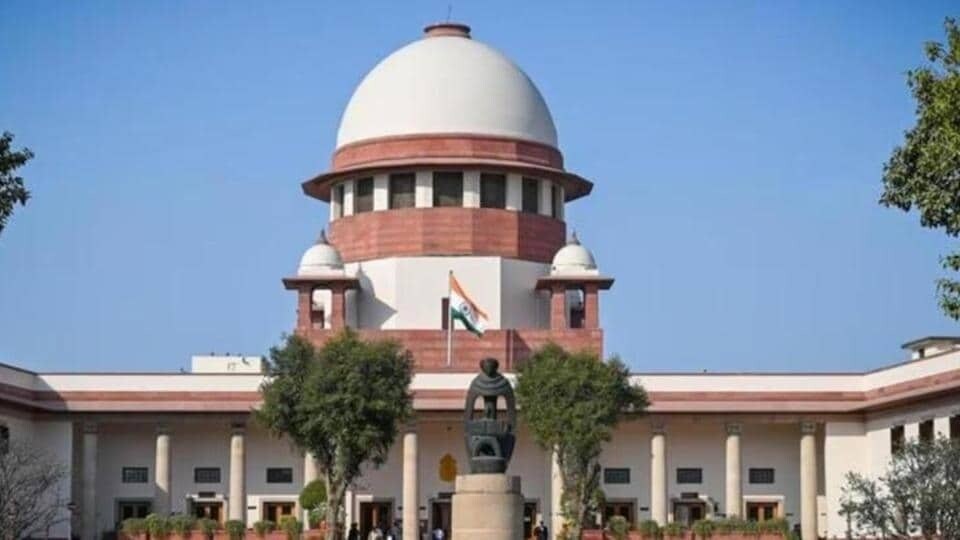
A bench, led by Chief Justice of India (CJI) Dhananjaya Y Chandrachud, accepted the request made by solicitor general (SG) Tushar Mehta to shift the CBI cases to magisterial and sessions courts in Assam in view of the prevailing situation in Manipur and the possibility of aspersions against the trial judges in Manipur who may belong to one or the other community.
Also read: No division of Manipur, in touch with Kuki MLAs: CM N Biren Singh
Asking the chief justice of the Guwahati high court to nominate as many trial judges as deemed suitable to take up the 27 CBI cases, the bench, which also comprised justices JB Pardiwala and Manoj Misra, pointed out that the directions are being passed “in view of the overall environment in Manipur and to ensure a fair process of the justice delivery system”.
The court said that the production, remand and custody of accused will be allowed in online mode due to distance and security reasons, while their test identification parade (TIP) will be done in Manipur in the presence of a local magistrate. Applications such as those seeking search and arrest warrants can be permitted to be made by investigating officers in the online mode, said the bench, adding that the high court chief justice may preferably pick judges who are conversant with one or more languages spoken in Manipur.
The bench clarified that the statements of the victims will be recorded in Manipur or wherever they are presently residing, in the presence of a local magistrate.
“This is in the interest of the victims and the survivors. We are not asking the government to pick judges, but the Guwahati high court chief justice will do it. Also, we are not going to ask the survivors to travel anywhere. They will give their evidence from wherever they are residing. We are very clear neither the victims nor the witnesses will be made to travel,” the bench remarked, as senior advocates Indira Jaising and Colin Gonsalves, representing some of the petitioners in the matter, expressed reservations against shifting the cases to Assam.
While Jaising questioned why Assam has been preferred over other states, Gonsalves pressed for continuation of trial in Manipur.
The bench, in response, asked the lawyers to acknowledge the “reality of the ground situation” and let all procedural directions that go in preparation of the trials be carried out smoothly.
“If you genuinely want the trials to take place, some provisions will have to be made. These trials otherwise will not take place for the next several months if you insist on holding them in Manipur... There have been victims in the valley and victims in the hills of Manipur. People belonging to community A in hills as well as community B in valley have suffered. We are not on who suffered more. But the fact is both suffered. We are on ensuring fair trial. There are certain pre-trial directions required immediately,” it added.
The bench also told the lawyers that its direction on shifting the cases to Assam is open to be reviewed in future as and when the situation becomes conducive for the trials to take place in Manipur. “We will not cast motives on either side. We will pass an order that is judicially balanced and fair,” it said.
The court recorded an assurance of the SG that proper internet connectivity will be made available to facilitate the implementation of the directions being passed by the bench. “The above directions shall not preclude any victim or witness who desires to appear in person,” added the court order.
Ethnic clashes between the tribal Kukis and dominant Meiteis first erupted on May 3 during a protest against a court-ordered tweak to the state’s reservation matrix, granting Scheduled Tribe status to the latter. The violence quickly engulfed the state where ethnic fault lines run deep, displacing tens of thousands of people who fled burning homes and neighbourhoods into jungles, often across state borders. At least 155 people have been killed in the violence.
Hearing a bundle of petitions that have sought an array of protective and rehabilitative orders from the top court, the bench on Friday was informed that 27 cases stand transferred to CBI. Of these, 20 cases relate to the offences of rape, molestation and murder of women. One of these cases pertains to a horrific 30-second video clip of two Kuki women being stripped and paraded naked by a mob that prompted the apex court to take suo motu cognisance, and the subsequent hand over of the case to CBI by the Centre on July 28. Among the other seven cases, three are for looting weapons, two for murder, and one case each for rioting and conspiracy.
During the hearing, the bench also issued certain directions on infrastructural facilities and financial allocation for the high-powered committee comprising three retired women high court judges that the court appointed on August 7 to examine the efficacy of rescue, relief and rehabilitation measures in the northeastern state.
Mehta, on his part, said that the Union home secretary had a meeting with the panel two days ago and that the central government would ensure all suitable amenities shall be provided to the committee, which comprises justices Gita Mittal (former chief justice of the Jammu & Kashmir high court), Shalini P Joshi (former Bombay high court judge) and Asha Menon (former Delhi high court judge).
Last week, the panel submitted three reports, emphasising on the need to address the plight of the victims of the ethnic clashes in Manipur who have lost identity proofs and are in dire need of adequate compensation to rebuild their lives.



