
 E-Paper



SC to decide today whether to refer Article 370 issue to larger bench
At least 23 petitions have been filed in the Supreme Court challenging the central government’s decision to scrap Article 370 and strip Jammu and Kashmir of its special status.

 Prefer HTon Google


The Supreme Court will decide on Monday whether or not the petitions challenging the abrogation of Article 370 of the Constitution, that granted special privileges to the erstwhile state of Jammu and Kashmir, should be heard by a larger seven-judge bench.
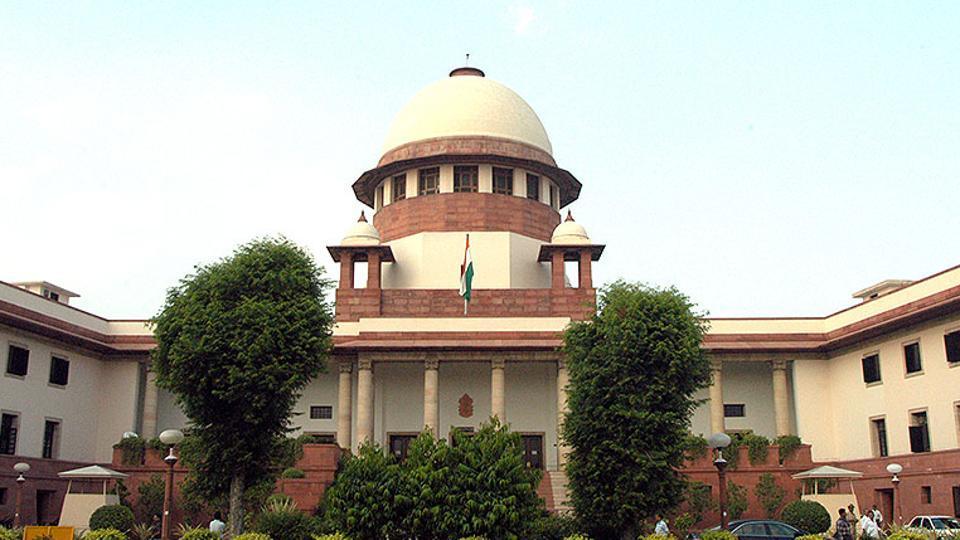
A five-judge Constitution bench, presided by Justice N V Ramana and comprising justices Sanjay Kishan Kaul, R Subhash Reddy, BR Gavai and Surya Kant, had reserved its order on reference of the case to a larger bench on January 23.
The central government had scrapped Article 370 in August last year, which ended special provisions accorded to Jammu and Kashmir and bifurcated it into two union territories - Jammu and Kashmir with a legislative assembly and Ladakh without one.
At least 23 petitions have been filed in the Supreme Court challenging the central government’s decision.
Senior counsel Dinesh Dwivedi, who was appearing for an intervenor in the case, had pointed out that two earlier Supreme Court judgments, Prem Nath Kaul (1959) and Sampat Prakash (1968), are at loggerheads with regard to the scope and intent of Article 370. Since both these judgments were delivered by benches of five judges, Dwivedi had asked the court to refer the issue to a bench of seven or more judges.
In Sampat Prakash judgement, the Supreme Court had held that Article 370 will cease to be operative only if the President issues a direction to that effect on a recommendation made by the Constituent Assembly of Jammu & Kashmir.
In Prem Nath Kaul verdict, the Supreme Court ruled that plenary powers of the ruler of Kashmir were not limited by Article 370. The temporary provisions of Article 370, the court ruled, were based on the assumption that the ultimate relationship between India and Jammu & Kashmir would be finally determined by the Constituent Assembly of Jammu & Kashmir.
The central government and the Union territory of Jammu & Kashmir opposed the reference and submitted that there was no conflict between the two judgments. The Centre has argued that the sovereignty of J&K enabled by Article 370 was temporary.
Besides challenge to the abrogation of Article 370, a slew of petitions were also filed in Supreme Court challenging the restrictions in the Kashmir valley which the petitioners had argued were in violation of their fundamental right to speech and expression and the right to move freely under Article 19 of the Constitution.
Those petitions were heard separately by three-judge bench of the Supreme Court which on January 10 held that restrictive orders suspending internet, telecommunication and movement should be published by the government indicating the specific reasons for imposing the restrictions and it should be proportional to the concerns necessitating such suspension.
A communications blackout and a lockdown were imposed in the region in August, 2019, when hundreds of politicians and activists were detained to prevent protests against the move. Most of the restrictions have since been eased even as access to the Internet remains restricted and three former chief ministers are among top politicians under continued detention.


