Our country is struggling with the coronavirus these days. Since the lockdown was announced on 25 March, most government offices have remained closed for a month, markets are shut and business activity has come to a standstill. Since April 20, the lockdown has been relaxed in the country’s rural areas to allow all farm-related activity to resume. Also, trucks and other goods vehicles have also been exempted. It is hoped that in the coming time, with the support of people, the country will be able to overcome the challenge posed by coronavirus on its own strength. At this time, our country will take an important step towards solving a very serious problem that made our rural population suffer for all these years. Today, the Prime Minister of the country will inaugurate the “SVAMITVA” project, which is one of the most important steps towards changing the future of rural areas.
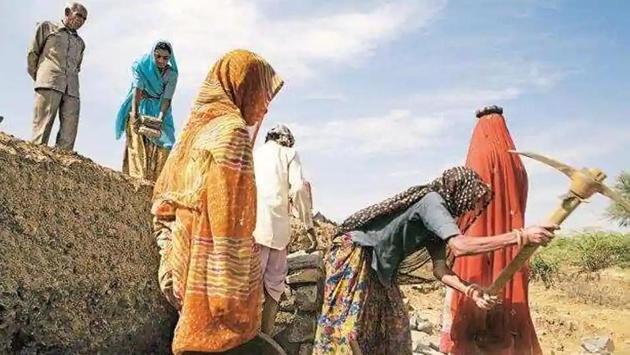
Since the beginning, the villages of India have been the backbone of its economy, because “Malguzari”, that is, land revenue was the main source of the State income for a long time. In the sixteenth century, Sher Shah Suri started the culture of settling the agricultural land with farmers to recover Malguzari systematically. Todarmal established a well-organized “Malguzari” system during Akbar’s rule. When the British took over the reins of governance here, they inherited a land record system established over centuries. Since the Britishers were driven by a single objective, to collect as much land revenue from tenants as possible, they established the Zamindari system in many parts of the country. Elsewhere, they established the ryotwari system. But where as ownership of the cultivated land and their measurement maps were prepared, they did not make any effort to measure the “village abadi“ area nor did they try to determine the ownership records of residents in the residential portion of the village. Clearly, they did not do so because there was no land revenue to be collected from the populated area. Unfortunately, even after Independence, no effort was made to either demarcate the abadi land or create ownership rights there.
Due to the absence of any kind of ownership records or demarcation of abadi land, whenever a dispute arose about possession, drainage, or boundary, the parties had to approach the civil court to settle these differences. These civil disputes, according to a survey conducted recently, takes an average of about 20 years to be settled. This leads to the tremendous harassment by the parties involved in such cases.
{{/usCountry}}Due to the absence of any kind of ownership records or demarcation of abadi land, whenever a dispute arose about possession, drainage, or boundary, the parties had to approach the civil court to settle these differences. These civil disputes, according to a survey conducted recently, takes an average of about 20 years to be settled. This leads to the tremendous harassment by the parties involved in such cases.
{{/usCountry}}Not only this, according to experts, out of the total number of cases pending in the civil courts of our country, at least 40 percent of the cases are related to the disputes concerning the abadi land, which will run in crores.
This is the backdrop against which the Panchayati Raj department of the central government initiated the SVAMITVA project. The exercise to demarcate land of all the people living within the rural abadi area and determine their ownership holds the potential of changing the dynamics of rural areas. This one step will help settle crores of cases pending in our courts for years. And prevent new ones from coming up. The records related to the ownership of the land will also help the rural population in many ways and promote the rural economy
The objective of this “SVAMITVA” scheme is to provide an integrated asset verification solution for rural India. Under this scheme, the land of the residents in rural abadi areas will be demarcated using the latest survey methods including drones in collaboration with the Ministry of Panchayati Raj, State Revenue Departments and Survey of India.
This will also enable village households to use their homes as a financial asset for loans and other financial benefits as well as provide a record of the property rights of rural areas. The Survey of India, under this project, will survey the entire abadi area in every village by use of drones and other advanced technology to prepare a database of the entire site. The local representatives of the revenue department like the patwari, revenue inspectors etc. and representatives of other allied departments will prepare a record of the ownership of the people in the presence of the inhabitants. Along with this, a detailed arrangement has been made to settle disputes, if any, on the spot. The methodology of mapping, and preparation of land rights records has been tested on pilot basis in some villages and based on the experience so far, it can be said that people have overwhelmingly welcomed and appreciated this effort. This epoch-making scheme has immense possibilities for the future and will prove to be a game changer for the rural population of our country
(VS Pandey is a former Indian Administrative Service officer and retired as secretary, Department of Fertilizers)