Tarang Shakti 24, the biggest air combat exercise to be hosted by India, will be held in August-September, and involve 10 foreign air forces and 18 countries as observers. The event will allow the country to showcase its indigenous military capabilities to the world, Indian Air Force (IAF) vice chief Air Marshal AP Singh said on Wednesday.
The exercise will be conducted in two phases: from August 6-14 at the Sulur air base in Tamil Nadu, and August 29-September 14 in Jodhpur. Each phase will involve the participation of 70-80 aircraft, including fighter planes, helicopters, special operations planes, mid-air refuellers and airborne warning and control system (AWACS) aircraft, IAF officers aware of the matter said.
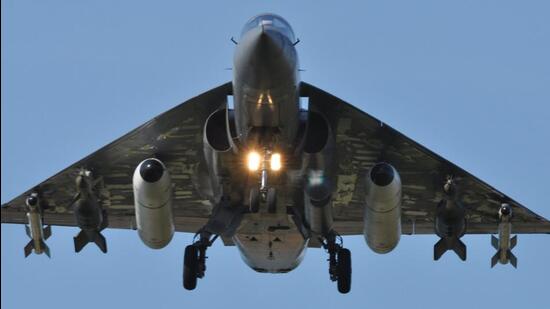
“One of the goals is to showcase the booming indigenous defence ecosystem and highlight the self-reliance drive. The Tejas light combat aircraft (LCA Mk-1), Prachand light combat helicopter, Dhruv advanced light helicopter and its armed version Rudra are among the locally produced assets taking part in the drills,” Singh said at the curtain-raiser event.
Some commercial flights may have to be rescheduled or rerouted because of the exercise, HT has learnt.
Tarang Shakti 24 will involve the practicing of a variety of combat missions in a realistic environment, boost mutual trust and help explore avenues for interoperability and imbibe best practices from one another, Singh said. To be sure, while Tarang Shakti will be the biggest multilateral exercise to be conducted in India, IAF has taken part in several such drills on foreign soil.
{{/usCountry}}Tarang Shakti 24 will involve the practicing of a variety of combat missions in a realistic environment, boost mutual trust and help explore avenues for interoperability and imbibe best practices from one another, Singh said. To be sure, while Tarang Shakti will be the biggest multilateral exercise to be conducted in India, IAF has taken part in several such drills on foreign soil.
{{/usCountry}}The 10 air forces that are bringing their assets for the exercise are the United States, the United Kingdom, Australia, France, Germany, Spain, Greece, the United Arab Emirates, Singapore and Bangladesh. Russia and Israel, two of India’s main defence partners, are not taking part in the drills because of their preoccupation with ongoing developments back home, HT has learnt.
The IAF fighters taking part in the drills include the Rafales, Sukhoi-30 MKIs, Mirage 2000s, Jaguars and MiG-29s, said Group Captain Ashish Dogra, the exercise coordinator. The fighter jets to be deployed by the foreign air forces include F-18s, F-16s, Rafales and Typhoons, he added.
The UK, France, Germany and Spain will take part in the first phase, while the remaining six foreign air forces will participate in the second and final leg.
“The exercise will involve within and beyond visual range combat missions, large force engagements, air mobility operations, dynamic targeting, low light operations, high value aerial asset protection and busting, air-to-air refuelling missions, and combat search and rescue,” Dogra said.
IAF Agniveers posted at the Sulur and Jodhpur bases will also participate in some ground roles during the exercise at a time when a political firestorm rages over the controversial Agnipath defence recruitment model that cuts tenure and offers fewer service benefits to Agniveers recruited under it.
Tarang Shakti 24 comes close on the heels of the IAF showcasing its capability to carry out high-tempo operations during Exercise Gagan Shakti 24 earlier this year from April 1-10, which involved all air force bases and assets scattered across the country. The last of IAF’s MiG-21 fighter planes took part in the pan-India drills, their final participation in a major exercise.
The MiG-21, India’s first supersonic fighter whose induction began in 1963, will be pulled out of service by 2025, and replaced by the new Tejas light combat aircraft (LCA Mk-1A), a programme which is currently running behind schedule.
This has been a busy year for IAF.
In February, it showcased its offensive capabilities by day and night at the Pokhran air-to-ground range near Jaisalmer during Vayu Shakti 24, with fighter jets carrying out precision strikes against simulated enemy aircraft and targets on the ground, including runways, bridges, ammunition dumps, radar sites and terror camps.
The exercise, based on the theme ‘Lightning Strike from the Sky’, saw IAF’s combat platforms drop around 50 tonne of ordnance in a span of two hours over an area measuring 2 sq km.