What unfolded inside prisons while the nation battled the Covid-19 pandemic? How does corruption between jailers and prisoners thrive behind bars? And how are rules quietly bent for high-profile prisoners held in Maharashtra’s infamous Anda cells — the high-security egg-shaped units?
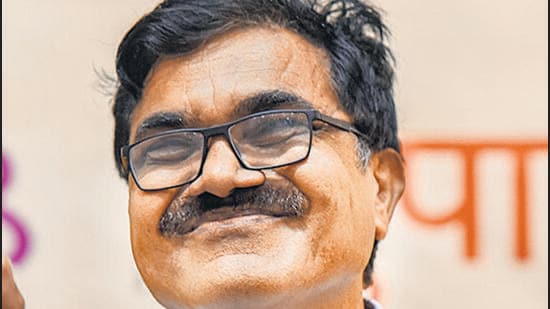
Scholar activist Anand Teltumbde, an accused in the 2017 Elgar Parishad(EP) - Bhima Koregaon case, who spent nearly 31 months inside Taloja jail, has penned his prison memoir in his book - The Cell and the Soul published by Bloomsbury India (releasing on September 2). Teltumbde, offers an insider’s account of life behind bars. He also chronicles his conversations with co-accused Fr. Stan Swamy, who died in custody after repeated bail pleas were denied.
Lodged in one such Anda cell, Teltumbde has written how the cells are actually a showpiece area, with fewer prisoners(unlike the crowded prison), and superior in many ways. Prisoners such as Ajmal Kasab, Abdul Karim Telgi, Arun Gawli, Indian Mujahideen accused Qateel Siddiqui have in the past been lodged in Anda cells.
The National Investigation Agency(NIA) has accused Teltumbde, accused number 10, of having links to Communist Party of India(Maoist), and convening the infamous 2017 Elgar Parishad case which led to the Bhima Koregaon violence.
{{/usCountry}}The National Investigation Agency(NIA) has accused Teltumbde, accused number 10, of having links to Communist Party of India(Maoist), and convening the infamous 2017 Elgar Parishad case which led to the Bhima Koregaon violence.
{{/usCountry}}In his book, Teltumbde has mentioned about a notorious don in the Anda cell, who paid a cut to the prison officials. “The don’s influence extended within the prison walls. Guards treated him with deference, and he often shared his abundant canteen supplies – fruits, drinks and syrups – with us and the jail staff. While we struggled to manage our purchases within the limited monthly allowance of ₹4,500 (also supporting inmates who depended on us), the don and other affluent prisoners enjoyed unlimited supplies through a 40:60 ratio arrangement. This unofficial system allowed inmates to obtain any amount of goods from the canteen provided they paid 150 per cent of the items’ value. The specifics of these transactions were unclear, but it was commonly believed that monetary exchanges occurred outside the prison in cash,” he said in his book.
Teltumbde ,also grandson-in-law of Dalit icon BR Ambedkar, has not revealed the don’s name but mentioned that the unassuming Kannadiga man was a well-known figure in the world of crime. Despite owning a house in Bandra, the don chose to reside in Dharavi, where he wielded significant influence. “Anda served as a demonstration piece, a controlled environment intended to impress visitors. Any guest brought to this section of the jail would observe a more orderly and less oppressive environment, and even if they spoke to an inmate, they were unlikely to hear much negativity about the routine conditions. For example, while the prison hospital provided a mere 400 grams of chicken when one placed a one-kilo order, the canteen delivered exactly one kilo of chicken to Anda inmates. We had an extra influence of the don, which fetched us three to four kilos against a two-kilo order.”
Teltumbde in a chapter titled -We Lost Stan- has written how prison authorities refused to help the elderly Jesuit priest, suffering from Parkinson’s, with basic items such as a straw and winter clothes. He has mentioned how it took an almost two month old legal battle to get the basic items. The 84 year old priest, who was arrested on 8 October 2020 and brought to Taloja Hospital the following evening, had disclosed in court about getting tremors in both hands, which made it difficult for him to hold a glass or eat.
“Stan had multiple issues in prison due to his health condition. He could not even hold a glass of water steady to drink from. Outside, he told us he used a sipper bottle and straw to drink water, but they were disallowed by the prison staff when he was brought to Taloja. He could not hear without a hearing aid and was unable to speak on the phone during mulaqat. By the time the sipper issue was communicated to the lawyers and they could file an application on 7 November, already a month had passed. The NIA responded that it had conducted a personal search of Stan Swamy during his arrest in the presence of independent witnesses and “no such straw and sipper were found.”
The writer has said that Stan’s request for a full-sleeved sweater, a thin blanket and two pairs of socks too was denied until December 4, when the court instructed the jail staff to prove the items to him.
Accusing prison authorities of underreporting Covid-19 cases and prisoners recovering on their own, Teltumbde said Stan too had contracted the virus but the prison authorities denied this.
“…If it wasn’t for his Parkinson’s, his health was otherwise good for his age…..His oximeter readings were plummeting, and I notified the doctor and the jailer, requesting that they send him to an outside hospital. Nothing was done for him, even though his oximeter reading slid down to 75, which I thought was dangerously low. I went down and almost shouted at the doctor, saying they would be responsible if something happened to him. Stan’s oximeter reading indicated that he had contracted COVID-19. However, when a test was conducted on him in the Hospital on 27 May, we were told that he tested negative. We learned from the newspapers on 30 May that after reaching Holy Family Hospital in Mumbai, he had tested positive, confirming our fears…tested negative inside the jail but were found infected (positive) when tested outside.”
Stan Swamy died at a private hospital in Mumbai on July 5, 2021.
Teltumbde has also given an insight of the prison’s handling of the Covid-19 pandemic at a time when there was a nation wide lockdown and family visits were restricted in jails across the country.
“I entered prisons during the Covid-19 and witnessed a joke called social distancing…The prison authorities repurposed a school for quarantine, cramming 35-40 inmates into each classroom, sleeping shoulder to shoulder. Article 21 of the Constitution helplessly stared at the fact of three toilets, seven urinals and no bathrooms for nearly 400 prisoners. Rather than containing the virus, this kind of quarantining actually accelerated its spread. In the hospital barrack of the Taloja prison, where I was held in a cell, over 55 people jostled for space meant for 30 or 35. Single-prisoner cells housed five, leaving barely enough room for the inmates to huddle. Many contracted COVID-19, yet officials insisted there wasn’t a single case as a result of ‘excellent management’. Deaths occurred but were never recorded as COVID-19 fatalities. After all, nobody dies of COVID-19.”
He also said that while there was no proper medical aid when he too was unwell, much later when the prison authorises selected inmates for Covid-19, there were many including him, who had the antibodies. “It only confirmed what we had long suspected: we had all been infected. Some of us survived. Others like Stan did not.”
Teltumbde’s book also mentions how two men, arrested in an infamous case of defrauding 17 banks in a multi crore scam, used their clout to tweak rules with the help of a don, who bribed the prison authorities. “Every evening, they would walk to the telephone room and have relaxed conversations with their families. The don mediated their access to the jail authorities, and money took care of the rest,” he said in the book.
In contrast to the hospitalisation request of Swamy or other inmates, Teltumbde has shared an anecdote of how the two used their clout to be lodged in hospitals outside. The younger brother was hospitalised in a top-notch hospital for months, followed by the older brother too, in KEM hospital in Mumbai. There used to be a board in the front gate office displaying the names of prisoners who were admitted in outside hospitals for anyone to see. While people like us had to fight in the courts to be taken to outside hospitals as outpatients for serious health issues, here were the wealthy prisoners getting ensconced in private hospitals for months together. It was reported in the papers that they were running their businesses from the hospital rooms.”
Teltumbde also writes about another prisoner - a Pune builder, also dubbed as Pune’s god of good times, admitted to a hospital for having panic attacks. The writer has mentioned that after his release on bail, when he went to visit his mother in law at the same hospital, the man was in the VIP room of the same hospital, along with his minions being served lunch with no guards in sight. “He continued to enjoy his royal stay in the VIP suite of St George Hospital, with the front lawns being specially done up for his parties, as we observed during our several visits to the adjacent VIP suite when my mother-in-law was again hospitalised.”