
 E-Paper



Temple construction, CAA stir to figure at RSS meet
The three-day meeting of the ABPS dovetails with a widening of the communal schism and criticism by the RSS’s critics of the role it has played in sharpening the divide.


Ongoing protests against the amended citizenship law, resistance to the National Population Register (NPR) and the construction of a grand Ram temple in Ayodhya will be among the key ideological issues that will come up for discussion at the Akhil Bharatiya Pratinidhi Sabha (ABPS), the top decision-making body of the Rashtriya Swayamsevak Sangh (RSS), starting on March 15 in Bengaluru.
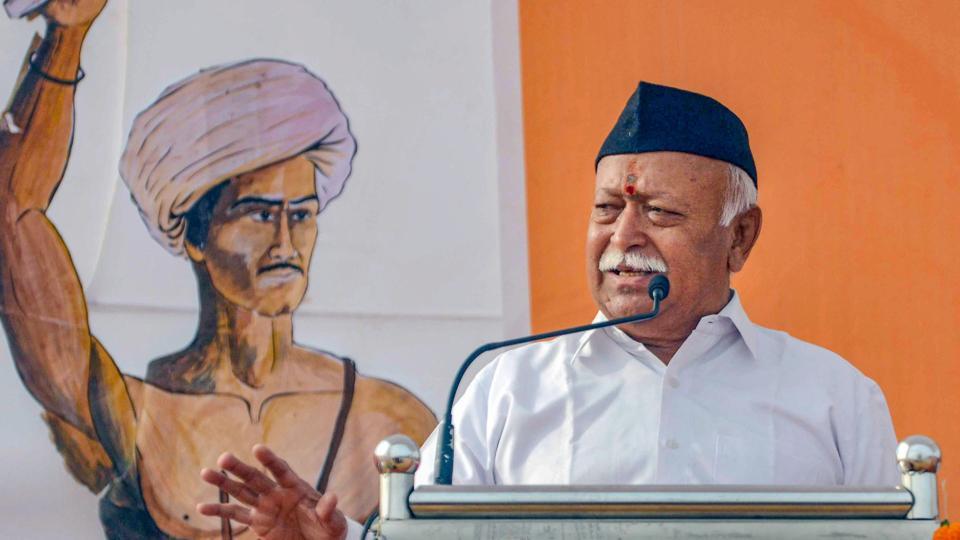
For the RSS, the ideological mentor of the ruling Bharatiya Janata Party (BJP), there is much to celebrate. Three of its long-pending demands--revocation of article 370 that gave special status to Jammu and Kashmir, a law that fast-tracks citizenship for persecuted Hindus and other non-Muslims from three Muslim-majority countries in India’s neighbourhood, and the right to build a Ram temple on the disputed site in Ayodhya -- have been met.
At the same time, the three-day meeting of the ABPS dovetails with a widening of the communal schism and criticism by the Sangh’s critics of the role it has played in sharpening the divide.
According to the a person aware of the agenda for the Bengaluru meeting, the issues listed above, for which the Sangh has waged a decades-long campaign, are expected to figure at the discussions that will be attended by RSS chief Mohan Bhagwat and the top leadership.
“A resolution or a special mention to the thank the government for initiating the process for abrogation of Article 370 and the citizenship amendment bill could be could be passed at the meeting. The Sangh is also happy with the favourable outcome of the Supreme Court verdict on the Ram Janmabhoomi issue that had been pending for decades,” said the person quoted above.
Current social and political developments will dominate the meeting, which is attended by the BJP president and the heads of all Sangh affiliates. Among them is the resistance of some states to the NPR, a biometric database of residents of India, which they fear could be a precursor to the proposed National Register of Citizens, an exercise proposed to identify illegal citizens.
The Sangh, which describes itself as being an apolitical organisation that works for a Hindu cultural renaissance, has recently begun to redraw the boundaries separating its work from that of its political arm, the BJP.
Even though the Sangh does not openly endorse the BJP, it does make it known that a party which is in line with its ideology is more acceptable to it and deputes a senior functionary to the party to act as link or coordinator.
Concerned that the slew of defeats that the BJP has faced in state elections in recent months could have an impact on its organisational network, the Sangh sent out a reminder that its brand of Hindutva could not be conflated with the BJP’s electoral performance.
In Goa, at a two-day conclave earlier this month, RSS general secretary, Suresh Bhaiyyaji Joshi said opposition to the BJP cannot be read as opposition to Hindutva.
While the Sangh was quick to defend the statement as an iteration of an established notion; the undertone betrayed concerns over fissures within the larger Hindu community. This was followed by a similarly nuanced comment by Bhagwat at a closed-door interaction with writers. Bhagwat also chose to underline the difference between the BJP’s electoral performance and Hindutva. He told the attendees that governments may come and go, but the focus should be on changing society.
The Bengaluru meeting follows Hindu-Muslim rioting that rocked Delhi towards the end of February after pro- and anti-Ctitizenship (Amendment) Act protests took a communal turn, leaving at least 42 people dead in the national capital’s north-east district.
On the Sangh’s stance on the visible and increasing polarization, RSS commentator Dilip Deodhar said: “The Sangh has been working tirelessly to unite Hindus, abolish caste divisions and largely mobilise political parties to work towards the idea of India. Particularly now when the CAA protests have shown a simmering discontent that led to the riots in Delhi, the Sangh feels there is an urgent need to address and acknowledge problems of radicalism and consolidate the forces that are nationalistic.”


