
 E-Paper



‘Terrorism will stay as long as Islam is there’: Exiled Bangladesh writer Taslima Nasrin on Pahalgam attack
Taslima Nasrin compared the Pahalgam terror attack to the 2016 Dhaka strike, saying Muslims were killed for not being able to recite the Kalma.

 Prefer HTon Google


Exiled Bangladeshi writer Taslima Nasrin on Sunday compared the Pahalgam terror attack to the 2016 Dhaka cafe siege, saying “terrorism will stay as long as Islam is there.”
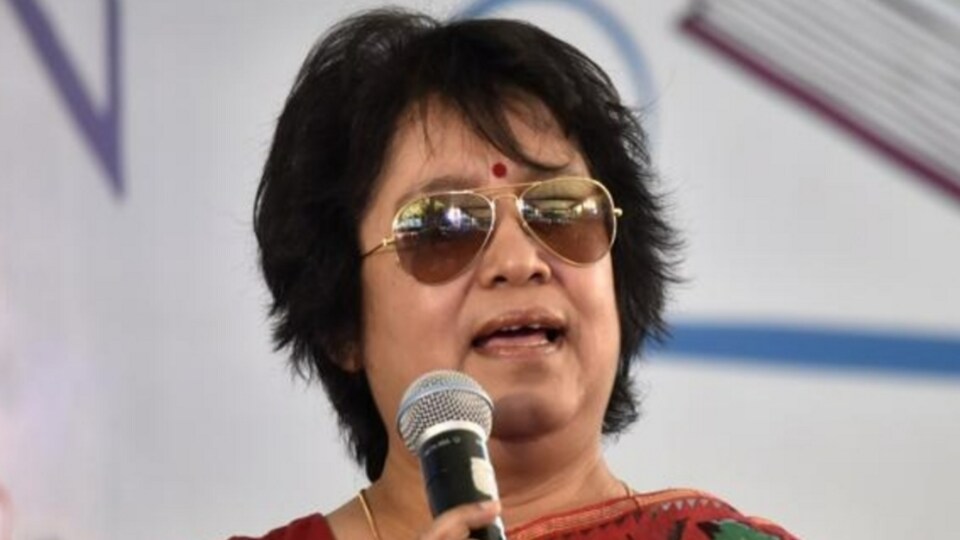
According to news agency PTI, while speaking at the Delhi Literature Festival, the Lajja author remarked, “Islam has not evolved in 1,400 years.” She added, "Until it does, it will continue to breed terrorists. In the 2016 Dhaka attack, Muslims were slaughtered because they could not recite the Kalma. This is what happens when faith is allowed to overrule reason and humanity."
The Pahalgam attack on April 22 claimed the lives of 26 people, mostly tourists. On July 1, 2016, terrorists had stormed the Holey Artisan Bakery in Dhaka, leaving 29 dead.
Taslima Nasrin also criticised the expansion of religious institutions, stating, "In Europe, churches have turned into museums, but Muslims are busy building mosques everywhere. There are thousands and they still want more. What they produce are jihadists. There should be no madrasas. Children must read all books, not just one."
Forced into exile in 1994 after being accused of blasphemy, Nasrin has since lived in Sweden, the US, and India. She shared her emotional connection to India, saying, "I am a permanent resident of the United States and lived there for 10 years, but I always felt like an outsider. It was only when I came to Kolkata that I felt at home. Even after being thrown out of West Bengal, I found another home in Delhi. This country has given me a sense of belonging that my own country could not."
"I love India. It feels like home," she added.
Turning her attention to women’s rights, Nasrin criticised the situation in her homeland and expressed support for legal reform. "Every civilised country must have a UCC. India too. I support it. Islamic patriarchs want Quranic rights. Rights must never be religious. If women's security is compromised in the name of culture, religion or tradition, then we must question that culture. A society that cannot protect half of its population is a failed society," she said.
Who is Taslima Nasrin?
- Taslima Nasrin, a medical doctor by training and writer by passion, rose to global attention in 1993 with the publication of her novel Lajja. Islamic clerics declared the novel blasphemous, leading to a fatwa against her. In response, the Bangladesh government revoked her passport and ordered her to cease writing.
- In protest of the government’s actions, she resigned from her medical profession in 1993. Facing escalating threats to her life, Nasrin fled Bangladesh overnight and has been living in exile ever since.
- She initially sought refuge in Sweden and later moved to France. Currently, she has requested permission from the Indian government to reside in France.
- Nasrin lived in exile in India from 1994 but was compelled to leave Kolkata in 2007 following violent demonstrations by Islamist groups opposing her writings.
- ‘Lajja’ portrays the plight of Hindus in Bangladesh, focusing on the communal violence that followed the demolition of the Babri Masjid in India in 1992. It narrates the terror experienced by a Hindu family amid retaliatory attacks.
- Another of her works, Dwikhandito, along with some of her public statements, sparked widespread controversy and provoked protests that turned violent.
- The situation escalated to the extent that the West Bengal government advised her to leave the state for her own safety. She was relocated first to Jaipur and then to Delhi under government protection before eventually exiting India.
- Despite living outside Kolkata for years, Nasrin has often expressed a deep emotional connection to the city and a desire to return. However, successive West Bengal governments have declined her requests, citing potential security threats.
- Though her presence in India continues to be a politically delicate matter, her plea to return has garnered support from parts of the literary and political communities.
- Over the years, Taslima Nasrin has received numerous prestigious awards, including the Ananda Puroshkar (an Indian literary honour), the European Parliament’s Sakharov Prize for Freedom of Thought, the Kurt Tucholsky Award from Swedish PEN, and the UNESCO-Madanjeet Singh Prize in 2004 for her autobiography Amar Meyebela.


