...
...
Next Story

Number theory: The new tripartite alignment in Indian politics

A look at why the current anti-BJP alliance may be different from similar experiments in the past.

Published on: Jul 6, 2023, 00:47:43 IST
Advertisement

India’s political landscape is undergoing a realignment in the run-up to the 2024 Lok Sabha elections. On one side is the Bharatiya Janata Party (BJP) and its former (it is trying to woo them back), current, and potential allies in the National Democratic Alliance (NDA). On the other, are the 15 opposition parties which took part in a meeting held in Patna on June 23 and will meet in Bengaluru once again. And between the two is a group of

PREMIUMIn a two-part data series, HT captures India’s political re-alignment.
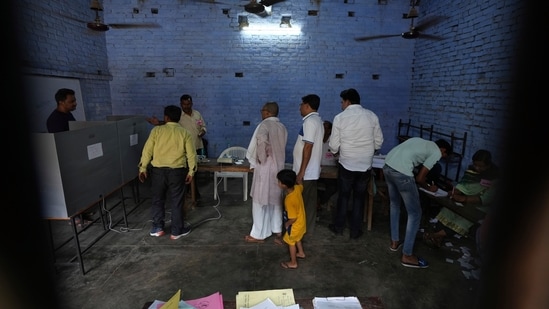
In a two-part data series, HT captures India’s political re-alignment.
The charts that matter
  • The NDA has a clear lead in the Lok Sabha
    The NDA, as of now in the Lok Sabha, comprises 10 other parties apart from the BJP. They are the Shiv Sena led by Eknath Shinde, Apna Dal, Rashtriya Lok Janshakti Party, All India Anna Dravida Munetra Kazhagam, All Jharkhand Students Union, and smaller parties that are part of the North East Democratic Alliance (NEDA). These parties won 329 seats in the 2019 Lok Sabha election, with the BJP alone winning 303. This group was even bigger just after the 2019 election, when the NDA also included 18 MPs from the Janata Dal (United) and the Shiromani Akali Dal (SAD). A section of the NCP allying with the BJP will not undo this damage completely (Four of five NCP MPs are with Sharad Pawar’s faction on July 5 while Sunil Tatkare is with the Ajit Pawar faction). For the opposition, the 15 parties that attended the opposition meeting in Patna won 140 seats with three of them not winning any. Apart from these two groups, there are 16 other parties that won 74 seats in the 2019 election.
  • But the opposition group has a lead when it comes to the total number of MLAs in the country
    To be sure, in terms of number of MLAs, the NDA does not have the kind of advantage over other groups as it does in the Lok Sabha. The parties that attended the Patna meeting have a total of 1,781 MLAs out of the 4,030 there are in the country For the NDA, this number is 1,557. Even accounting for Ajit Pawar’s 31 (this is the number of MLAs who attended his faction’s meeting on July 5), the NDA’s lead among MLAs won’t be as big as its lead in the Lok Sabha. Part of this asymmetry in the Lok Sabha and assembly strength of the groups is a result of the fact that the BJP has not performed well in assembly elections held after 2019. In the 22 state elections held after the 2019 Lok Sabha elections, the BJP has won a single-party majority in only six and was the single-largest party in just four others. Part of the asymmetry is also a reflection of the national premium which the BJP enjoys. It is important to remember that this remains a grouping in the making – and it is possible that some parties choose to go it alone.
  • None of the fence sitters come from BJP-dominated states
    Among the political parties which have not joined the two main camps so far, the three most important parties are from states where the BJP did not win a majority of seats in the 2019 Lok Sabha elections. They are YSR Congress Party (YSRCP) in Andhra Pradesh, Biju Janata Dal (BJD) in Odisha and the Bharat Rashtra Samiti (BRS) in Telangana. These three states have 25, 21 and 17 Lok Sabha seats respectively. The BJP won none, eight, and four of them in 2019; and parties which attended the Patna meeting won four in total. Among the three non-aligned parties that are important in these states, the BJD has been a part of the NDA in the Vajpayee years, YSRCP is an offshoot of the Congress in Andhra Pradesh, and the BRS only gained political prominence after the creation of Telangana. All three have supported the NDA on various occasions in the Rajya Sabha, where the ruling alliance still does not have a majority. The only other state where there is an as-yet-unaligned political formation is Punjab, although the Shiromani Akali Dal is talking to the BJP. To be sure, the Bahujan Samaj Party (BSP), which won 10 Lok Sabha seats in the 2019 elections, has also not joined either camp. However, its 2019 performance should be seen in the context of its alliance with the Samajwadi Party (SP). The BSP could not win even one Lok Sabha seat in the 2014 Lok Sabha and has just one MLA in the current Uttar Pradesh assembly, both instances of when it contested without allies.

This is the first of a two-part data journalism series looking at the tripartite realignment taking place in Indian politics. The second part will explain how the current Congress-led group against the BJP is different from similar groups in the past.

All Access.
One Subscription.

Get 360° coverage—from daily headlines
to 100 year archives.

E-Paper
Full
Archives
Full Access to
HT App & Website
Games
 
ABOUT THE AUTHOR
Nishant Ranjan

Nishant Ranjan has been working as a data journalist with Hindustan Times since 2023. In this short period, he has established a niche for creating original datasets and utilising them to produce journalistic work that pushes the boundaries of journalism. The list of datasets and stories done by him include the following: a dataset of all 717 chief ministers India has had since 1952, a dataset of all 3,350 members of India’s council of ministers, a dataset of all 190 deputy chief ministers in India and a dataset of all 279 Supreme Court judges in India (1950-2025). He has also profiled each elected Muslim MLA/MP since 1952. He is a mining engineer by training who decided to pursue a Master's in Development Studies from TISS after working in a coal mine for 10 months. He also worked as a research associate at the Centre for Policy Research, researching local governance in India. He also has a keen interest in analyzing electoral politics and political executives in India.

Get the latest India News, breaking headlines and real-time updates from across the country. Stay informed about politics, government policies, crime, weather and major national developments.
SHARE THIS ARTICLE ON
Hindustantimes wants to start sending you push notifications. Click allow to subscribe