
 E-Paper



This year’s monsoon may be below normal: Skymet
Skymet expects the monsoon to be about 93% of the long period average (LPA) of 887mm in the four monsoon months .

 Prefer HTon Google


India is likely to receive “below normal” monsoon rainfall this year on account of the El Niño weather phenomenon that is sometimes associated with drought in the subcontinent, private forecaster Skymet Weather said on Wednesday in a prediction which, if it turns out to be right, could deal a setback to agricultural output.
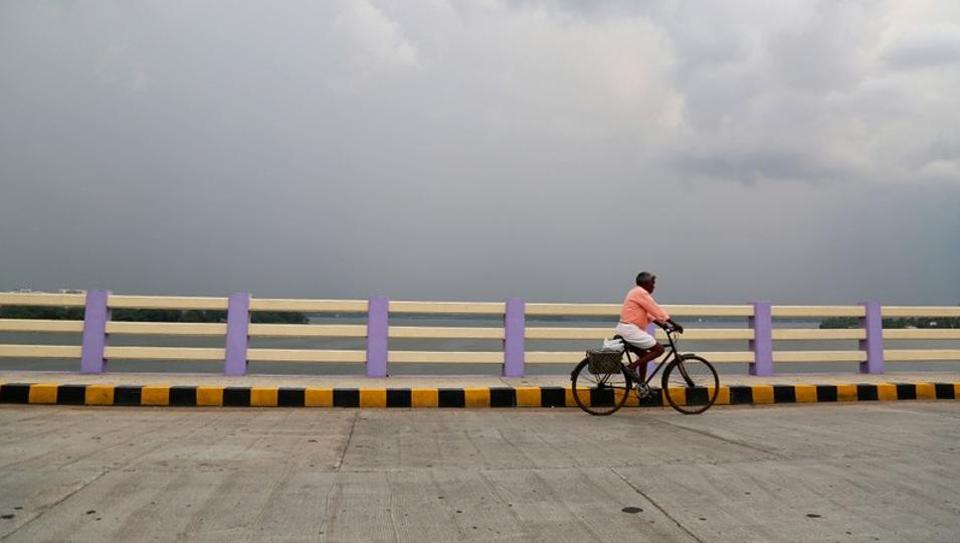
And if the forecast proves correct, it will be the fourth year since 2014 in which the June-September south-west monsoon falls short of the long-period, or 50-year average.
Skymet expects the monsoon to be about 93% of the long period average (LPA) of 887mm in the four monsoon months.
Last year the monsoon was 91% of LPA — bordering on “below normal”.
East India, along with large parts of Central India will receive deficient rainfall, particularly in June and July when El Niño will make its effect felt It is expected to weaken thereafter.

The onset of the monsoon in June would be “very sluggish...and deficit rains are likely to spill into July,” said a statement by Skymet Weather on Wednesday.
El Niño is a weather phenomenon characterised by warm ocean temperatures in the equatorial Pacific Ocean. El Niño years are characterised by a weak monsoon and more episodes of heat waves.
According to the World Meteorological Organisation’s (WMO) latest Global Seasonal Climate update (March to May), above average sea surface temperatures — partly because of a weak El Niño in the Pacific — is expected to lead to above-normal land temperature, particularly in tropical latitudes.
Globally, severe droughts were associated with the strong El Niño of 2015-2016.
“The Pacific Ocean has become strongly warmer than average. The model projections call for 80% chance of El Niño during March-May, dropping to 60% for June to August. This means, it is going to be a devolving El Niño this year, though retaining threshold values all through the season. Thus, Monsoon 2019 is likely to be below normal,” said Jatin Singh, managing director of Skymet.
The south-west monsoon accounts for about 70% of India’s annual rainfall and is key to agricultural output in the country, where over 60% of the population is either directly or indirectly dependent on farming for a livelihood. Normal rainfall is defined as 96-104% of the LPA.
“Farmers are suffering from low prices now and not so much due to low production. In fact the drought may be a relief because droughts tend to drive up prices. 2018 was also a pretty bad year with fairly large parts of the country— 300 districts — suffering dry conditions. So I think water availability will be a big problem which will impact people’s lives,” said Abhijit Sen, economist and former member of Planning Commission of India. Odisha, Chhattisgarh and coastal Andhra Pradesh are likely to receive normal rains throughout the season. According to Skymet’s regional forecast, West Bengal, Jharkhand and Bihar in the east, and Maharashtra, Madhya Pradesh, Karnataka, Andhra Pradesh and Telengana are going to be particularly dry throughout the season. There is a 15% chance of drought in some of these regions, according to Skymet’s models.
Overall, the rainfall forecast for June is 77% of the LPA of 164mm; in July rainfall is likely to be 91% of LPA of 289mm; in August it’s likely to be 102% of the LPA of 261mm and in September it’s likely to be 99% of the LPA of 173mm.


