E-Paper



Nagaland: Tribal bodies begin total shutdown demanding CM Zeliang’s ouster
The tribal bodies hold chief minister TR Zeliang responsible for the recent violence in the state, which resulted in two deaths and widespread destruction of government property.

 Prefer HTon Google


After shutting down government offices for a week, traditional tribal organisations in Nagaland began their total shutdown across the state on Monday seeking chief minister TR Zeliang’s resignation.
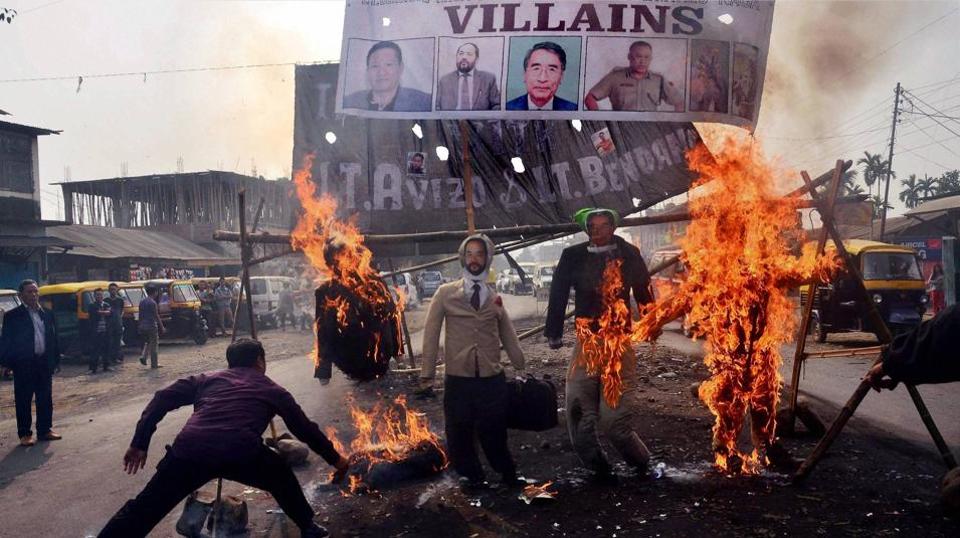
Tribal bodies under the banners of the Nagaland Tribes Action Committee (NTAC) and the Joint Coordination Committee (JCC) are holding Zeliang responsible for the recent violence that saw deaths and destruction of government property.
“Our indefinite bandh will continue from dawn to dusk between 6am and 6pm daily till Zeliang submits his resignation,” NTAC convenor KT Vilie told Hindustan Times.
Tribal bodies are opposed to holding election to urban local bodies (ULBs) with 33% reservation for women. They blame Zeliang for trying to hold the polls and also the violence that resulted due to opposition to it.
“Some services like hospitals, water supply and electricity department have been exempted from the purview of the strike. We have also asked our people to enforce the bandh peacefully,” he added.
Police stations have also been exempted from the strike, but restrictions have been imposed on movement of police personnel and their vehicles.
“We prioritised areas where there could be some trouble and deployed forces. Policemen were asked to exercise restraint. Nothing untoward happened on Monday,” Nagaland’s director general of police (DGP) LL Doungel said.
Normal life in Nagaland’s commercial hub Dimapur was affected since Monday morning due to the strike. There were no vehicles on the streets and business establishments were shut.
“The streets are deserted. People are not even venturing out on cycles fearing there could be violence,” said Dipu K Sangma, a Dimapur resident.
On January 31, two youths were killed and several others injured in police firing in Dimapur when mobs opposed to the ULB polls tried to enter the private residence of the chief minister.
Two days later, protesters burned down nearly two dozen government buildings including the municipal office in state capital Kohima. The events forced the government to declare the ULB polls null and void.
Despite growing clamour for his ouster, Zeliang, who enjoys the support of nearly all MLAs in the 60-member assembly, has refused to step down.
The state government has been asking NTAC and other tribal bodies to sit for talks to end the crisis, but the latter have refused to attend the meetings till Zeliang leaves his chair.
In an address to residents of Nagaland on Monday via radio, the CM appealed to the tribal bodies to lift the bandh to allow students to appear for their exams, government offices to function and commercial establishments to conduct business.
“We should resolve the present situation through mature appreciation and dialogue. Let us put our heads together to build the Nagaland of our dreams,” he said, even as he remained silent on the subject of his resignation.