Distinct electoral narratives, disparate campaign pitches and differing political preferences marked the electoral landscape of Jammu and Kashmir regions as Tuesday’s verdict highlighted that the two divisions located on either side of Pir Panjal have separate and at times conflicting political identities.
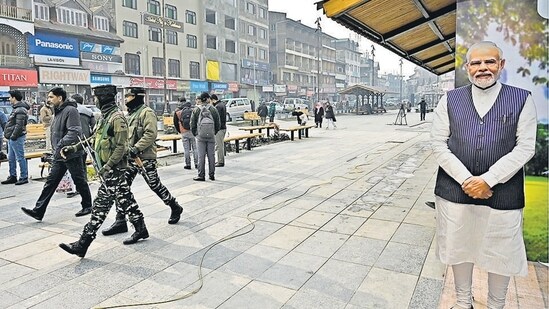
In the Muslim-dominant Kashmir, the bringing back of statehood and the restoration of Article 370 – two things promised by both major parties in the Valley, the NC and the Peoples Democratic Party – became the dominant rallying points in the region’s first assembly elections since its special status and statehood were scrapped five years ago. National Conference vice president Omar Abdullah promised to even move the Supreme Court to get the statehood back, a plank supported by the Leader of Opposition in the Lok Sabha Rahul Gandhi and Congress chief Mallikarjun Kharge.
“The dominant narrative in Valley focussed on what people lost in 2019. The political talk focussed on disempowerment of people with issues like revocation of Article 370, snatching of statehood and even unilateral reorganisation of the state taking centre stage,” said Inamul Haq, a political expert with keen eye on Kashmir issues.
In the Hindu-majority Jammu division, the revocation of Article 370 was also a key poll plank but with different contours. The BJP credited itself with removing what it called a discriminatory legislation, adding that it paved the way for the integration of J&K with the mainland. The party’s top leaders, including Prime Minister Narendra Modi and home minister Amit Shah, led the campaign trail with a focus on the “changing” ground situation after the BJP-led central government abrogated Article 370 five years and ushered in what they described as a “new era” in the region.
{{/usCountry}}In the Hindu-majority Jammu division, the revocation of Article 370 was also a key poll plank but with different contours. The BJP credited itself with removing what it called a discriminatory legislation, adding that it paved the way for the integration of J&K with the mainland. The party’s top leaders, including Prime Minister Narendra Modi and home minister Amit Shah, led the campaign trail with a focus on the “changing” ground situation after the BJP-led central government abrogated Article 370 five years and ushered in what they described as a “new era” in the region.
{{/usCountry}}The narrative of bias and discrimination also took different shapes in the two regions. In Kashmir, the NC-Congress combine argued that the BJP-led central government was ignoring the interests of the people as it asked them to vote for them in order to change their standard of living.
Read more: Historic Haryana hat-trick for BJP, INDIA begins new innings in J&K
In Jammu, BJP leaders, including Modi argued that successive regimes in Srinagar had ignored Jammu. In his last campaign rally for J&K polls on September 28, Prime Minister Narendra Modi told the voters in Jammu to grab the opportunity to end discrimination meted out to the region for decades.
“I want to tell the people of city of temples not to let this opportunity go away. The BJP government alone would end the discrimination to Jammu region,” he said.
Pakistan and cross-border terrorism remained key poll planks, with the BJP arguing that the ground situation had improved after it came to power in the centre and its rival countering it by pointing to the spate of terror attacks in Jammu, which gave rise to concerns that it was emerging as the new hub of violence in the restive UT.
The difference in narrative and demography also played out in the final results as the BJP continued its tight-hold on the Jammu region, which helped it reach its high-ever J&K tally of 29 and vote share of 25.6%. The National Conference won just seven seats and its ally Congress was reduced to a paltry one.
The picture was completely different just a few hundred kilometres away. The NC-Congress combine surged ahead in the Valley, winning xx of the 47 seats, which helped it completely cross the majority mark. The BJP, despite its impressive showing in Jammu, could not connect with the voters in Kashmir, where it is yet to win a seat.