The Union government on Tuesday inaugurated a second supercomputer to enhance India’s capability to forecast weather, procure advance information on natural disasters, create climate models and study oceans from June.
This is the second supercomputer procured by the ministry of earth sciences for the purpose this month, with the first being installed at the Indian Institute of Tropical Meteorology in Pune. This unit will be used at the National Centre for Medium Range Weather Forecast in Noida.
“India comes fourth in terms of having a dedicated high-performance computing resource for climate, after the United States, United Kingdom and Japan,” said Union minister for science and technology Dr Harsh Vardhan.
The combined peak capacity of both the supercomputers, which cost Rs 450 crore, is 6.8 petaflops (a measure of processing speed). This will add to the 1.2 petaflop capacity of existing equipment.
The supercomputers will generate high-resolution models to help scientists at the ministry of earth sciences provide block-level weather forecasting data. Data is currently available at the district level.
“We expect to provide block-level data for a radius of 15 to 20 km from June (before the monsoon) every morning,” said Dr M Rajeevan, secretary, ministry of earth sciences.
{{/usCountry}}“We expect to provide block-level data for a radius of 15 to 20 km from June (before the monsoon) every morning,” said Dr M Rajeevan, secretary, ministry of earth sciences.
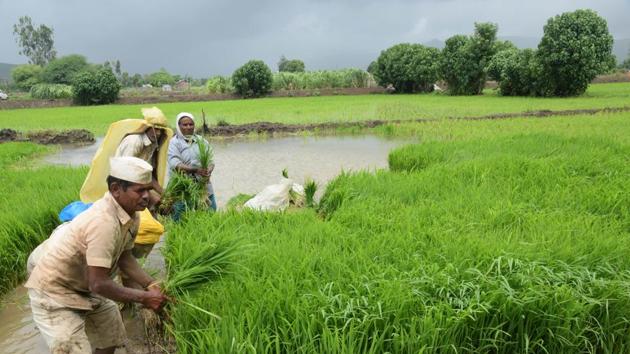
{{/usCountry}}Besides helping farmers, the supercomputers will assist in the development of high-resolution models to enhance the forecast of extreme weather conditions and natural disasters. “The ministry of earth sciences is doing historic work. The 2004 tsunami caught us unawares, but now India has a tsunami-warning system that can provide alerts and information to neighbouring countries as well,” said Dr Harsh Vardhan. “It is because of these early warnings that recent cyclones have not been as devastating as the ones (that hit the subcontinent) a decade ago.”