NEW DELHI: UK foreign secretary James Cleverly raised the issue of tax searches at BBC offices at a meeting with his Indian counterpart S Jaishankar on Wednesday and was told all entities operating in the country have to comply with rules and regulations, people familiar with the matter said.
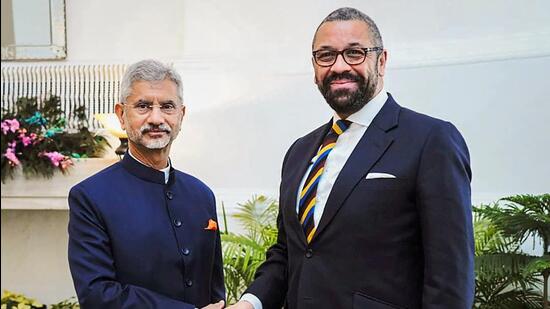
Cleverly, who is in India to attend a meeting of G20 foreign ministers, told Reuters he had raised the tax searches at BBC offices during his bilateral talks with Jaishankar. He didn’t give any details.
“The conversations I had with [Jaishankar] are best to keep with him. I did raise it,” Cleverly said. “One of the advantages of having such a strong and professional relationship with Dr Jaishankar is I am able to bring up, and indeed he brings up with me, some of these sensitive issues. I did raise it with him.”
The people cited above acknowledged Cleverly brought up the “BBC tax issue” with Jaishankar. “He was firmly told that all entities operating in India must comply fully with relevant laws and regulations,” one of the people said.
Tweets put out by both foreign ministers after their meeting made no mention of the BBC issue.
{{/usCountry}}Tweets put out by both foreign ministers after their meeting made no mention of the BBC issue.
{{/usCountry}}“Began the morning with a bilateral meeting with Foreign Secretary @JamesCleverly of the UK. Reviewed the progress in our relationship since our last discussion. Noted in particular the commencement of the Young Professional Scheme. Also exchanged views on the global situation as well as the G20 agenda,” Jaishankar tweeted.
Cleverly said in a tweet: “India and the UK stand united as friends and partners. We are working together for the benefit of both our great nations.”
The British government earlier said it was closely monitoring the searches conducted by India’s tax authorities at BBC offices in New Delhi and Mumbai over three days last month. The British government also defended the BBC and its editorial freedom in Parliament.
The searches were carried out after the Indian government was angered by a BBC documentary on the 2002 Gujarat riots that criticised the role of then chief minister of the state, Narendra Modi.
The Central Board of Direct Taxes (CBDT) said last month that the Income Tax department’s survey of BBC had revealed that income or profits shown by several of its entities “is not commensurate with the scale of operations in India”. The CBDT said evidence had emerged to indicate that BBC “has not paid taxes on certain remittances”.
CBDT said IT officials found several discrepancies in BBC’s transfer pricing documentation. “The survey revealed that despite substantial consumption of content in various Indian languages (apart from English), the income/profits shown by various group entities is not commensurate with the scale of operations in India,” it said in a statement.
During the operation, around 22 income tax officers stayed at BBC offices overnight, making copies of documents and questioning employees. CBDT said the survey operation didn’t hinder the broadcaster’s operations and statements of only crucial employees were recorded.
The government had dismissed the BBC documentary, “India: The Modi Question”, as propaganda and blocked its streaming and sharing on social media. The external affairs ministry said the documentary was aimed at pushing a “discredited narrative”, was biased, lacked objectivity and showed a “continuing colonial mindset”.
Jaishankar too was highly critical of the timing of the documentary and described it as a “hatchet job”.