New Delhi The bill tabled on Friday by the Union government in Parliament to replace the British-era Indian Penal Code (IPC) has proposed to make punishments for crimes against women more stringent, envisaging death penalty as the maximum punishment for the gang rape of a minor, and earmarking as a separate offence the act of tricking a woman into having sexual intercourse under the false pretext of marriage or by offering inducements such as job or promotion.
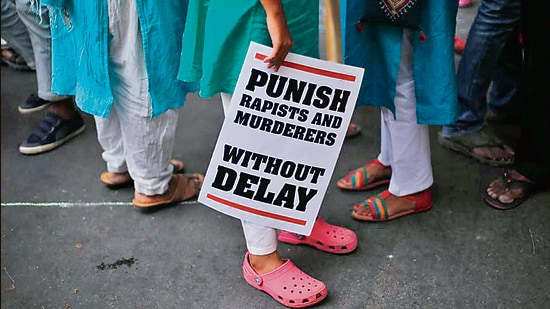
Under the proposed law, which is meant to replace IPC, the gang rape of a girl under 18 years of age is punishable with imprisonment for life, which means imprisonment for the remainder of that person’s natural life, and with a fine, “or with death”.
In IPC, the provisions relating to the gang rape of minors are classified under two categories – where a survivor is under 12 years of age and where she is less than 16 years old. For an act of gang-raping a girl under 12, the maximum punishment under IPC is death sentence, but for the crime against a girl between 12 and 16 the maximum punishment is life imprisonment.
Doing away with these age subclassifications, the Bharatiya Nyaya Sanhita Bill, 2023, lays down that an offence of gang rape against a girl under 18 years of age can fetch capital punishment for all those involved in the crime.
The proposed legislation, which Union home minister Amit Shah said will be sent to a parliamentary panel for scrutiny, has also earmarked a distinct offence to penalise acts of beguiling women into a sexual relationship, and makes the offence punishable with a jail term up to 10 years.
{{/usCountry}}The proposed legislation, which Union home minister Amit Shah said will be sent to a parliamentary panel for scrutiny, has also earmarked a distinct offence to penalise acts of beguiling women into a sexual relationship, and makes the offence punishable with a jail term up to 10 years.
{{/usCountry}}Section 69 of the bill states: “Whoever, by deceitful means or making by promise to marry to a woman without any intention of fulfilling the same, and has sexual intercourse with her, such sexual intercourse not amounting to the offence of rape, shall be punished with imprisonment of either description for a term which may extend to ten years and shall also be liable to fine.”
The “explanation” to this section clarifies that “deceitful means” shall include the false promise of employment or promotion, inducement or marrying after suppressing identity.
The other provisions relating to rape and gang rape have been retained under the new law with the same punishments. Similarly, definitions and punishments for various other offences against women, including sexual harassment, molestation, voyeurism and stalking have remained the same under the 2023 bill.
Engrafting the mandate of a 2017 judgment of the Supreme Court, the proposed legislation enhances the minimum age of wife from 15 to 18 years for giving an immunity to husband from a charge of rape. In 2017, the top court interfered with Exception 2 of Section 375 to the extent that it protected husbands from prosecution under the rape charge if the wife was not below 15 years. The Supreme Court read down the exception clause to hold that a wife must not be younger than 18 years, instead of 15 as mentioned under IPC, for the immunity to be valid.
The bill also does away with Section 377 of IPC, which made homosexuality an offence punishable up to life term. The move borrows from the Supreme Court’s judgment of 2018 by a Constitution bench that decriminalised gay sex between consenting adults.