
 E-Paper



‘Untenable’: MEA slams Nepal's remarks on India-China trade via Lipulekh pass
MEA also said that India remains "open to constructive interaction with Nepal on resolving agreed outstanding boundary issues through dialogue and diplomacy".

 Prefer HTon Google


The Ministry of External Affairs on Wednesday condemned Nepal's remarks on the resumption of trade between India and China through the Lipulekh pass, saying that such claims are unjustified and not based on historical facts and evidence.
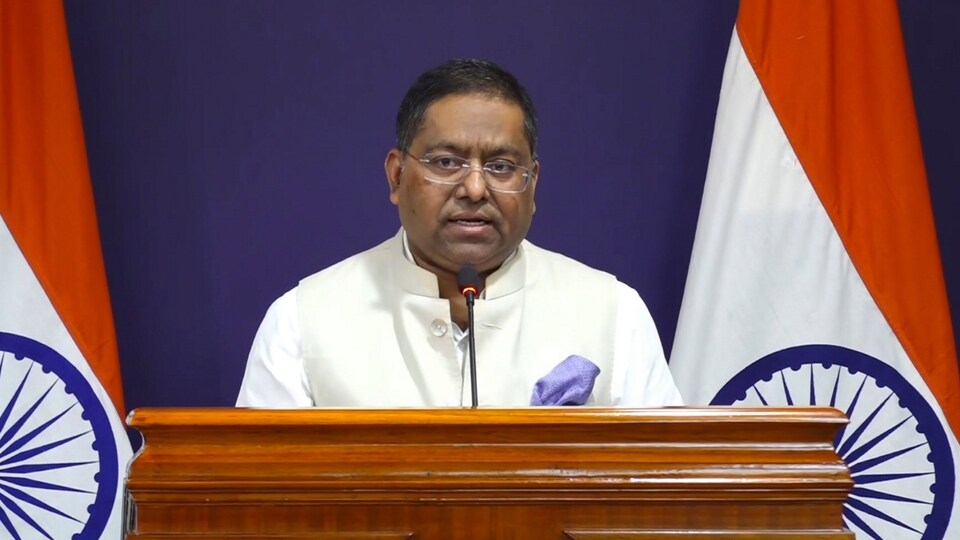
The remarks came after the KP Sharma Oli-led Nepali government issued a statement claiming that the official map of Nepal, which has been included in the country's Constitution, shows Limpiyadhura, Lipulekh, and Kalapani east of the Mahakali River as "integral parts of Nepal".
Nepal's foreign ministry said in an official statement that it also urged India to refrain from carrying out any activities in Nepali territory.
The Indian government condemned these claims and said, "As regards territorial claims, our position remains that such claims are neither justified nor based on historical facts and evidence. Any unilateral artificial enlargement of territorial claims is untenable."
Nepal's foreign ministry further said in its statement, "It is also known that the Government of Nepal has been urging the Government of India not to carry out any activities such as road construction/expansion, border trade in the said area. It is also known that even the friendly country China has been informed that the said area is Nepali territory."
ALSO READ | From direct flights to trade, India-China talks yield broad breakthroughs
It said that in the spirit of close and friendly relations between Nepal and India, "the Government of Nepal has been committed to resolving the border issue between the two countries through diplomatic means on the basis of historical treaties and agreements, facts, maps and evidence".
Referring to Nepal's statement, the Ministry of External Affairs clarified that the country has been "consistent and clear" in this regard. It further said that border trade between India and China via the Lipulekh pass had commenced in 1954 and has been going on for decades. "This trade had been disrupted in recent years due to Covid and other developments, and both sides have now agreed to resume it," the MEA added.
However, the MEA said that New Delhi remains "open to constructive interaction with Nepal on resolving agreed outstanding boundary issues through dialogue and diplomacy".
The Lipulekh Pass has been a long-standing territorial dispute between India and Nepal, mainly focused on the exact location of their border in the Kalapani region.
During Chinese foreign minister Wang Yi's visit to India, it was announced that India and China have agreed to resume border trade as part of the measures being taken to normalise bilateral ties between the two nations.
At Wang's meeting with external affairs minister S Jaishankar, several other initiatives were also finalised, including the resumption of direct flights "at the earliest" and finalisation of an updated air services agreement.


