The US has “some concerns” about India’s continuing military and technology cooperation with Russia though Washington is focused on working with New Delhi to narrow areas with divergences, US deputy secretary of state Kurt Campbell said on Wednesday.
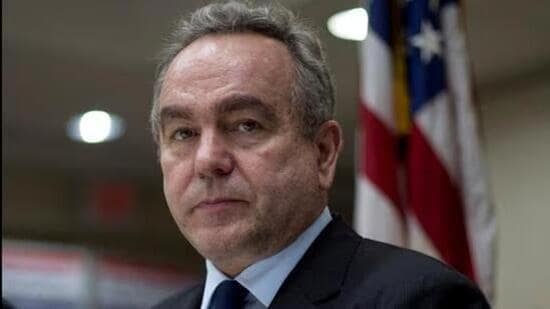
The remarks by Campbell, widely seen as the architect of the Asia strategy of the Biden administration, came against the backdrop of reports that India and Russia are exploring the possibility of a visit by Prime Minister Narendra Modi to Moscow next month. Campbell, however, during an online media briefing, ducked a question on whether such a visit could affect India-US relations.
The US and India, he said, have a “full and frank” dialogue that encompasses discussions on their “mutual relationships with key countries”, including India’s ties with Russia.
“We have been clear which areas are affected by the continuing relationship between India and Russia, militarily and technologically. I think we will take what steps we can to mitigate some of those engagements and we have expressed some concerns,” he said in response to a question about reported worries that sensitive technology supplied by the US to India could be accessed by Russia.
The US has confidence and trust in India as it seeks to advance the bilateral partnership in technology and Washington also wants to develop a “much deeper and stronger technological relationship” with New Delhi, he said. Both countries have many areas of alignment, “but it is not surprising that there would be areas where we had perhaps different perspectives, views, historical ties”, he added.
{{/usCountry}}The US has confidence and trust in India as it seeks to advance the bilateral partnership in technology and Washington also wants to develop a “much deeper and stronger technological relationship” with New Delhi, he said. Both countries have many areas of alignment, “but it is not surprising that there would be areas where we had perhaps different perspectives, views, historical ties”, he added.
{{/usCountry}}In the context of the bilateral strategic partnership, an important aspect is “our ability to share views on areas where we occasionally have disagreements, do those respectfully and seek where possible to narrow those areas where there are differences”, Campbell said.
While India and the US have ramped up collaboration on the joint development and production of military equipment and launched the Initiative on Critical and Emerging Technology (iCET), Russia remains the largest supplier of defence hardware, accounting for almost 60% of the weapons used by Indian armed forces.
Campbell also outlined some of the steps taken by the US and India to take forward iCET at a meeting last week between US National Security Adviser (NSA) Jake Sullivan and his Indian counterpart Ajit Doval. Campbell was part of the delegation that accompanied Sullivan for the meeting.
The iCET is at the heart of the India-US partnership, which places technology at the “core of our ambitions”, he said. India is part of a very small group of countries that the US works with intimately on new technologies and the two sides have advanced strategic cooperation in space, semiconductors, advanced telecommunications, AI, quantum computing and biotech.
The two sides also had ambitious deliberations on cooperating in the Indian Ocean. This initiative will bring together the Indian Prime Minister’s Office and the National Security Council with the US state and defence departments as well as the two navies. “We think the Indian Ocean is a critical venue for us to deepen our cooperation and dialogue,” he said.
As the two sides focus on security issues, commerce and technological cooperation, the US values India’s “central role” in the Indian Ocean and wants to support India’s maritime domain awareness and military capabilities as part of a shared interest in maintaining peace and stability, Campbell said.
Campbell responded to a question on proposed deals for the US to supply MQ-9B drones and Stryker combat vehicles to India by saying that a letter of offer and acceptance for the drones was delivered to India in early March. “I think we’re awaiting signature [of the letter] to move forward. General Atomics is negotiating details of the sale with the Indian ministry of defence and we’re prepared obviously to work with them in addressing any outstanding questions,” he said.
India has expressed an interest in the co-production of the Stryker combat vehicle though the two sides are in “relatively early stages” and the US Army plans to demonstrate the capabilities of the vehicle to the Indian Army at an early opportunity.