The Supreme Court on Friday held that medical practitioners cannot offer stem cells for the treatment of Autism Spectrum Disorder (ASD) observing that administering such a therapy without adequate information of proven research is “unethical and will invite action for professional misconduct”.
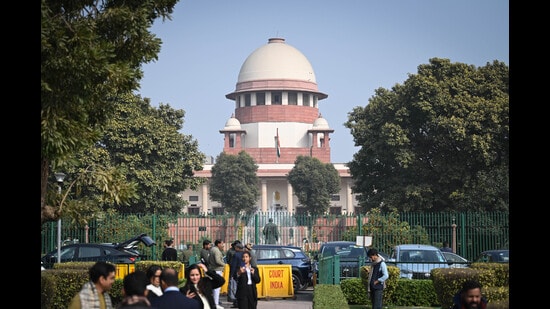
The judgment also made a comprehensive analysis of the legal regime governing stem cell research while proposing to the government to come out with a law governing the field and appoint a regulatory authority to oversee clinical trials for future research.
Considering the practical situation where several parents have given consent to adopt this line of treatment for their children on their own risk, the court held such a consent in the absence of proved knowledge or established research to be invalid. However, it held that a person would still have the liberty to participate in an approved and regulated research/clinical trial involving such medical interventions.
It asked the Ministry of Health and Family Welfare (MoHFW) to propose a way forward for such patients/parents, in consultation with officials from AIIMS and National Medical Commission (NMC), within four weeks. The court has kept the matter for hearing after the Centre comes out with the solution.
The 99-page judgment came on a public interest litigation filed by two bodies - Yash Charitable Trust and Forum for Medical Ethics Society, along with two individuals who questioned the indiscriminate commercial use of stem cell therapy for ASD in the absence of any clinical trial or proven research about its therapeutic value. The petitioners even flagged the legal vacuum that exists in this field with no regulatory oversight over stem cell research or treatment.
{{/usCountry}}The 99-page judgment came on a public interest litigation filed by two bodies - Yash Charitable Trust and Forum for Medical Ethics Society, along with two individuals who questioned the indiscriminate commercial use of stem cell therapy for ASD in the absence of any clinical trial or proven research about its therapeutic value. The petitioners even flagged the legal vacuum that exists in this field with no regulatory oversight over stem cell research or treatment.
{{/usCountry}}The bench of justices JB Pardiwala and R Mahadevan said, “Until there is further research which establishes this as a sound and relevant medical practice, stem cell ‘therapies’ for ASD cannot be offered by medical practitioners as a clinical service, outside an approved and monitored clinical trial/research setting.”
It further said that the only “circumstance” in which an experimental treatment may be provided is when it is administered within an approved research or clinical trial setting and not as a therapy. “Therefore, every use of stem cells in patients outside an approved clinical trial is unethical and shall be considered as malpractice,” said the decision authored by justice Pardiwala.
The court said that a medical practitioner is expected to meet the standard of reasonable care and would be liable for medical negligence if he administers an intervention that lacks credible scientific evidence of safety and efficacy. In the present case, the court noticed that the expert body of Indian Council of Medical Research (ICMR) had “unequivocally” stated that such form of treatment is not recommended.
“A medical practitioner who disregards this and administers speculative, unproven, or experimental treatments even when credible professional bodies have expressly advised against the use of such an intervention, may be held liable on count of professional misconduct,” the court said, adding that this would fail to satisfy the standard of “reasonable care” recognised by past Supreme Court decisions.
The court was of the view that statutory consequences should follow for professional misconduct under Regulation 7.22 of the Indian Medical Council (Professional Conduct, Etiquette and Ethics) Regulations, 2002 which prescribes disciplinary action. Also, under Sections 32 and Section 40 of the Clinical Establishments (Registration and Regulation) Act, 2010, which provide for cancellation of registration and penalty.
The court was informed that in Delhi, clinics and hospitals openly endorsed such a therapy supported by an order passed by the Delhi high court where the issue regarding stem cell therapy is still pending. The order of August 31, 2023 of the HC had left it to individual autonomy to make informed decisions about the treatment options and permitted such a therapy to continue. The Parents Forum for Stem Cells in Autism and Cerebral Palsy - the petitioner in the HC had joined proceedings in the Supreme Court appealing not to discontinue their treatment.
The top court examined their request and said, “Even though the patient may have voluntarily opted for such procedure, yet, such choice does not amount to a valid consent to undergo the treatment due to the lack of ‘adequate information’ to form its basis.”
While permitting the use of stem cell for clinical trials in humans, the court warned the risk of “therapeutic misconception”, when the person believes that the purpose of clinical trials is to administer treatment rather than to conduct research, which is forbidden by the National Ethical Guidelines for Biomedical and Health Research Involving Human Participants, 2017.
The court said, “It is unfortunate that the Union has let the matter worsen without any suitable and timely intervention. Such inaction has led to several parents/guardians seeking an unproven method of treatment for their children suffering from ASD incurring huge financial cost and in alternative to other approved treatments.”
As things currently stand, the legal framework pertaining to stem cell research is fragmented and spread out across legislations with little harmony which makes compliance and enforcement an uphill task, the bench noted on an analysis of the various laws governing the field. Such obscurity in the legal regime arises from “legislative short-sightedness” and enables manipulation of patients’ vulnerabilities by errant medical practitioners, it added.
As a way forward, the court suggested having a law that defines stem cells and their derivates, provides procedure for clinical trials, guidelines to be adhered to, and provision for interim compensation in case of injury or death.
It also proposed a dedicated authority that has clear and well-defined powers of regulatory oversight such as the NAC-SCRT (National Apex Committee for Stem Cell Research & Therapy) to be constituted once again for proper and coherent monitoring and regulation of stem cell research. This body was continued by an order passed by the Centre in March 2024.