E-Paper



Uttarakhand approves Geo-Thermal Energy Policy 2025 to tap geothermal resources
Government plans to strengthen state’s energy security through geothermal energy by reducing carbon emissions, adding to long-term environmental, energy goals

 Prefer HTon Google


Dehradun: The Uttarakhand cabinet on Wednesday approved the Uttarakhand Geo-Thermal Energy Policy 2025, aimed at promoting scientific and technological research to explore and develop economically and environmentally viable geothermal resources in the state.
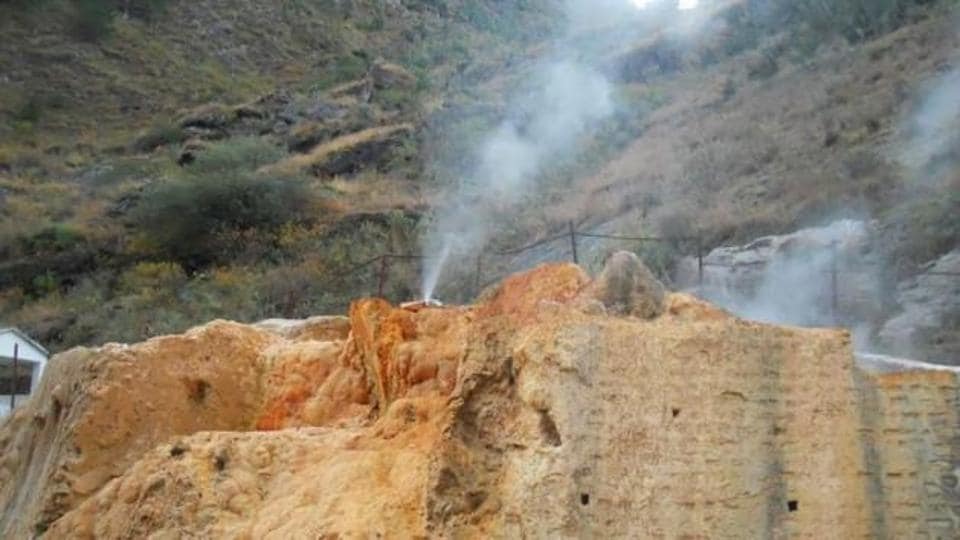
Chief minister Pushkar Singh Dhami chaired the cabinet meeting on Wednesday, officials aware of the development said, adding that the policy aims to promote the use of geothermal sites for power generation, heating and cooling, water purification, and community development.
The energy department of the state, in collaboration with the Uttarakhand Renewable Energy Development Agency (UREDA) and Uttarakhand Jal Vidyut Nigam Limited (UJVNL), will implement the policy, which applies to all geothermal projects in the state.
The government plans to strengthen the state’s energy security through geothermal energy by reducing carbon emissions and contributing to long-term environmental and energy goals.
According to officials, projects under the policy will be allotted for a maximum period of 30 years from the date of commissioning and sites identified for development can be allocated to central or state enterprises or private entities through competitive bidding or specified processes.
Also Read: Uttarakhand to use satellite imageries, drones to assess plantation success
If financial assistance (FA) is not available from the central government, the state government may provide financial assistance for the first two projects, subject to approval. “The state government will provide up to 50% financial assistance, up to ₹3 crore, to developers for preparing detailed geothermal project reports or assessing the feasibility of existing projects,” an official said.
Also, permission for the transfer or approval of private land will be granted as per the revenue department’s reporting standards. “For forest land or other reserved areas, leases/pattas will be granted as per the provisions of the state’s proposed lease policy, subject to state government approval or forest clearance,” the official added.
Hot springs or geothermal sources form in the Himalayan region when water percolating beneath the Earth’s surface reaches a geothermal point and exits through a thermal vent. As one goes deeper into the Earth, the temperature increases due to thermal activities such as volcanic activity, rock formation, and tectonic plate movement, which release heat and energy. When a water source passes near these zones, it absorbs the heat and emerges through thermal vents as hot springs.
Also Read: Uttarakhand working on policy for small hydropower projects: Official
Experts said that geothermal points in the Himalayan region are scattered along the geological fault line of the Main Central Thrust—where the Indian plate has pushed the Eurasian plate along the Himalayas—and hot springs are found along this fault line.
At the sixth meeting of the governing body of the National Mineral Exploration Trust on Wednesday, the cabinet also approved the Uttarakhand State Mineral Exploration Trust Rules, 2025, encouraging the formation of State Mineral Exploration Trusts. Additionally, it approved the Uttarakhand District Mineral Foundation Trust Rules, 2025, following amendments to certain provisions of the Uttarakhand District Mineral Foundation Trust Rules, 2017.
Also Read: Over 70 hot springs identified in Uttarakhand and HP for power generation
The cabinet also gave its consent to the formation of a Project Management Unit (PMU) to study the carrying capacity of bridges under the public works department (PWD), and to establish a digital forensic laboratory in the state tax department to ensure effective compliance with taxation laws through the collection, retrieval, and analysis of information and evidence.
It also decided to enlist seven companies listed by the ministry of electronics and information technology for the supply of IT-related services and materials in the state.
The cabinet also said that disabled persons will continue to receive disability pension even after their son or grandson attains adulthood (20 years)