Delhi health minister Satyendar Jain said on Sunday the government has finalised 89 sites for the vaccination drive against the coronavirus, with stocks of the jabs expected to arrive in the Capital between January 12 and January 14, a remark that came a day ahead of Prime Minister Narendra Modi’s interaction with chief ministers to take stock of the immunisation exercise that begins on January 16.
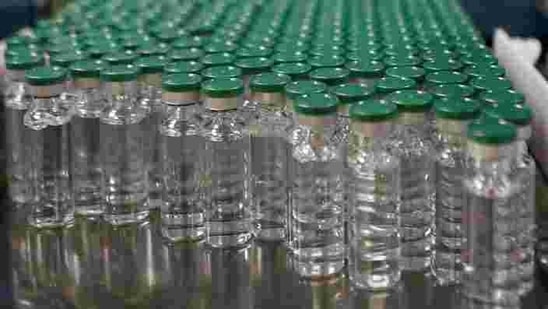
India’s vaccination drive, the world’s largest such exercise against the coronavirus disease (Covid-19), will kick off on January 16 with priority to about 30 million health care and frontline workers, the government has said. India plans to vaccinate 270 million others in six to eight months.
“Each centre will be managed by 8-10 staff. Cold storage facilities are ready and security arrangements are in place. The vaccines should arrive in the city between January 12 and 14,” Jain said.
The Prime Minister, meanwhile, will interact with CMs to review the arrangements for the drive. This will be Modi’s first interaction with chief ministers since the Drug Controller General of India on January 3 offered emergency use approval to a pair of Covid-19 vaccines – Pune-based Serum Institute of India’s Covishield, developed by Oxford University and AstraZeneca, and Hyderabad-based Bharat Biotech International’s indigenous candidate Covaxin, which is still in Phase 3 trials.
Three dry runs have so far been conducted across the country for the vaccination campaign. The vaccine roll-out will initially target 10 million health care workers and 20 million other front line workers, and will later cover high-risk population such as senior citizens and those with comorbidities numbering about 270 million.
{{/usCountry}}Three dry runs have so far been conducted across the country for the vaccination campaign. The vaccine roll-out will initially target 10 million health care workers and 20 million other front line workers, and will later cover high-risk population such as senior citizens and those with comorbidities numbering about 270 million.
{{/usCountry}}Covid-19, which originated in the central Chinese city of Wuhan in December 2019 and spread rapidly throughout the world, has claimed 151,215 lives in India and affected 10,467,429, making it the country worst hit by the viral disease after the United States.
On the eve of the meeting with the Prime Minister, the Delhi health minister said that the city-state’s administration had shortlisted 89 vaccination centres. Forty will be in public hospitals and 49 in private hospitals, he said.
In the first phase, the vaccine will be administered to health care workers. While the Delhi government had estimated their number at 300,000, around 225,000 of them have registered to receive the vaccine, said a senior government official. Health care workers will be followed by an estimated 600,000 front line workers – employees across government departments, agencies and civic bodies – engaged in Covid-19 management.
Next in line would be people aged above 50 years and individuals with comorbidities such as hypertension and diabetes.
Their number has been currently pegged at 4.2 million but it is bound to increase as the Delhi government is still updating its database for these groups and creating mechanisms for self-registration to ensure nobody misses the shot, said a government official who requested anonymity. HT had reported on January 5 that the government is working on a plan to grade the last group on the basis of age, number of comorbidities and the type of comorbidities.
Delhi’s main vaccine storage centre has been set up at the Rajiv Gandhi Super-Speciality Hospital. There is another centre in Civil Lines as a back-up. The government has also drafted a plan to set up a third centre for bulk storage at the directorate of health services in Karkardooma. Other than that, there are 609 cold chain points and a plan for 1,000 vaccine administration centres for later stages.
Jain said at a media briefing earlier on Sunday: “We have urged the central government to make Covid-19 vaccines free for all residents of India. I highlighted the issue in a recent meeting with the Union health minister and yesterday chief minister Arvind Kejriwal also appealed to the central government.”
On Saturday, Kejriwal posted a tweet urging the central government to consider making Covid-19 vaccines free for all Indians.
On the day of the first vaccine dry run on January 2, Jain had said that the Covid-19 vaccine would be free for all residents of Delhi. Union health minister Harsh Vardhan assured free vaccines for health care and frontline workers in the first phase.
Asked if the Delhi government would administer the vaccine free to all the residents of the city, Jain said: “We have requested the Union health minister. He has said that he will consider the proposal. We should wait.”
Dr Suneela Garg, a professor at the Maulana Azad Medical College in Delhi and an adviser to the Indian Council of Medical Research (ICMR), said: “Now that the city has witnessed successful dry runs, the next few days should be spent on revisiting the exercise, especially areas such as crowd management and monitoring of patients after vaccination. Delhi is prepared for the vaccination drive.”
A Pune-based executive with a logistics firm that has been hired to transport the vaccine vials said, meanwhile, that it had deployed a fleet of 300 refrigerated trucks at various locations in the country to transport the vaccine. The transport of the vaccine manufactured by the Serum Institute of India will be initially by air and then through road, for which the Pune Police have arranged for two-tier security.
Executives from Koolex Integrated Cold Chain Solutions held a meeting with Pune Police chief Amitabh Gupta on Saturday, according to a report in HT’s Sunday edition.
“We have a fleet of 300 refrigerated trucks which was upgraded from 200 in the last six months. All are indigenous trucks with refrigeration infrastructure installed locally as well. We carry extra fuel for the road as well. Even we are not sure about the routes and destinations yet but we have 30 branches of our own and our nodal point will be at the cold storage in Bhiwandi, Thane. Our vehicles, however, are on standby,” said Rahul Agarwal, founder of Koolex Integrated Cold Chain Solutions. A logistics official will be appointed by the Serum Institute of India who will assign the number of vials to be carried by each commercial airline. The Indian Air Force will also be in the mix for the transport of the vaccine in remote areas, according to an earlier report published by HT.
The Serum Institute of India, which had stockpiled 50 million doses by the first week of January, said that the vials need to be maintained at a temperature between 2 and 8 degrees Celsius. The refrigerated trucks are equipped to maintain the required temperature and live-track the location as well, according to Agarwal.
The federal ministry of health and family welfare announced on Saturday that the nationwide vaccination drive will commence on January 16.
Prime Minister Modi chaired a meeting on Saturday to review the status of the pandemic in the country along with the preparedness of the states and Union territories to begin the vaccination drive. The meeting was attended by the cabinet secretary, principal secretary to the PM, health secretary, and other senior officials.
Modi reiterated that India has a global role in the vaccination drive against Covid-19. “Being the pharmacy of the world, India has supplied important medicines to all those in need in the world in the past and is also doing so now. The world is not only waiting for Indian vaccines but is also watching how India runs the world’s biggest vaccination programme,” he said at the Pravasi Bharatiya Divas on Saturday.