
 E-Paper



Waqf JPC meeting: Opposition, BJP lock horns over bill’s intention
Panel chairman and BJP lawmaker Jagdambika Pal stressed the importance of wide-ranging discussions and a constructive outcome

 Prefer HTon Google


The Joint Parliamentary Committee (JPC) started a detailed review of the Waqf (amendment) bill on Thursday, with members of the Opposition in the panel questioning the intent behind it, seeking explanation on the rationale and the logic behind the large number of amendments proposed, and posing several questions to officials from the law and minority affairs ministry. Bharatiya Janata Party lawmakers in the committee defended the bill, leading to heated exchanges between the two sides.
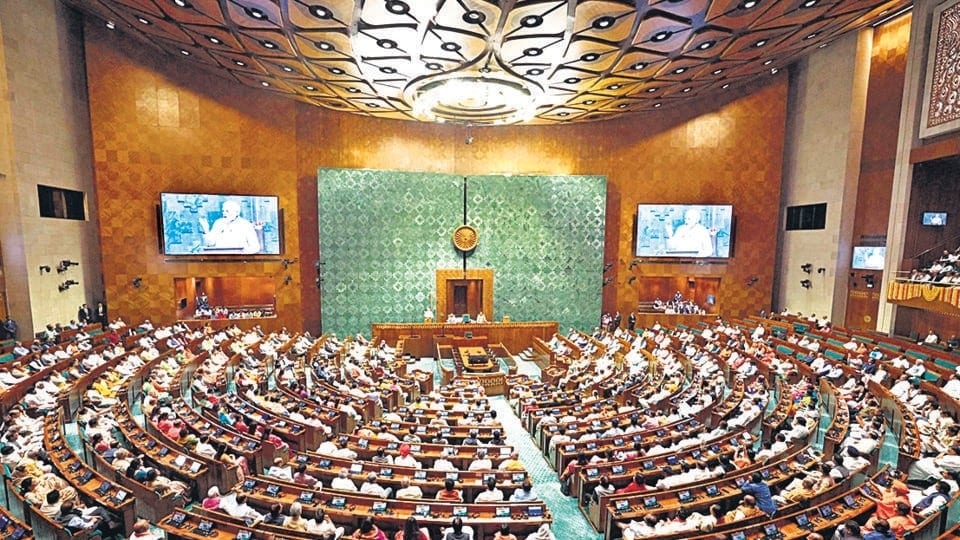
In the first meeting of the panel, officials from the minority affairs ministry and the law ministry presented their views on the bill, and sought to answer questions posed to them, but the Opposition lawmakers in the panel, led by the Trinamool Congress’ Kalyan Banerjee, Aam Aadmi Party’s Sanjay Singh and Congress leader Nasser Hussain, said the officials were “ill-prepared”, according to a person familiar with the proceedings, who asked not to be named.
Panel chairman and BJP lawmaker Jagdambika Pal stressed the importance of wide-ranging discussions and a constructive outcome. “The government presented the bill and it has been referred to the JPC. All members of JPC will discuss this bill in it. Whatever the concerns are, we will discuss them in the JPC,” he said before the meeting.
Read more: Andhra Pradesh: TDP in a bind over NDA’s stand on Waqf board, fears backlash in the state
Pal added that many people and organisations, including stakeholders such as the chairmen of State Waqf Boards and bodies representing minority communities would engage with the panel.
While the ministry officials focused on the differences between the 2013 bill and the new bill, Opposition MPs demanded that they explain the salient features of and the rationale behind bringing a new bill. “We asked them why two Hindus are included in the Waqf board, and why the law demands that only Muslims practising for five years can donate land to Waqf,” a member of the panel from an opposition party said, asking not to be named.
Lawmakers pointed out that many Muslims and Hindus have donated for each other’s causes but the new law tries to prohibit such goodwill gestures. They also questioned why collectors have been given power to decide whether a property is Waqf or not, in case of a dispute, when judgments in the Supreme Court ruled otherwise.
Some Opposition lawmakers objected to inclusion of two Hindus in the Waqf boards and said in the meeting that while the bill prohibits Hindus from donating land for Waqf , it want Hindus in management of Waqf, HT has learnt.
According to the person cited in the first instance, one lawmaker also demanded that the government come out with correct figures on the total area of land under Waqf while another leader argued because India has a large Muslim population, it is natural that there are a large number of Waqf properties.
Read more: Purpose of Waqf bill is to dispossess Muslims of ancestral inheritance: JUH president
The bill’s provision of having one member each from Bohra and Agakhani communities, if they have Waqf in the state, was also discussed in the meeting. Pointing out that Bohras and Agakhanis are part of the 14 sects of Shia, many Opposition leaders sought representation for backward Muslims in Waqf committees but asked the officials whether the government could ensure adequate representation of backward Hindus and one person from the SC and ST in each temple board.
According to Opposition leaders, the officials could not answer many of the questions.
The Opposition leaders maintained that the bill violates Article 26 that deals with the freedom to manage religious affairs. Banerjee, according to two other leaders who attended the meeting, also said that there was no need to bring a new law for Waqf properties.
The Waqf bill was introduced in the Lok Sabha on August 8 and was referred to a 31 member-Joint Parliamentary Committee. Some of the controversial provisions of the bill include induction of two non-Muslims members in the Central Waqf Council and waqf boards; inclusion of one member each from Bohra and Agakhani communities in the boards; empowering collectors to survey Waqf properties. Under the current Waqf Act, the Waqf tribunal’s decisions were final but the bill allows for that tribunal’s orders to be appealed against in the high court within 90 days.
AIMIM leader Asaduddin Owaisi submitted a 15-page note to the panel registering his objection to the bill.
Owaisi, one of the top minority leaders in Parliament, argued that the government has cherry-picked the Sachar Committee recommendations. He cited that the Sachar Committee Report recommended “broad basing” the membership of the Waqf boards and the government used this as a pretext to mandate non-Muslim members in the Boards. Owaisi has pointed out that the commission’s recommendations meant the “broad-basing” was supposed to be within the community.
Owaisi also argued that the state can make law pertaining to the secular aspects, while leaving the religious aspects in the hands of the adherents as the Supreme Court has held that regulations can be made to prevent mismanagement and maladministration, without intervening in the religious activity itself. In other words, the law may play an orderly and enabling role, but not an interventionist or restrictive role, he argued.
The panel will meet again on August 30.


