
 E-Paper



Interview: We have zero tolerance towards custodial torture, says Jiwal
Shankar Jiwal, Tamil Nadu's Director General of Police, discusses his priorities including zero tolerance for custodial torture and monitoring social media for security. He also addresses preparations for the 2024 Lok Sabha elections and crackdowns on illegal activities such as arms smuggling and drug trafficking.

 Prefer HTon Google


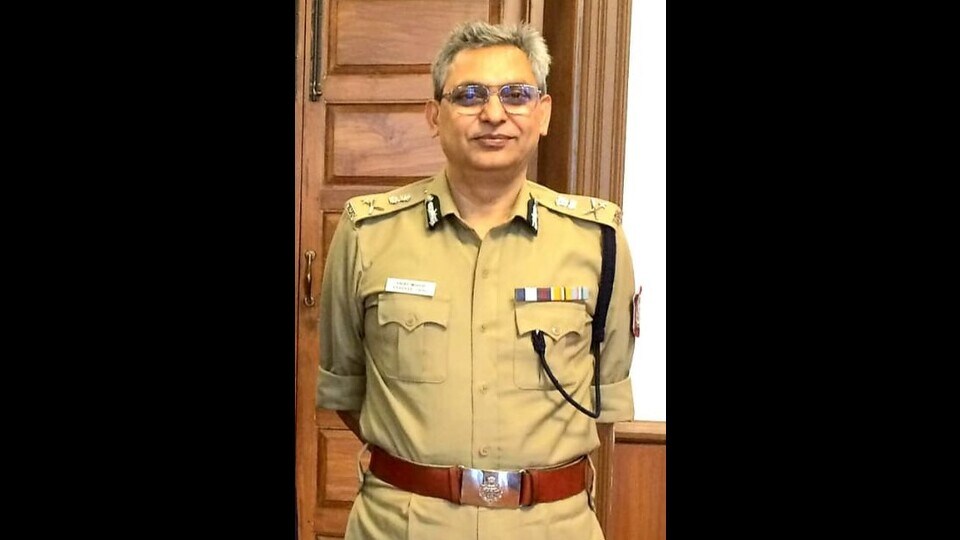
After his 26-month stint as Chennai city commissioner of police, Shankar Jiwal on June 30 took over as Tamil Nadu’s director general of police (DGP). In an interview with Divya Chandrababu, he speaks of having zero tolerance towards custodial torture, predictive policing on social media and security preparations for 2024 Lok Sabha elections. Edited excerpts:
In the last five months, since you have taken charge, what have been your priorities, chief challenges and new initiatives?
Tamil Nadu police is functioning very well focussing on eight verticals, such as maintaining law and order, taking stringent action against rowdyism [hooliganism], katta panchayat, especially against organised gangs and hired killers], drug and prohibition offenders, safety of women, children, senior citizens and vulnerable sections of society, time-bound disposal of Mudhalvarin Mugavari petitions [received through chief minister’s helpline management system and the CM’s Special Cell] and other public grievances, welfare of the police force, reducing road traffic accidents and deaths and lastly, strict vigil over developments on social media that have the potential to affect law and order and public peace.
We have introduced mobile CCTV cameras which are readily deployable at any place in short span of time and have internet connectivity to enable monitoring from multiple remote locations. Body-worn cameras have been provided to police personnel on escort duty and the escort vehicles are fitted with CCTV cameras. This helps in monitoring the accused in transit to court and back to avoid their interaction with unauthorised persons. A system has also been introduced to monitor progress of trial cases in courts and production of witnesses in the courts, quality evidence is being ensured. This is likely to reduce the pendency of FIRs and non-bailable warrants in due course.
How are you monitoring social media to maintain security?
We have created a state of the art Social Media Centre (SMC) at the police headquarters which functions 24x7 to analyse content, monitor trends and track high-profile users to ensure that preventive checks can be digitally laid before an issue spirals out of control. The SMC has different teams to monitor social media platforms based on four criteria–Issue based monitoring, organisation based monitoring, current trends & hash tags monitoring, and analysing. Any post on social media which can harm peace and harmony, is brought to the knowledge of superior officers immediately for necessary action.
There is a social media cell under each district superintendent of police (SP) and commissioner of police (CP). Advanced software tools for Open Source Intelligence are used to watch trends and developments. These tools enable us to collect and analyse information from the internet, social media and Dark Web. It analyses hashtags to identify viral messages, the sentiments around the trending topics, the top influencers, tweeted content, images, videos, opinions, etc.
Tamil Nadu police are well equipped to tackle the fake news on social media. In early 2023, the successful tackling of the massive spread of fake news that North Indian Hindi speaking migrant workers were being attacked in Tamil Nadu by local people was lauded not only in the state but across the country. Many have opined that this response can be a template for other police forces. In the current year [from January to October], 3,046 cases have been registered under IT Act.
It is true that personal disputes over trivial issues, like murders by relatives, sometimes are flared up by vested interest on social media in order to sensationalise the issue and also to create an image as if the law and order situation is not good. It is true that some activists use their social media handles to malign individuals by spreading the misinformation.
Apart from the steps mentioned above, the content of the social media handle is blocked and in some cases, the social media handle itself is blocked.
There have been three extrajudicial deaths in the past as many months where five criminals have been shot dead. Your comment.
Tamil Nadu Police, both in letter and spirit, ensure that no activity, which is against law, is tolerated and if anything adverse comes to notice, it is acted upon. At the same time, police as enforcers of law, do have the right of self-defence and in three cases in recent past, history-sheeted rowdies had attempted to harm and cause danger to the lives of the policemen performing their duty. Thus, in all cases, only as a last resort, had the concerned police team used force. It is pertinent to mention that the concerned history-sheeted rowdies had a number of pending cases, including serious ones. The injured were immediately shifted to hospitals. The due process of law, enquiry by an independent agency by way of a Magisterial enquiry was instituted.
Though there have been no custodial deaths this year, there have been complaints of custodial torture.
Tamil Nadu police have adopted zero tolerance towards custodial torture and instructions have been given to all the concerned police officers, accordingly. Any allegation of police torture will be taken seriously and prompt investigation will be done to find out the lapses and take necessary legal action. All the 1,578 police stations have been installed with CCTV cameras to ensure transparency and accountability. The results are evident in the data. The number of custodial death cases has drastically declined in recent years. In 2018 it was 10, in 2019 it was 10, in 2020 it was 6, in 2021 it was 4, in 2022 it was 3, and 2023 it is nil.
Ahead of the 2024 Lok Sabha elections, the government is concerned that political opponents are likely to drive caste and communal disharmony in the state. How is the police preparing?
Tamil Nadu police is fully prepared to face the 2024 general elections and efforts are already underway to ensure smooth and incident free conduct of elections. Accordingly, police officers are working on to keep the trouble mongers and rowdies in check by way of various preventive actions like detentions under Goondas Act, speedy prosecution, etc. Regarding the murders and rowdy-related murder cases in some southern districts [Tirunelveli and Thoothukudi], the total cases reported from January to October in 2023 are 87, as compared to 104 in the same period in 2022. Thus, there is a decrease in total murder cases reported in the southern districts in 2023.
With regard to the caste and communal clashes, a mobile squad in certain districts for prevention of violence and atrocities against members of SC/ST has been created. The mobile Police Squad (PCR Unit) in certain districts were tasked with the role to avert caste fragilities in the society along with enforcing and periodic monitoring of the Prevention of Civil rights 1955 and Prevention of Atrocities against SC/ST Act. The unit holds regular meetings with NGOs to provide Socio-economic rehabilitation measures.
Since 2021, NIA has registered over four cases to probe a conspiracy by Liberation Tigers of Tamil Eelam (LTTE) sympathisers based in India and Sri Lanka to revive the activities of the banned outfit by indulging in arms smuggling, ferrying of drugs and using hawala for transfer of funds. How is state police cracking down on these attempts to regroup?
NIA is the central agency which picks up cases and investigates as per relevant Act. Tamil Nadu police has a specialised unit Q Branch, which deals with the issues relating to the 4 cases registered. Q Branch is working in professional cooperation with NIA to see that any anti-national and anti-social activity is curtailed and also logically investigated to avoid further incidents. The overall situation in Tamil Nadu with respect to smuggling of narcotics and arms is well under control and those who are there meant to be in transit are already being monitored through registration of cases and in-depth investigation.


