US secretary of state Marco Rubio said on Thursday that Washington's close ties with Pakistan would not affect its partnership with India, adding that both countries shared concerns over terrorism.
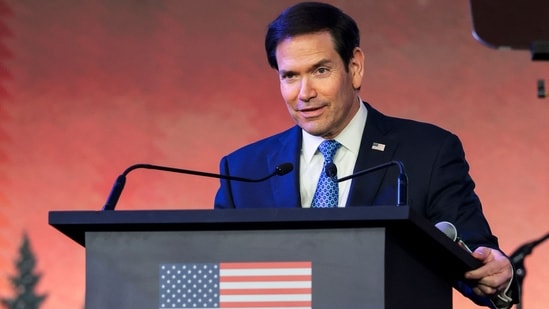
"In no way does the relationship with Pakistan come at the expense of our relationship with India," Rubio, who was on a visit to India, said in an interview with India Today. He added that the US and India "share the same concerns... about terrorism."
He made the remarks at the Taj Mahal Palace Hotel in Mumbai, one of the locations targeted in the 26/11 terror attacks in 2008. The attacks killed more than 160 people, including six US nationals.
Deep Dive
What issues did Marco Rubio discuss with S Jaishankar during his India visit?
Why did Marco Rubio visit Reliance Industries' Jamnagar refinery?
How close are India and the US to a trade deal?
He was responding to a question on how Washington would reassure New Delhi that its closer ties with Islamabad would not weaken India's efforts to fight terrorism.
Rubio on US-Pakistan ties and India
He said the US had global interests that required it to maintain ties with countries across the world, including Pakistan, with which it has had longstanding relations.
{{/usCountry}}He said the US had global interests that required it to maintain ties with countries across the world, including Pakistan, with which it has had longstanding relations.
{{/usCountry}}Rubio added that closer engagement could give Washington greater scope to influence Islamabad's decisions on several issues. "I think it allows us to have, hopefully, more influence over the decisions they make on a variety of topics," he said.
While speaking about the US record on counterterrorism, Rubio said his country had also suffered from terrorist attacks and remained committed to tackling the threat worldwide.
"No country in the world does more to go after terrorism than the United States," he said, referring to US operations that dismantled the Islamic State's territorial stronghold, weakened Al-Qaeda and killed its founder, Osama bin Laden.
Marco Rubio in India
During his India visit, Rubio also sought to address concerns about Washington's stricter immigration rules. He said the changes were part of a broader effort to reform the US immigration system and were not specifically aimed at India.
He held talks with external affairs minister S Jaishankar, with discussions largely covering trade, energy, defence, technology and people-to-people ties.
On Wednesday, Rubio met leaders of some of India's largest business groups. His meetings included Tata Group chairman N Chandrasekaran and Adani Group chairman Gautam Adani, before he travelled to Jamnagar for a tour with Reliance Industries chairman Mukesh Ambani.
Speaking about the proposed India-US trade deal, Rubio said the two countries were “very, very close” to an agreement, with only a few details left to resolve.
His remarks on India’s Russian oil purchases were also significant. He said the importance of maintaining strong ties with India was one factor behind US President Donald Trump's recent decision to waive tariffs on India and other countries over their purchases of Russian energy.
Rubio also acknowledged that India would find it difficult to reduce its dependence on Russian crude oil in a short period.