
 E-Paper



What does the interim budget do for elections?
The BJP has been smart enough to devise schemes which have provided it political credit for helping the poor without even spending a rupee from the budget’s coffers

 Prefer HTon Google


The short answer to this question is nothing. There are no big-bang populist announcements after all. The slightly long and more correct answer is that it only reiterates the 24x7 political-economy plan which has so far worked very well for the Narendra Modi government. The main contours of this plan are as follows.
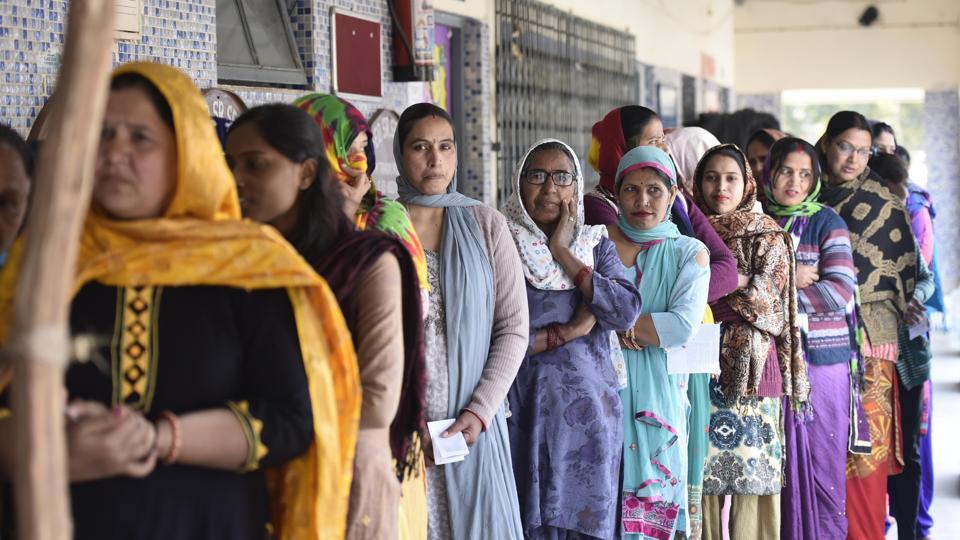
In the 10 years the current government has been in power, it has deployed an intricate and detailed network of welfare measures and cultivated a large number of economically obliged voters who have come to be known as “labharthis” (beneficiaries). While welfare beneficiaries are not a new category in itself in India, the BJP’s political genius lies in the fact that in the last decade, it has built a political communication highway between this vast mass of underclass and the Prime Minister who represents almost all of the political capital of the BJP.
The fact that almost all of India’s welfare delivery now takes place through the direct benefit transfer (DBT) route thanks to the Jan Dhan- Aadhaar-Mobile (JAM) trinity has been a critical factor in building this highway. For these sections, the budget is just another day of political messaging in their lives. Every time they receive a welfare benefit – this could be something as inconsequential as a few kilograms of rice or as a significant as a new house – the BJP’s, and more importantly, the Prime Minister’s political messaging is instant and relentless. By extending some of the schemes, such as a large addition to the number of houses under the rural housing scheme, the interim budget has shown that the government is is focused on harvesting the new demographic crop of “labharthis” which is waiting to be obliged.
In fact, the BJP has been smart enough to devise schemes which have provided it political credit for helping the poor without even spending a rupee from the budget’s coffers. The Lakhpati Didi scheme, which has seen an increase of 10 million in the number of targeted beneficiaries, is one such example. The money is all from banks (although guaranteed by the government) and therefore does not add to the government’s fiscal burden, but the credit is the government’s and by extension the BJP’s.
The budget speech’s reference to farmers, poor, women and youth being the only four “castes” worth focusing on, also shows that the BJP is hoping to exploit these welfare programmes to counter any political attempt to resurrect Mandal politics and consolidate other backward classes (OBC) voters against it ahead of the 2024 elections. “Previously, social justice was mostly a political slogan. For our Government, social justice is an effective and necessary governance model”, the finance minister said in her speech. The articulation could not have been clearer.
The other important political component of the budget is narrative-building. As a party which suffered a shock defeat in the 2004 general elections -- they were fought on the economic hubris of “India Shining” campaign -- the BJP has learnt its lessons in setting the economic narrative. It promises prosperity and well-being as work in progress which will only materialise if the BJP continues in power rather than the “it’s your fault if you cannot feel it” approach of “India Shining” . At the same time, it uses its predecessor’s track record to exploit what can be described as retrospective anti-incumbency. The reference to India being in the “fragile five” in 2014 as a result of “the mismanagement of those (UPA) years” is yet another attempt in the budget speech to do precisely that.
And instead of relying on one big defining number, the government’s economic narrative enchants the voter with a thousand details. Airports, Vande Bharat trains, competition among important religious tourism centres, selling the waiving off of tax disputes involving amounts as insignificant as ₹25,000 and even ₹10,000 are some such examples. These tidbits might bore the typical macro economist to death but they keep the layperson electorate hooked and happy and add to the number of voters who have been directly obliged by the government in one way or the other.
Last but not the least is the issue of what this budget has done to the numerically insignificant but extremely critical constituency of capital ahead of the elections. The government, by adhering to the fiscal glide path, retaining its capex focus, offering as much as trillion rupees in 50-year interest-free loans to private players to take up scientific research, making sure that tax holidays for entities such as sovereign wealth funds are not interrupted in an election year, and through the finance minister’s subtle expression of satisfaction about inflation being within the “target band” of 2%-6% even though the Reserve Bank of India has been insisting on it stabilising at the actual target of 4% has sent some very important messages to Indian capital. These measures will assuage business sentiment and inflation expectations, bring down cost of doing business and most importantly open hitherto closed parts of the Indian economy for private capital. This also means that big business will be more than happy to bet on the political stability and the policy continuity the BJP promises.


