Given that we celebrate Independence Day in August, it becomes fashionable to villainise the British. However, even the most ardent nationalist in this state will doff their Mysore peta to Benjamin Lewis Rice, the administrator-turned antiquarian/ historian in whose memory stands a church on Avenue Road in the heart of Bengaluru, the city where he was born all the way back in 1837.
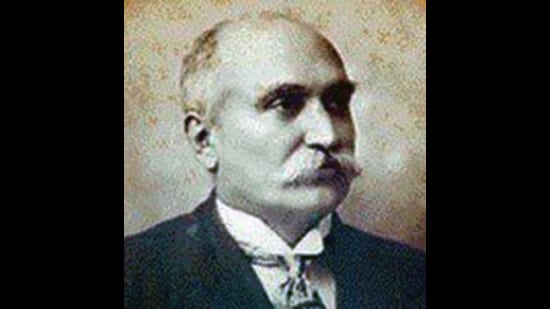
Rice was educated in England, and held many posts in the Kingdom of Mysore. It was a land he loved and wrote about. Consider this paragraph in his monumental 1897 Mysore Gazetteer: “If there be any truth in the observation that small countries with diversified and distinctive physical characteristics have played the greatest part in the world’s history, and given rise to its most distinguished men, Greece, Palestine, England and others being quoted as instances, Mysore, it seems to me, may fairly claim a place in the category. She is the peculiar home of the sandal and also of teak, a special haunt of the elephant, rears a famous and superior breed of horned cattle, supplies as the staple food of her people the nutrient grain of ragi, was the cradle in India and is still the chief garden for coffee cultivation. Thus in every department of the natural world she may claim some pre-eminence.”
Rice’s records detail a sudden, massive agricultural fluctuation in the ragi-growing belt of Southern Karnataka (including Bangalore and its environs) between 1871 and 1873. It was an abrupt relinquishment of wet rice cultivation in favour of ragi and oilseeds. This wasn’t a culinary whim, but an administrative side effect. The control of irrigation channels and tanks was transferred from local Revenue officers to the Public Works Department to enforce repairs and curb water waste. When the new Revenue Survey rendered all occupied lands liable for tax whether they were actively cultivated or not, the area under wet rice dropped drastically from 1.32 million acres to just half a million. The fields reverted to dry-land ragi, a crop managed with staggering precision, and more importantly, less dependent on water. As the historical chronicler Mark Wilks famously noted, “The whole world does not, perhaps, exhibit a cleaner system of husbandry than that of the cultivation of ragi in the home fields of Mysore.”
{{/usCountry}}Rice’s records detail a sudden, massive agricultural fluctuation in the ragi-growing belt of Southern Karnataka (including Bangalore and its environs) between 1871 and 1873. It was an abrupt relinquishment of wet rice cultivation in favour of ragi and oilseeds. This wasn’t a culinary whim, but an administrative side effect. The control of irrigation channels and tanks was transferred from local Revenue officers to the Public Works Department to enforce repairs and curb water waste. When the new Revenue Survey rendered all occupied lands liable for tax whether they were actively cultivated or not, the area under wet rice dropped drastically from 1.32 million acres to just half a million. The fields reverted to dry-land ragi, a crop managed with staggering precision, and more importantly, less dependent on water. As the historical chronicler Mark Wilks famously noted, “The whole world does not, perhaps, exhibit a cleaner system of husbandry than that of the cultivation of ragi in the home fields of Mysore.”
{{/usCountry}}Both Rice and Wilks chronicled agriculture. However, if you want to look at the historical zenith of regional gastronomy, you must open the ancient Sanskrit and Kannada shastras. In the 12th-century text Manasollasa, written by the Kalyani Chalukya King Someshvara III, the only sweet deemed worthy of mention is the payasam. The text includes topics on poetry, art, music, dance and all good things including perfumes and food. In his royal kitchen, cooking was done exclusively with pure ghee, tamarind provided the sourness, and chilies had not yet arrived to disrupt the palate. The king was clearly an aesthete, as he gave specific instructions about food preparation, including a technique that my grandmother and aunts still use: soaking hingu or asafoetida in water.
Even earlier, the 1025 A.D. Kannada text Lokopakara by King Chavundaraya laid down the rules of Soopashastra (culinary science). It reads like an ancient domestic manual, breaking down ingredient substitutions, methods for seasoning butter, and cookware selection. The first chapter describes the preparation of 35 breads, sweets and snacks. The second chapter describes the preparation of various soft drinks salty, sour and sweet in taste. The third chapter is on nine types of sweet payasam (pudding), eight types of cooked rice, and 24 types of mixed rice dishes. The remaining three chapters are on dishes made with various vegetables. These include recipes for 28 dishes with eggplant, 16 dishes with jackfruit, 25 dishes made with raw bananas and banana flowers. The last chapter contains recipes using bamboo shoots and myrobalan, along with preservation methods for pickles and papads.
All of this reminds us that before we became obsessive modern dieters, the traditional idea of a good meal was beautifully uninhibited. As anthropologist MN Srinivas observed in The Remembered Village, a satisfying meal meant eating until the stomach could hold no more, punctuated by a necessary, resounding post-meal belch, which gratified the hostess and signalled satisfaction.
(Shoba Narayan is Bengaluru-based award-winning author. She is also a freelance contributor who writes about art, food, fashion and travel for a number of publications.)