
 E-Paper



What shapes the electoral landscape in Karnataka
Will the Bharatiya Janata Party be able to fight off anti-incumbency, and also allegations of widespread corruption, in the state? Can the Congress eke out a rare win? And will the Janata Dal (S) still be relevant? .

 Prefer HTon Google


Will the Bharatiya Janata Party be able to fight off anti-incumbency, and also allegations of widespread corruption, in the state? Can the Congress eke out a rare win? And will the Janata Dal (S) still be relevant? .
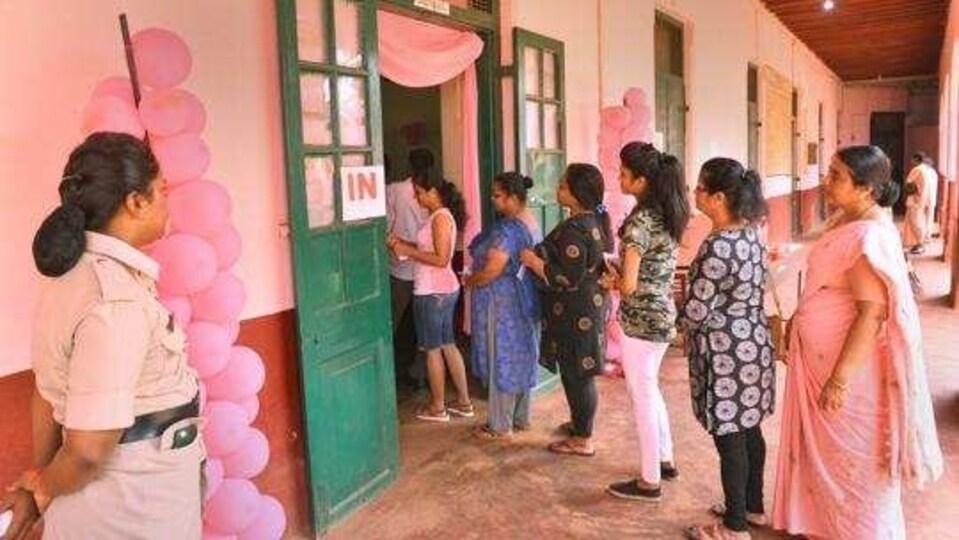
These are the three top-of-mind questions in Karnataka, where, the Election Commission of India announced on Wednesday, elections would take place on May 10, with the results being declared on May 13.

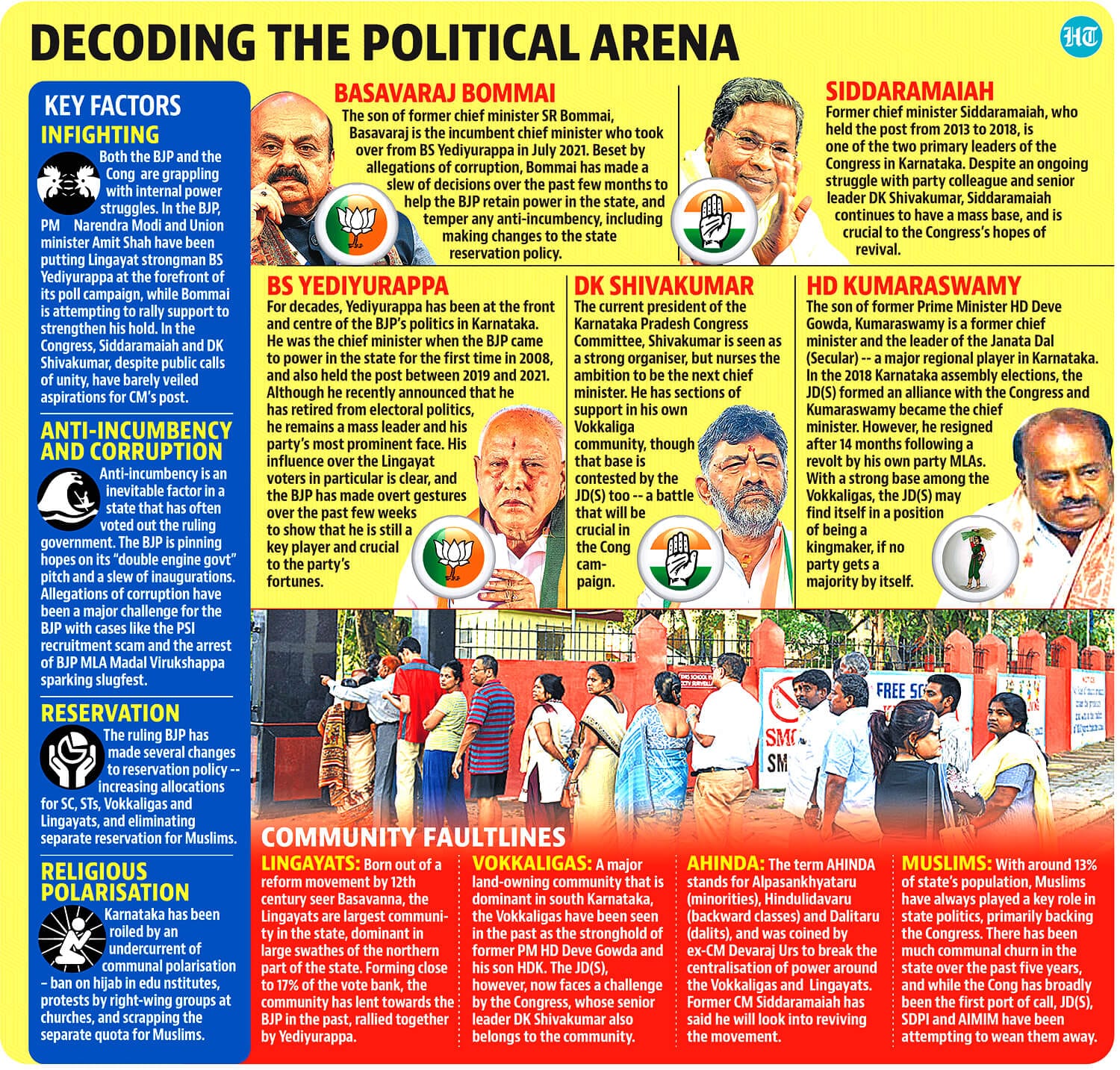
As of now, the BJP has 119 MLAs in the 224-member Karnataka assembly, followed by the Congress (75) and the JD(S) (28) . Two seats are vacant. In the 2018 election, the BJP had won 104, the Congress 80 and JD (S) 37. After BJP leader, B S Yediyurappa, failed to prove majority on floor of the house, JD (S)’ H D Kumaraswamy, became the chief minister with the support of the Congress. A year later, B S Yediyurappa returned as chief minister when 17 opposition MLAs resigned. But in August 2021, the BJP replaced Yediyurappa with Basavaraj Bommai, who has now also been named as chairman of the campaign committee .
On Wednesday, both the Congress and the BJP claimed they are election ready. Bommai said that the party is “every-ready” for elections and exuded confidence. Senior Congress leader and former chief minister Siddaramaiah hoped that the election commission would conduct “free and fair” polls and expressed confidence in his party’s prospects.
The Congress has already announced candidates for 124 of the 224 assembly seats and said it would announce the remaining candidates by April 10. The party claims the momentum is with it and points to at least 10 former lawmakers from the BJP joining its ranks in the past two months.
Bommai said the BJP would announce its first list of candidates in first week of April, and added that most sitting MLAs are expected to get tickets. “We may not repeat the Gujarat formula of replacing many sitting MLAs as it could have an adverse impact. The first list will have most of the sitting MLAs,” said a senior BJP leader who asked not to be named.
Also Read| Number theory: Five charts which explain the Karnataka contest
ELECTORAL ISSUES
The Congress has made corruption , alienation of minorities and mis-governance its major campaign issues. It is counting on the fact that the Congress national president Mallikarjun Kharge, is a Kannadiga (and a Dalit) to help.
In addition to the issues, the Congress has sought to revive AHINDA --- the Kannada acronym for minorities, backwards, dalits and tribals --- to counter a condolidation of the Hindu vote. These castes constitute about 39% of the state’s population but recent election results have shown that that they no longer vote as a block.
The BJP is relying on welfarism, consolidation of the Hindu vote, enhanced reservation for two dominant backward classes, Lingayats and Vokkaligas, Hindutva, and the popularity of Prime Minister Narendra Modi.
Lingayats have traditionally backed Yediyuruppa ( Bommai is also a Linagayat but not as big leader as Yediyuruppa, local BJP leaders admit) and the attention the party has given Vokkaligas may make them move away from the JD (S), BJP leaders said. The Congress too is eyeing the Vokkaliga vote, with D K Shivakumar, the state Congress D K Shivakumar, a Vokkaliga, also being a chief ministerial candidate.
And the BJP, analysts say, is also looking to sweep old Mysuru and the coastal region of the state on the back of its Hindutva politics. . For the first time, the political wing of now banned Islamic fundamentalist group, the Popular Front of India, Secular Democratic Party of India (SDPI) has decided to contest all seats in the two regions.
“ Hindutva politics and Tipu issue could have impact on coastal and Mysuru regions. In rest of Karnataka, it may not have much impact as previous elections as there is no sizeable Muslim population there. The SDPI play in coastal regions will be interesting to watch,” said political expert A Naryana, referring to some BJP leaders targeting Tipu Sultan.
VOTE CHANGE
The BJP has seen a steady growth in the state, where it won only 18 of the 110 seats it contested in 1983. In 1994, it won 40 seats, and then 79 in 2004.
In 2007, Yediyuruppa became the state’s first BJP chief minister after the Congress broke an alliance with the JD (S), bringing down the H D Kumaraswamy government. A year later, the BJP won 110 seats, its highest ever. In 2013, the BJP faced a debacle after Yediyuruppa left the BJP and floated his own party; it won only 40 seats . In 2018, the BJP recovered ground with Yediyuruppa back in fold and won 104 seats. But it was the Congress and the JD(S) that formed the government first.
Amid the rise of the BJP, the Congress vote share has declined from over 50% in 1970s to 38.04% in 2018. Experts say that the JD (S) could fare poorly this time, reducing the polls to a bipolar affair. At the constituency level, it will be a close contest, they add.
Karnataka is a test for Congress as it is the first state assembly election since the disqualification of Congress leader Rahul Gandhi from Lok Sabha and the first where the party will likely target PM Modi over his perceived proximity to the Adani Group, accused of alleged fraud and stock manipulation by research firm Hindenburg.
A win for the BJP would protect its only beachhead in the peninsula, and help it mount a campaign in Telangana and Andhra Pradesh. Analysts point out that chief minister Bommai as well as other local leaders of the BJP have taken a hard Hindutva line as they jockey for leadership of the party in the state. A win, they add, may well strengthen Bommai’s hand.


