
 E-Paper



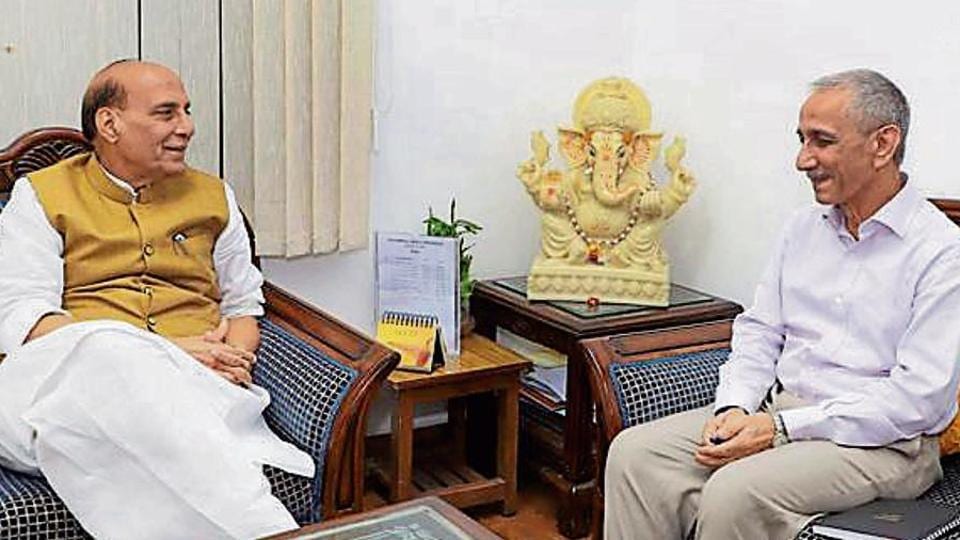
Kashmir’s new interlocutor: Who is Dineshwar Sharma?
Dineshwar Sharma was instrumental in the arrest of former Hizbul Mujahideen chief Master Ahsan Dar, who had returned to the Valley after falling out with the Syed Salahuddin, commander of the outfit in Pakistan-occupied Kashmir.

 Prefer HTon Google


The Pakistan-fueled Kashmir separatist unrest was at its peak in 1992 and the country’s internal intelligence agency was struggling in Srinagar after militants shot dead four officers from close range.
Intelligence Bureau (IB) assistant director Dinesh Kumar, who was on deputation from the BSF, was the lone man standing. At this vulnerable moment, then IB director MK Narayanan asked for a list of IPS officers to replace Kumar.
A couple of them virtually refused the rough assignment. But an officer of the 1979 batch volunteered and even decided to shift his entire family, including school-going children, to Srinagar.
He’s Dineshwar Sharma — short, slightly built and with a quiet and non-fussy temperament. He was IB assistant director for Jammu and Kashmir for the next two years, diligently doing his job without fuss and keeping the national flag flying in extreme conditions.
Sharma was instrumental in the arrest of former Hizbul Mujahideen chief Master Ahsan Dar, who had returned to the Valley after falling out with the Syed Salahuddin, commander of the outfit in Pakistan-occupied Kashmir.
He retired as IB director last December and the government appointed him this October as its representative for talks with the people in Kashmir, including separatists.
Sharma, or Panditji for his friends, is the fourth official interlocutor appointed by the Centre since 2000. According to intelligence officers, Sharma’s task is cut out as the Valley is reeling from protracted unrest after the killing of young Hizbul militant leader Burhan Wani last year.
But the Narendra Modi government could expect positive changes as the man known for his intellectual honesty in his analysis and reports is said to feel for the Kashmiris and has never been a supporter of extra-constitutional means in the Valley.
“He has a holistic perspective about the Kashmir issue and does not view the problem through a narrow security prism. He has tremendous capacity to hear people and is accessible to all,” said a former IB chief.
Sharma’s mandate is to keep the door open for dialogue even with separatists, including the Hurriyat amalgam, but the engagement will have no role of Pakistan.
“The representative is meant to have a sustained dialogue to understand the legitimate needs of the cross-section of society in J&K, and then communicate them to the state and central governments,” a senior IB officer said. “This is a natural step forward from Prime Minister Modi’s August 15 address in which he said Kashmir’s problems can only be solved by embracing people, not by bullet or abuses.”
Sharma would require support from the Mehbooba Mufti government and ground-level assessment to make the initiative credible. “A Kashmir dialogue is a minefield that will have to be negotiated by Sharma as consensus needs to be built on common issues while avoiding the contentious legacy issues of the past,” the official said.
Sharma will find support from his IB predecessor Asif Ibrahim and national security adviser Ajit Doval as the three have more than 100 years of combined experience in handling the troubled state.


