The first lesson taught in law college when dealing with the topic of personal liberty under Article 21, is that bail is a rule and jail an exception.
While this principle was honoured for long, in the past three decades this declared judicial principle, though ceaselessly repeated and reiterated, has become an elusive goal, and we have witnessed a transition from a liberal attitude towards bail to judicial conservatism. Add to this the trend of imposing additional legislative restrictions that obligate an accused to first show that he is not guilty of the offence before bail can even be considered.
The post-Emergency era till the early 1990s was liberty oriented. However, economic liberalisation led to an increased incursion of the reach of criminal law to almost every aspect of life accompanied by restrictive approach in matters of bail. Compounding the problem is the oppressive twin conditions of bail, ie, proving your innocence and that you will not commit any such offence, applied rampantly across statutes such as PMLA (money laundering), UAPA (terror cases), and Companies Act.
The extinguishment of the presumption of innocence, the reversal of the burden of proving innocence on the accused and the consequent circumventing of the protections under the Indian Constitution (Article 14, 21, 22) has led to a divorce between the Constitution and these special statutes, especially in matters of bail.
Even after the Supreme Court struck down the restrictive twin conditions stipulated in PMLA in Nikesh Tarachand Shah [2017], Parliament has brought them back through an amendment to PMLA. Although the twin conditions are presently under challenge before the Supreme Court, these conditions ensured that the presumption of innocence (part of our constitutionally protected rights) is rendered otiose. Such restrictive bail conditions have adversely impacted discretion in matters of bail and individuals are now left at the mercy of the investigating agencies.
{{/usCountry}}Even after the Supreme Court struck down the restrictive twin conditions stipulated in PMLA in Nikesh Tarachand Shah [2017], Parliament has brought them back through an amendment to PMLA. Although the twin conditions are presently under challenge before the Supreme Court, these conditions ensured that the presumption of innocence (part of our constitutionally protected rights) is rendered otiose. Such restrictive bail conditions have adversely impacted discretion in matters of bail and individuals are now left at the mercy of the investigating agencies.
{{/usCountry}}Till about three decades ago, the high court was the last court in matters of bail. That position has changed and the approach even at the high court level is based on the individual philosophy of individual judge. The consequence of all these factors is that with a restrictive exercise of discretion at the magisterial court, sessions court and often at the high court level, the Supreme Court is overwhelmed with challenges to orders cancelling bail as also seeking bail under Article 136 of the Constitution of India.
Repeated challenges to the grant of bail by high courts and trial courts have resulted into an adverse impact in the exercise of discretion.
Aggravating the problem is incessant 24x7 electronic media debate and social media discourse. Such media trials often question exercise of discretion in matters of bail amid an incessant attack dehors appreciation of facts or of the law.
Power of arrest vests both with state police agencies and the central agencies, some of which have co-ordinate investigative powers in the states.
Though the Narcotics Control Bureau has to look at fundamental issues such as eradicating illicit drug crops, implementing domestic and international trade control and assisting states in their drug law enforcement efforts, yet it is witnessed that of late it has chosen to exercise its investigating power in the states, despite the fact that the state police is fully empowered to investigate cases under the NDPS Act.
The difficulty that arises is when police seek to justify their existence by using their authority to target cases of individual allegations and then hype them up to justify such arrests and detention.
In 2020, there have been cases in Karnataka and Chhattisgarh where a similar pattern was followed with arbitrary arrests even of those who had no narcotics in their possession and such persons have languished in jail for as long as six months or more, till bail was finally granted by the Supreme Court.
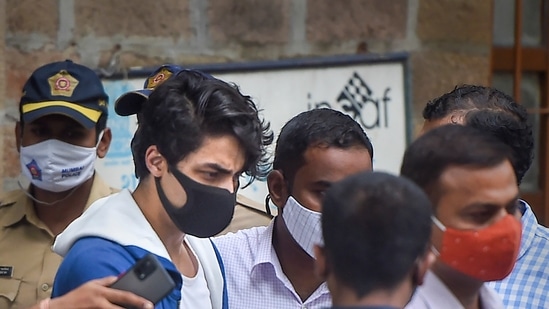
Under the NDPS Act where there is no recovery of drugs, the reverse burden of proving one’s innocence is not attracted and nor can the presumption of guilt in NDPS be drawn. Yet, bail is refused at the first instance as agencies vehemently oppose bail irrespective of lack of evidence. Whether such cases will ever reach trial is ignored. Aryan Khan’s case has highlighted these aberrations in the criminal justice system.
Meanwhile, there are countless many who continue to languish in custody without trial and conviction, waiting for their bail pleas to be heard while investigations and trials are delayed inordinately.
(Sidharth Luthra is a senior advocate and former additional solicitor general of India. Ketaki Goswami is a well-known lawyer)