E-Paper



‘India has not and will not accept any mediation’: PM Modi during 35-minute call with Trump
Prime Minister Narendra Modi told Donald Trump that Operation Sindoor remains underway and that India will respond to Pakistan’s bullets with bombs.

 Prefer HTon Google


Prime Minister Narendra Modi told US President Donald Trump on Wednesday the decision by India and Pakistan to halt military actions in May was made directly during talks between the armies of the two sides and without any mediation by the US, pushing back against the American leader’s claims that he brokered a ceasefire.
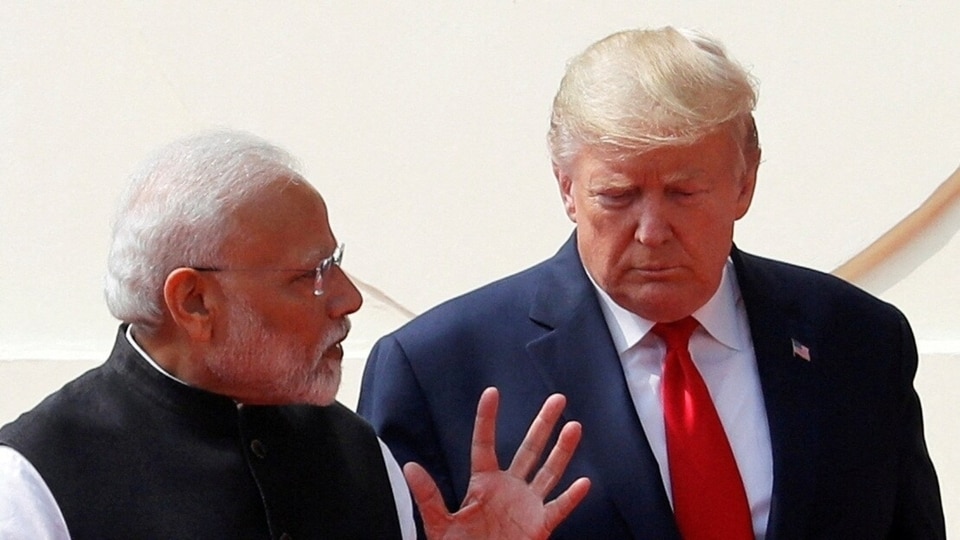
The issue figured in a phone conversation initiated at Trump’s request after the two leaders were unable to meet on the margins of the G7 Summit in Canada because of the US president’s return to the US ahead of schedule, foreign secretary Vikram Misri said.
During the 35-minute conversation, Modi told Trump that “India has never accepted mediation, does not and will never do so”, Misri said, speaking in Hindi. Modi made it clear to Trump that during the entire episode of the four days of military clashes between the two countries during May 7-10, issues such as the “India-US trade deal or mediation by the US between India and Pakistan” were not discussed “at no time [or] at any level”.
Trump was the first to announce the halting of hostilities between India and Pakistan on May 10 and an official American readout had even described the development as a ceasefire brokered by the US. Since then, Trump has claimed on more than a dozen occasions that he got India and Pakistan to stop fighting, and that he used the threat of stopping trade with both countries in these efforts.
This is the first time Modi’s remarks on the issue have been made public, and in the past, only officials had dismissed reports of a US role in the understanding between India and Pakistan to stop the hostilities that erupted after New Delhi launched Operation Sindoor on May 7 to target terrorist infrastructure in territories controlled by Pakistan in retaliation for the Pahalgam attack of April 22 that killed 26 civilians.
The Indian strikes of May 7 led to four days of intense clashes that saw both sides using missiles, drones and long-range weapons to target each other’s military facilities. The Indian side doesn’t refer to the understanding to halt hostilities, reached by the Directors General of Military Operations (DGMOs) of the two countries, as a ceasefire and has also said that Operation Sindoor has not ended.
Misri said a meeting between Modi and Trump was scheduled on the margins of the G7 Summit but couldn’t be held when the US President returned to America early. “Subsequently, at the request of President Trump, the two leaders spoke on the phone today,” he said.
This was the first conversation between the two leaders since Trump expressed condolences to Modi over phone after the Pahalgam terror attack and expressed his support in the fight against terrorism. “Therefore, Prime Minister Modi talked to President Trump in detail about Operation Sindoor,” Misri said.
Modi told Trump that after the Pahalgam attack, India “conveyed to the entire world its determination to take action against terrorism”. Modi said India targeted only terrorist hideouts in Pakistan and Pakistan-occupied Kashmir on May 7. “India's actions were very measured, precise, and non-escalatory,” Misri said.
India also made it clear that it would “respond to Pakistan's bullet with a cannon shell”, and on the night of May 9, US vice president JD Vance called Modi and said Pakistan “could launch a major attack on India”, Misri said.
Modi told Vance “in clear words that if this happens, India will give an even bigger reply to Pakistan”. Subsequently, India responded strongly to Pakistan's attack on the night of May 9-10, inflicting heavy damage on Pakistan’s military and making its military airbases “inoperable”.
“Due to India's strong response, Pakistan had to request India to stop military action. Prime Minister Modi made it clear to President Trump that during this entire episode, at no time, at any level, were issues such as India-US trade deal or mediation by the US between India and Pakistan discussed,” Misri said.
“The decision to halt military action was made directly between India and Pakistan, through existing channels of the two armies, and was made at the request of Pakistan. Prime Minister Modi stressed that India has never accepted mediation, does not and will never do so. There is complete political consensus in India on this issue,” he said.
Misri said Trump “understood the points made in detail” by Modi and expressed support for India's fight against terrorism. Modi also said India “now sees terrorism as a war and not a proxy war, and India's Operation Sindoor is still ongoing”.
Trump asked Modi if he could stop in the US on his way back from Canada, but Modi expressed his inability “due to pre-scheduled engagements”, Misri said. Modi travelled to Croatia from Canada for the last leg of a three-nation tour.
Misri said the two leaders decided they would try to meet in the near future. Trump and Modi also discussed the conflict between Israel and Iran and the Russia-Ukraine conflict. Misri said both leaders agreed that direct dialogue between Russia and Ukraine is necessary for “peace as soon as possible” and efforts should continue for this.
Trump and Modi also discussed the Indo-Pacific and “expressed support for the important role” of the Quad in this region. Modi invited Trump to visit India for the next Quad Leaders’ Summit and Trump “accepted the invitation and said that he is looking forward to visiting India”, Misri said.
India is expected to host the Quad Summit towards the end of the year.