While the Indian Army’s transition to a winter posture all along the 3,488km Line of Actual Control (LAC) with China is underway, a watch is being kept on the PLA’s western theatre command and movement of three combined armed brigades brought in as reserves by the Chinese army one month before the 20th Party Congress of Communist Party of China (CPC) in the eastern sector, according to officials.
External affairs minister Subrahmanyam Jaishankar has time and again maintained that peace and tranquillity on the LAC is the only key to restoring bilateral relations, which took a severe blow after PLA transgressions in East Ladakh in May 2020. On November 12, Indian Army chief General Manoj Pande publicly made it clear that there was unabated infrastructure development by China all along the LAC and there was no significant reduction of PLA troops in Occupied Aksai Chin in Ladakh.
Also Read| ‘Unpredictable… no significant reduction’: Army chief on LAC and Chinese troops
While the dates for the 17th round of senior military officials’ meeting are still to be finalised, the winter posture of the Indian Army will also be dependent on whether the three combined armed brigades (each brigade has 4,500 troopers with support elements of nearly a division) go back to their bases or continue to be positioned in the depth areas in the western theatre command, according to the officials quoted above.
It is understood that one combined armed brigade is deployed as reserve by PLA around Phari Dzong area across the Silliguri Corridor near the China-Bhutan border and two other PLA brigades are deployed across Arunachal Pradesh. These three brigades were inducted into Western Theatre Command from Eastern and Southern theatre commands of the PLA. Now that the 20th Party Congress has concluded and Xi Jinping has been elected President for the third term, the national security planners expect the PLA brigades to move back to their original bases. Or else, the Indian Army deployment through the winter will also have to take into account these additional forces in the depth areas.
{{/usCountry}}It is understood that one combined armed brigade is deployed as reserve by PLA around Phari Dzong area across the Silliguri Corridor near the China-Bhutan border and two other PLA brigades are deployed across Arunachal Pradesh. These three brigades were inducted into Western Theatre Command from Eastern and Southern theatre commands of the PLA. Now that the 20th Party Congress has concluded and Xi Jinping has been elected President for the third term, the national security planners expect the PLA brigades to move back to their original bases. Or else, the Indian Army deployment through the winter will also have to take into account these additional forces in the depth areas.
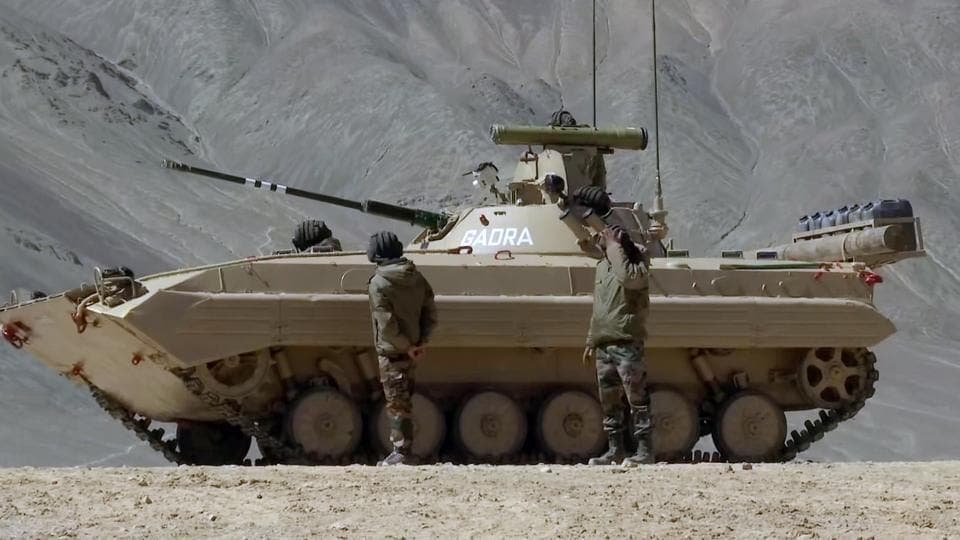
{{/usCountry}}The PLA is fully deployed in occupied Aksai Chin, with two divisions of troops plus border guards division along with rocket, armour, artillery, and missile support regiments. The Indian Army is also deployed in strength in East Ladakh, with armour and support elements. The PLA Air Force is also on standby at Gar Gunsa air base apart from fighters at Hotan, Kashgar, Lhasa and Nyingchi air bases, according to one of the officials.
Also Read| Modi, Xi Jinping shake hands at G20 dinner in first meeting since Ladakh standoff
While the Indian diplomatic and military officials have raised the question of disengagement and then de-escalation at the previous India-China meetings, the LAC issues will be resolved slowly with detailed bilateral deliberations.
The resolution of LAC issues such as the Indian Army’s right to patrol at Depsang Bulge, south of Daulet Beg Oldi, and CNN junction at Demchok in East Ladakh is also dependent on the strategic guidance that the PLA’s western theatre commander gets from the newly appointed Central Military Commission headed by President Xi Jinping. The Indian Army, meanwhile, is prepared for a long haul.