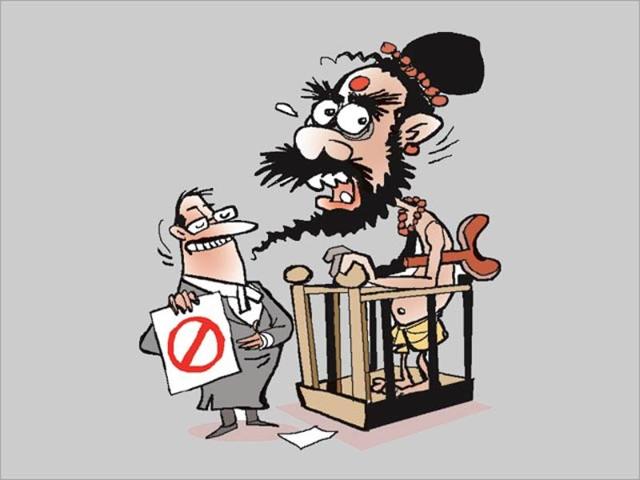
The testimony of a sanyasi or mendicant who renounced the world and follows an ascetic life cannot be accepted in a civil dispute by a court of law, the Supreme Court has held.
The order came on a plea filed by the sanyasi’s family which wanted the Haryana government to return their 30 acres in Palwal, declared surplus and allotted to different individuals under a local law in 1961 before he gave up worldly life.
“When you become a sanyasi you must abandon all material or worldly affairs,” said a bench headed by Justice Dipak Misra rejecting the testimony of Bhalle Ram, a mendicant from Jind who had deposed in favour of his sons in a property dispute.
“Sanyasis used to leave their homes to write scriptures. Forget cars, they never even travelled in bullock carts. But nowadays, sanyasis move in cars and aeroplanes,” the bench said, upholding a verdict of the Punjab and Haryana high court.
Ram, the family told the court, had renounced the world in 1964 and relinquished the ownership of his land. The appeal was filed after the family lost two rounds of litigation that began in 1967.
{{/usCountry}}Ram, the family told the court, had renounced the world in 1964 and relinquished the ownership of his land. The appeal was filed after the family lost two rounds of litigation that began in 1967.
{{/usCountry}}Ram’s testimony in favour of his children during the civil trial gave it away. Terming this an act of worldly affairs, the high court held that he became a sanyasi but still could not detach himself from the materialistic world. He came forward and deposed in favour of his children, it concluded.
“A person renounces the world when he ceases to take interest in worldly affairs or retires to a single room. In order to bring a person under the head ‘sanyas’, it is necessary to show absolute abandonment by him of all secular property and a complete and final withdrawal from worldly affairs,” the HC said.
“Needless to say that an ascetic order means severing all ties from the worldly affairs unlike Bhalle Ram who continued to pursue civil or criminal proceedings for the personal gain of his family members,” it said, dismissing the family petition.
When the case reached the top court, it upheld the high court order.
“Civil death means the entire existence of the person comes to an end. How could this man come back to give his evidence? It clearly shows that this was to circumvent the law under which his land was declared surplus and taken away by the government,” Supreme Court advocate Aishwarya Bhati said, welcoming the verdict.